
Samurai at the Sphinx: The Doomed Diplomacy of the Ikeda Mission
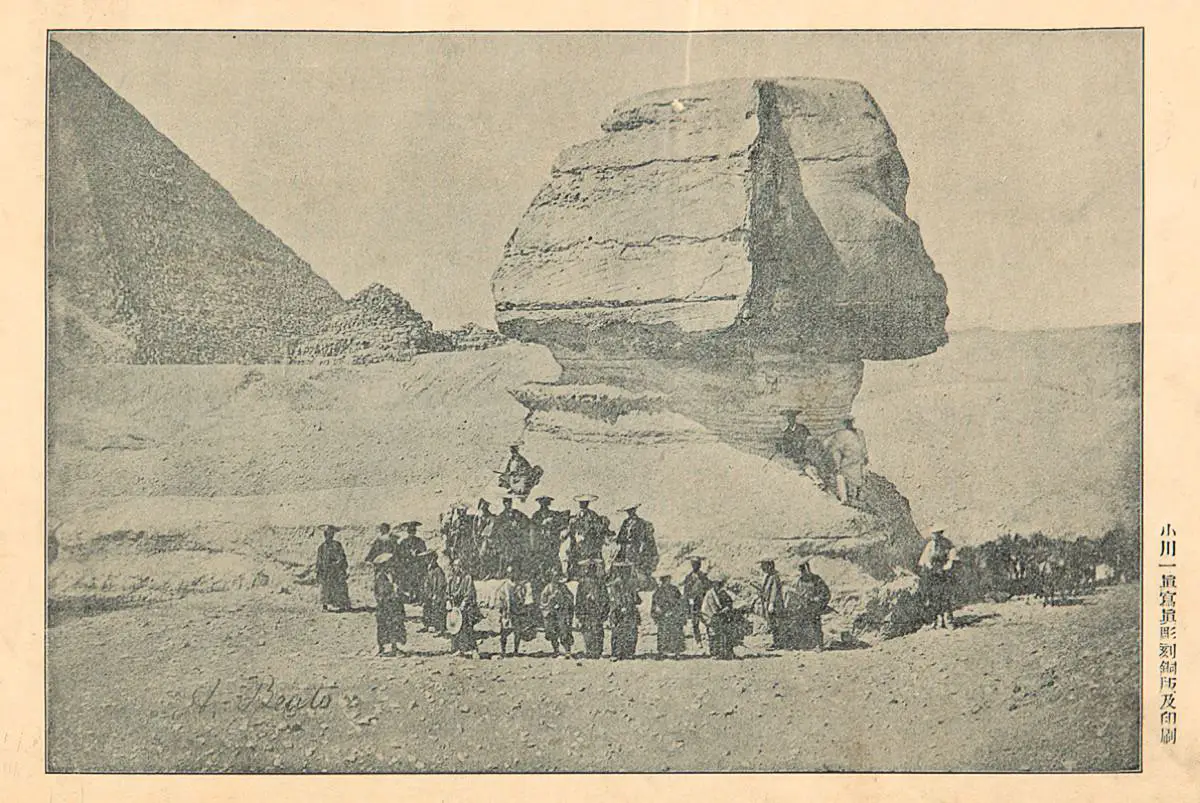
Thirty-six men in full samurai regalia, swords at their hips, standing in the Egyptian sand before the Great Sphinx of Giza. The photograph, taken in 1864 by the Italian-British photographer Antonio Beato, looks at first glance like a clever digital fabrication. It is entirely real. The men were members of the Ikeda Mission, a diplomatic delegation sent by Japan's Tokugawa Shogunate on a journey that would fail in every one of its stated aims, yet leave behind one of the most arresting images of the nineteenth century.
A Mission Born from Crisis
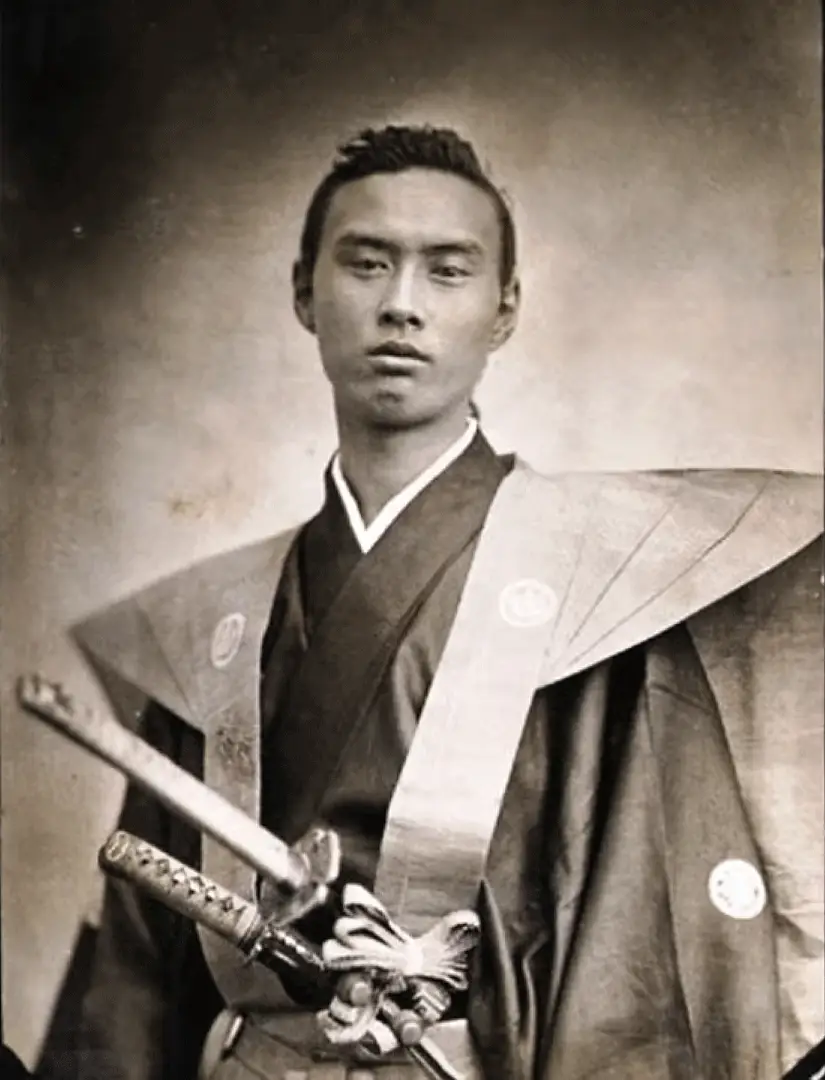 Ikeda Nagaoki, leader of the 1864 mission to France.
The delegation left Japan on 6 February 1864 aboard a French warship, led by the 27-year-old Ikeda Nagaoki, governor of the small villages of Ibara in Bitchū Province (modern Okayama Prefecture). His deputy was Kawazu Sukekuni. Their brief was simple on paper and impossible in practice: persuade France to agree to the closure of Yokohama's harbour to foreign trade.
The political backdrop was turbulent. In 1853, Commodore Matthew Perry had forced Japan's ports open after more than two centuries of sakoku, the policy of near-total national seclusion that had kept foreign influence at arm's length since the early 1600s. By the 1860s, Yokohama had become the main gateway for Western merchants and diplomats, and many powerful daimyō (feudal lords) wanted those doors shut again. In 1863, Emperor Kōmei issued his "Order to Expel Barbarians," and fighting had already broken out at Shimonoseki, where the rebel Chōshū clan fired on American, French and Dutch ships, prompting retaliatory bombardments. The Shogunate, caught between imperial edicts and treaty obligations, dispatched Ikeda's party to negotiate what amounted to a reversal of history.
From Shanghai to the Sphinx
The route took the delegation through Shanghai and India before arriving in Egypt, where they travelled by rail to the pyramids at Giza. It was here, at the foot of the Sphinx, that Antonio Beato made his now-famous albumen print. Beato, born in Venice in 1835 and the younger brother of the celebrated war photographer Felice Beato, had established himself in Cairo during the early 1860s, building a reputation for technically accomplished images of Egypt's ancient monuments. His photograph of the Ikeda delegation, with its collision of Japanese ceremonial dress and ancient Egyptian stone, captured something that no diplomatic report could: the sheer strangeness of a world suddenly shrinking.
After Egypt, the mission sailed through the Mediterranean to Marseille and on to Paris.
Photographed by the Best in the Business
Paris offered its own encounter with the camera. The delegation sat for Nadar (Gaspard-Félix Tournachon), widely regarded as the first great celebrity portrait photographer, whose studio at 35 Boulevard des Capucines had already produced defining images of Victor Hugo, Baudelaire and Sarah Bernhardt. According to the Pitt Rivers Museum at the University of Oxford, which holds a related collection of photographs from both the 1862 and 1864 Japanese missions, engravings based on Nadar's portraits of the Ikeda delegation were reproduced in illustrated newspapers across France. A third photographer, Jacques-Philippe Potteau, an assistant at the Muséum d'Histoire Naturelle, also produced individual portraits of the delegation members in the ethnographic style of the period, working from his own studio beside the Jardin des Plantes.
These portraits represent some of the last formal images of working samurai before the class was abolished following the Meiji Restoration of 1868.
Diplomatic Failure, Personal Transformation
In Paris, Ikeda met with Napoleon III and the German-born scholar Philipp Franz von Siebold, staying at the Grand Hôtel. The negotiations went nowhere. Yokohama was the lynchpin of Western commercial activity in Japan, and no European power had any interest in seeing it closed. The mission returned home in August 1864, a total failure by every diplomatic measure.
For Ikeda personally, however, the journey had the opposite effect to the one intended. Deeply impressed by French technology and culture, he became an advocate for sending Japanese students abroad and brought back a library of documents covering physics, biology, manufacturing, textiles and fermentation. He also brought back French wine and established his own vineyard, earning him a reputation as one of the founding figures of Japan's wine industry. The Shogunate, unimpressed by his change of heart, placed him under house arrest. He died in 1879, aged just 42.
TimeLine Auctions, 26th May 2026
