
Living Yeasts Found in Ötzi the Iceman, 5,300 Years After His Death
Yeasts that have lived on and inside Ötzi the Iceman for more than 5,300 years are still alive, and at least one of them has kept growing inside the refrigerated cell where the mummy is kept. Researchers at Eurac Research in Bolzano cultured four groups of living, cold-adapted yeast from the body, one of them from deep in his stomach, and reported the results on 3 June in the journal Microbiome.
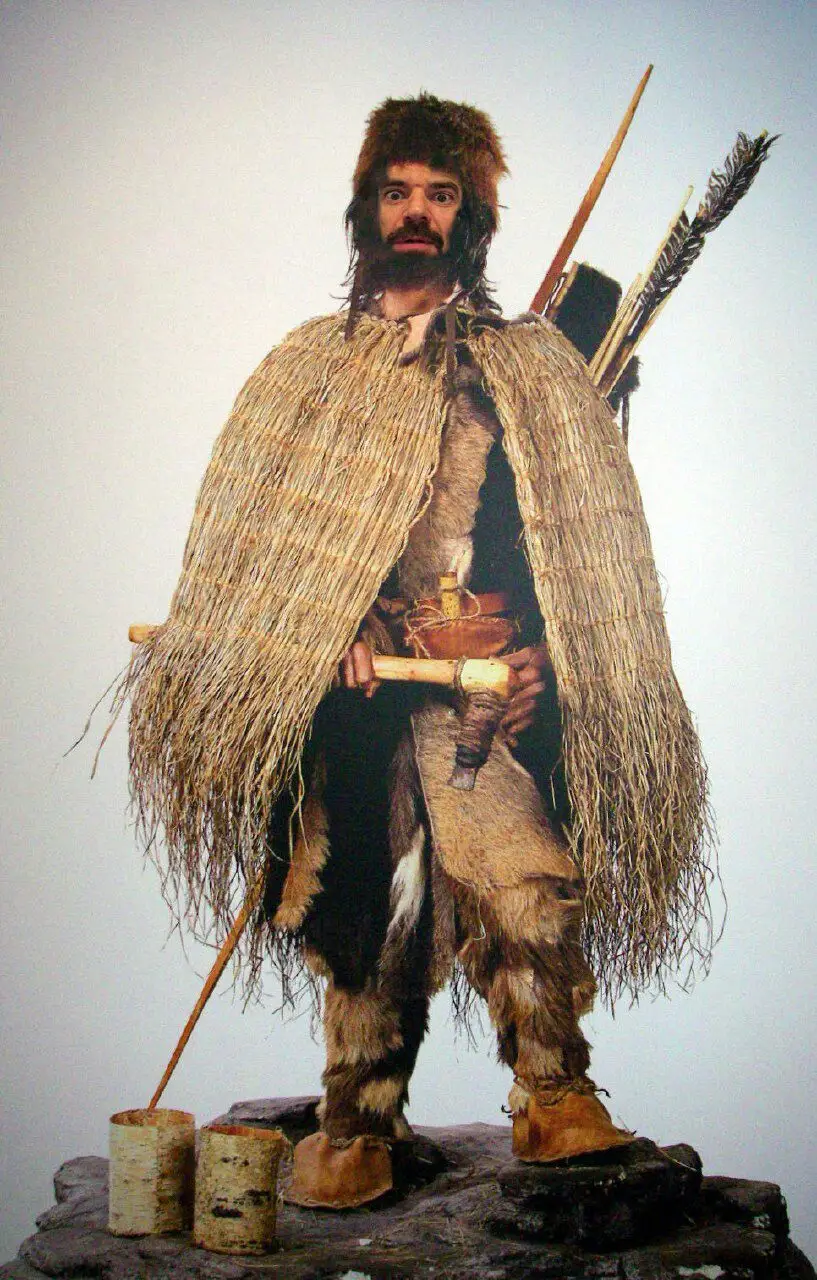 A reconstruction of Ötzi as he may have looked in life, with replica clothing and tools. Photo: Melotzi5713, CC BY-SA 4.0, via Wikimedia Commons.
The result has a practical edge for the people who care for the body. The four yeasts, the cold-loving genera Glaciozyma, Goffeauzyma, Mrakia and Phenoliferia, resemble fungi known from cold places such as the Alps and Antarctica, which the team reads as a sign they were environmental microbes that colonised the corpse and froze with it. Three of the four carry genes to break down phenol, the disinfectant applied to the Iceman after it emerged from a glacier in the Ötztal Alps in 1991. Mohamed Sarhan, the Eurac Research microbiologist and lead author, said the study was motivated by the need to conserve the mummy.
A mummy's microbiome is unique because we are dealing with microbes that are over 5,000 years old and, at the same time, with modern microbes that have been introduced since the discovery.
To tell the two apart, the team thawed part of the remains to 4°C for five hours and collected the runoff, swabbed the skin, and sampled tissue and stomach contents. They set what grew against glacier soil from the discovery site, air from the museum, and water from the conservation chamber, then sequenced the DNA to separate the organisms that travelled with Ötzi from those that arrived after 1991. Albert Zink, a co-author, said ancient DNA from the yeasts confirmed they had persisted in the body rather than colonising it recently.
Not everything inside the mummy proved alive. Attempts to grow bacteria from the interior failed; only the yeasts produced viable cultures in the lab. Glaciozyma was more abundant on the body than in a sample taken in 2010 and carried less DNA damage, which the team reads as evidence that it has gone on replicating despite storage at minus six degrees Celsius and roughly 99 percent humidity at the South Tyrol Museum of Archaeology.
Frank Maixner, director of the Institute for Mummy Studies at Eurac Research, said the work changes how conservators should think about the remains. The mummy, he said, is "not a static relic, but a dynamic biological system."
Patrick Hunt, an Alpine archaeologist at Stanford University who was not involved in the study, said the microbiology bears directly on any future effort to preserve the body. The researchers note that the conditions keeping glacial mummies intact are still not fully understood, and a microbiome that stays active below freezing is a factor the museum has not had to manage before.
TimeLine Auctions, 24th June 2026
