-
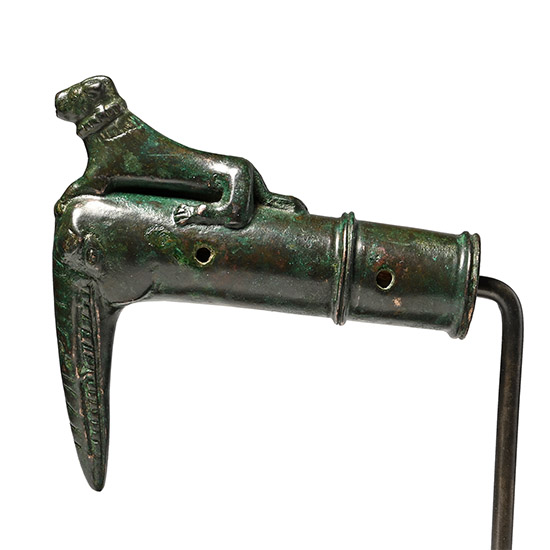
Luristan Bronze Pickaxe with Crouching Dog
Circa early 1st millennium B.C.Estimate: £1,500 - 2,000 (+bp*)
Opening Bid: £750
The body of the axe resembling a stork's head with incised lines on the sides, a tubular socket with a collared dog reclining on the top and perforations on the sides. 373 grams total, 15.2 cm high including stand
European private collection, 1990s. Ex John Lawton private collection, Surrey, UK. Accompanied by a copy of a previous illustrated catalogue page, including provenance. -
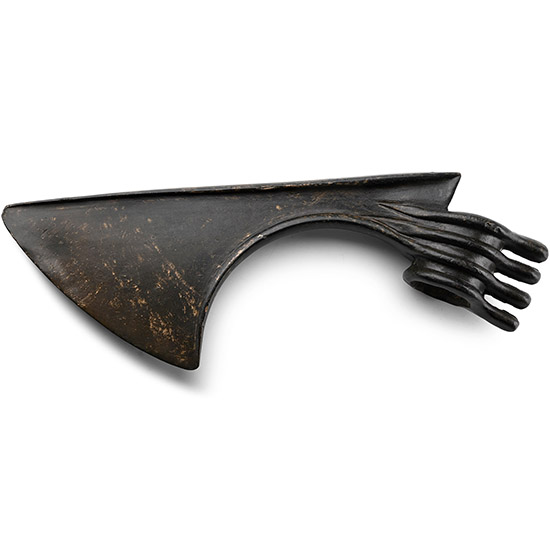
Luristan Bronze Comb-Backed Axehead
2nd-1st millennium B.C.Estimate: £500 - 700 (+bp*)
Opening Bid: £275
With ribbed socket terminating in a butt formed of four cones, the blade expanding from the socket in a swept arc with reinforcing rim to upper and lower edges. 368 grams, 21.5 cm
Ex Abelita collection, 1980s-2010. -
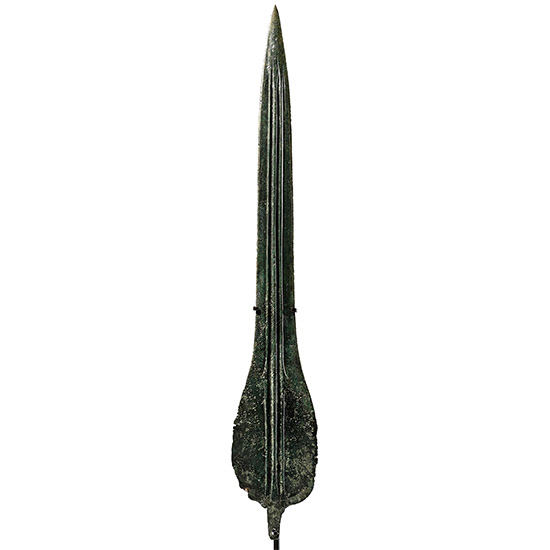
Luristan Bronze Sword Blade
13th-7th century B.C.Estimate: £600 - 800 (+bp*)
Bids: 3 | Current Bid: £540
Slender blade widening at the base, three raised median ribs extending to the short tang; accompanied by a custom-made display stand. 420 grams total, 41 cm high including stand
German collection, cologne 1990s. Ex John Lawton private collection, Surrey, UK.
According to Moorey, such categories of swords were distributed in the Northern Iran area, as proved by the Amarlu finds. Based on the example from the Ashmolean Museum, he dated them to the end of the 2nd millennium B.C., more precisely to a period between the 14th and 13th centuries B.C. The type was in use until the 7th century B.C. -
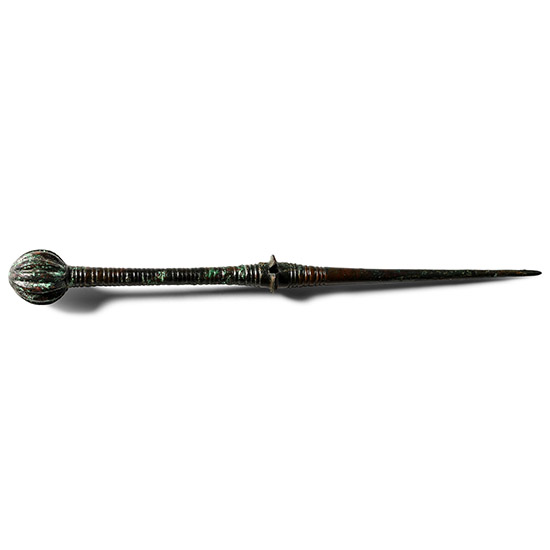
Luristan Decorated Bronze Cloak Pin
Circa 1000-800 B.C.Estimate: £120 - 170 (+bp*)
Bids: 3 | Current Bid: £35
Comprising a slender shank tapering to a point with circumferential ribbing and median flange collar pierced to accept a ring; ribbed melon finial. 25.2 grams, 13.8 cm
Ex John L. Homan, S. Humberside, UK, 1990. Ex West Yorkshire, UK, collection. Accompanied by an original invoice no.A61, dated 3 May 1990. -
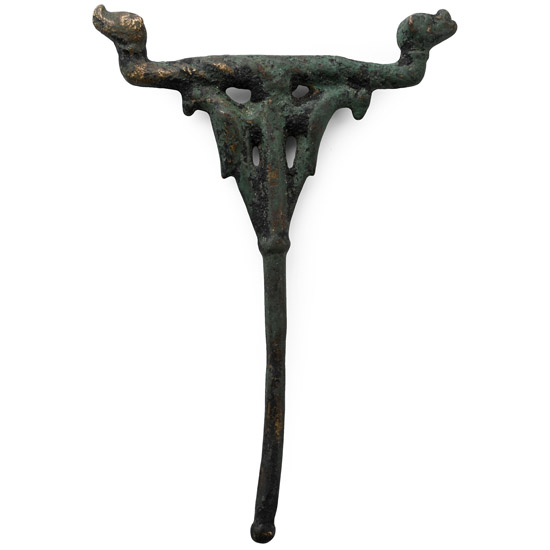
Luristan Bronze Double Beast-Headed Finial
Mid 1st millennium B.C. or laterEstimate: £80 - 100 (+bp*)
Opening Bid: £5
Featuring a round-section shaft with an openwork finial formed as a vertical bar with beast-head finials supported by two opposing birds. 118 grams, 15 cm
Acquired on the UK art market since the 1960s. From the private collection of Mr J.P.H., a Woolwich, UK, collector, his collection formed since the 1960s. -
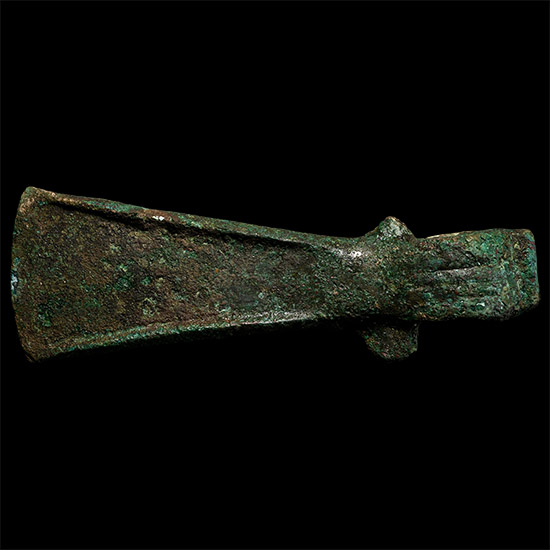
Luristan Bronze Socketted Axehead
Bronze Age, 2nd-1st millennium B.C.Estimate: £80 - 100 (+bp*)
Bids: 1 | Current Bid: £5
Flat-topped triangular blade with swept profile and canted edge, a tubular socket with a small rectangular extension at the rear. 400 grams, 15.2 cm
From an old English collection; acquired on the UK art market before 1970. From the property of a late Lincolnshire, UK, gentleman; thence by descent. Accompanied by a previous catalogue information slip. -
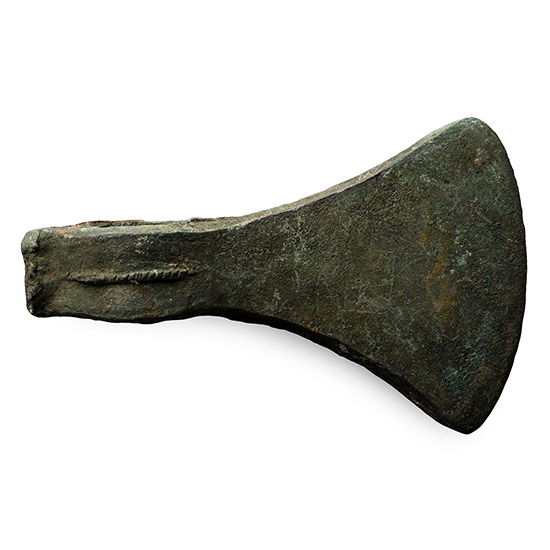
Large Heavy Luristan Bronze Axehead
8th century B.C.Estimate: £100 - 140 (+bp*)
Opening Bid: £50
Comprising a triangular blade with curved edge, lentoid socket, square butt with striking face. 1.38 kg, 20 cm
Acquired in the 1990s. Ex Abelita family collection. This lot has been cleared against the Art Loss Register database, and is accompanied by an illustrated lot declaration signed by the Head of the Antiquities Department, Dr Raffaele D'Amato. -
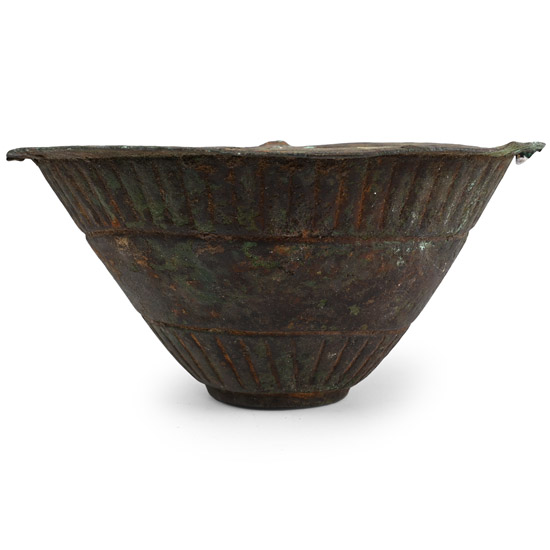
Luristan Bronze Decorated Conical Vessel
Bronze Age, 2nd-1st millennium B.C.Estimate: £120 - 170 (+bp*)
Opening Bid: £5
Conical in profile with three horizontal bands: vertical ribs above and slashes below. 616 grams, 17.5 cm wide
Acquired on the UK art market since the 1990s. From the property of a late Lincolnshire, UK, gentleman; thence by descent. -
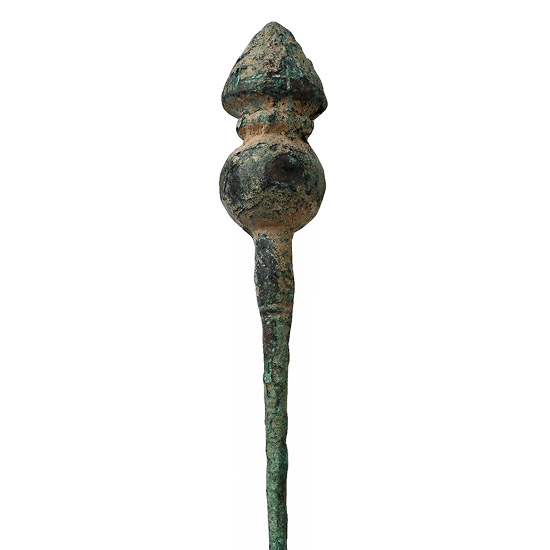
Large Luristan Bronze Poppy-Headed Cloak Pin
8th-7th century B.C.Estimate: £60 - 80 (+bp*)
Opening Bid: £5
Comprising a substantial round-sectioned pin with a bulbous poppy-shaped conical head. 145 grams, 30.3 cm
Acquired on the UK art market since the 1960s. From the private collection of Mr J.P.H., a Woolwich, UK, collector, his collection formed since the 1960s. -
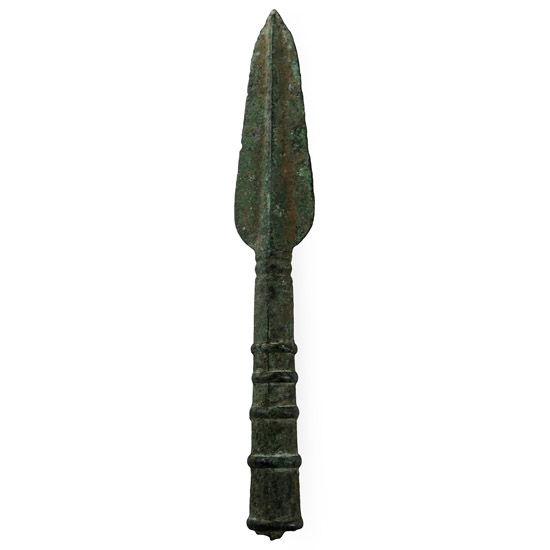
Luristan Bronze Socketted Spearhead
2nd-1st millennium B.C.Estimate: £100 - 140 (+bp*)
Opening Bid: £5
Comprising a leaf-shaped blade with a raised midrib extending to a tubular socket with four raised circumferential ribs. 136 grams, 22.6 cm
Acquired on the UK art market since the 1960s. From the private collection of Mr J.P.H., a Woolwich, UK, collector, his collection formed since the 1960s. -
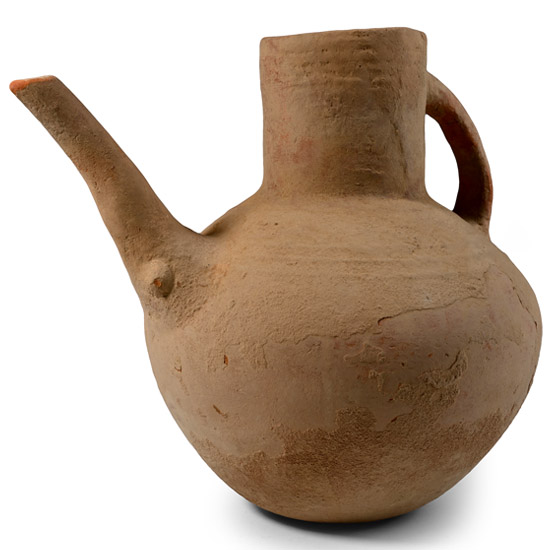
Luristan Terracotta Handled Pouring Vessel
Bronze Age, 2nd-1st millennium B.C.Estimate: £120 - 170 (+bp*)
Opening Bid: £5
With bulbous body and broad sloped shoulder, tall tubular neck with strap handle to rear; arched spout with lateral lugs at the base. 1.55 kg, 28.5 wide
Acquired on the UK art market since the 1990s. From the property of a late Lincolnshire, UK, gentleman; thence by descent. -
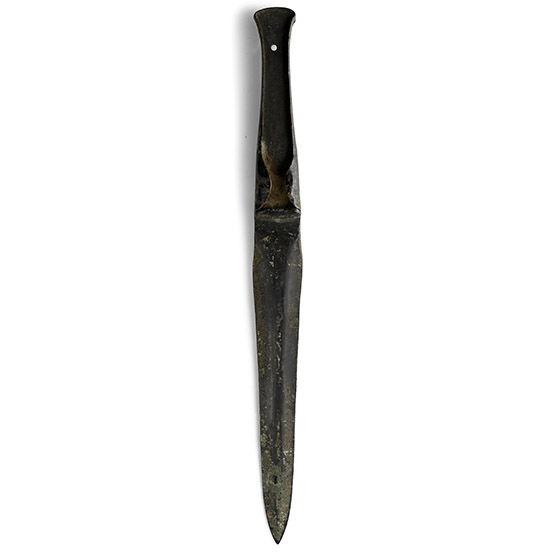
Luristan Bronze Dagger
13th century B.C.Estimate: £180 - 240 (+bp*)
Bids: 1 | Current Bid: £90
With a lentoid-section blade, tongue-shaped in plan, with an integral tapering hilt with flared finial, lateral flanges to accept a panel of bone to each face forming the grip. 185 grams, 32.5 cm
Ex Abelita family collection, 1980s-2000s.
The art of Luristan can be described as the art of nomadic herdsmen and horsemen with an emphasis on the crafting of small, easily portable objects, among these a great number of bronze weapons. The rich and noble aristocrats of the Luristan, Elamites, Hurrians, Lullubians, Kutians, and Kassites went to battle splendidly equipped and wore magnificent bronze armour, using maces, spears and daggers as offensive weapons, alongside spears, bows and arrows.

