
Loading, please wait...

LOT 1668
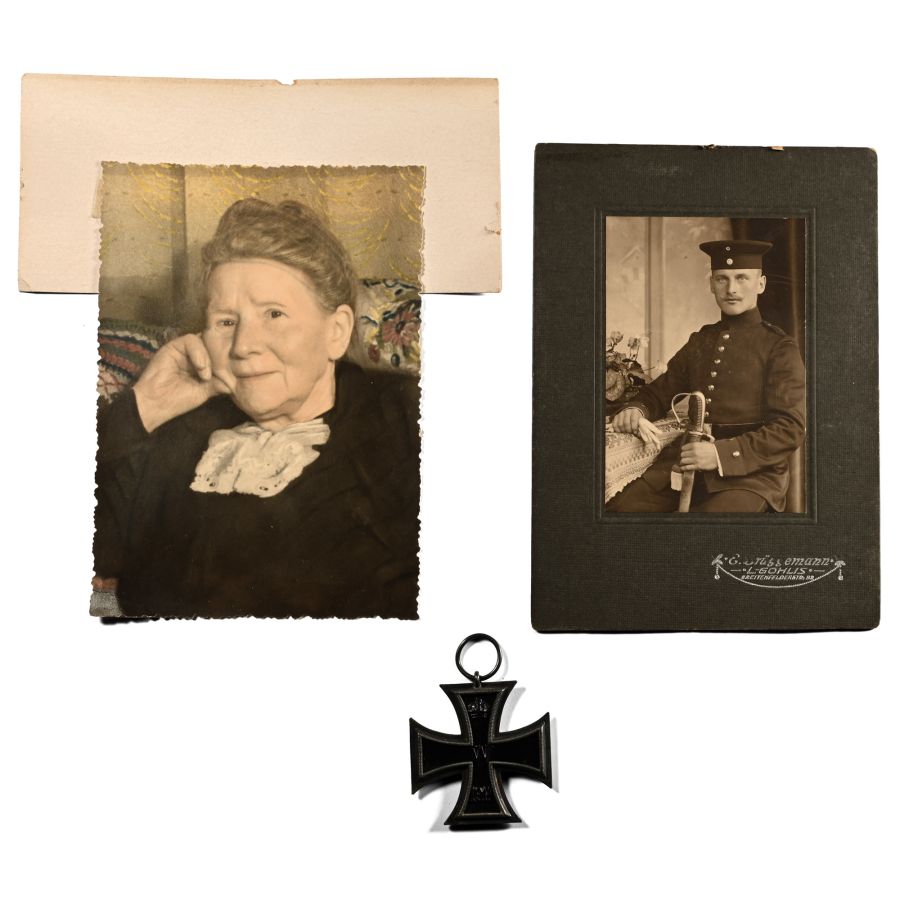
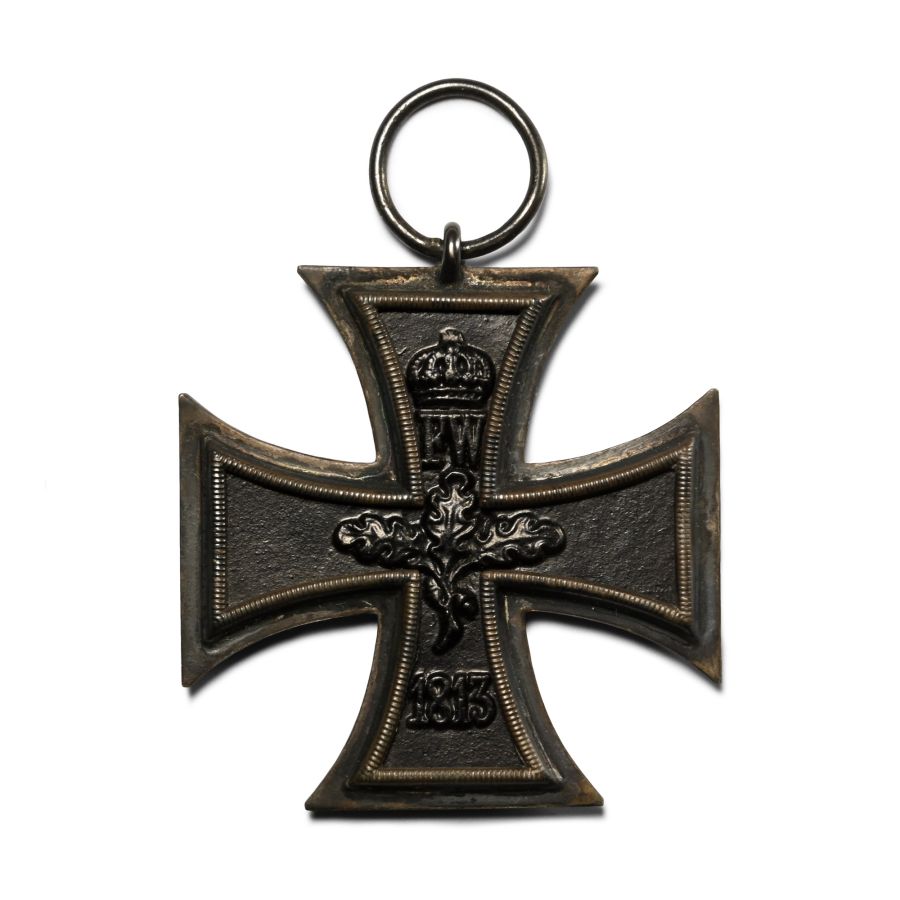
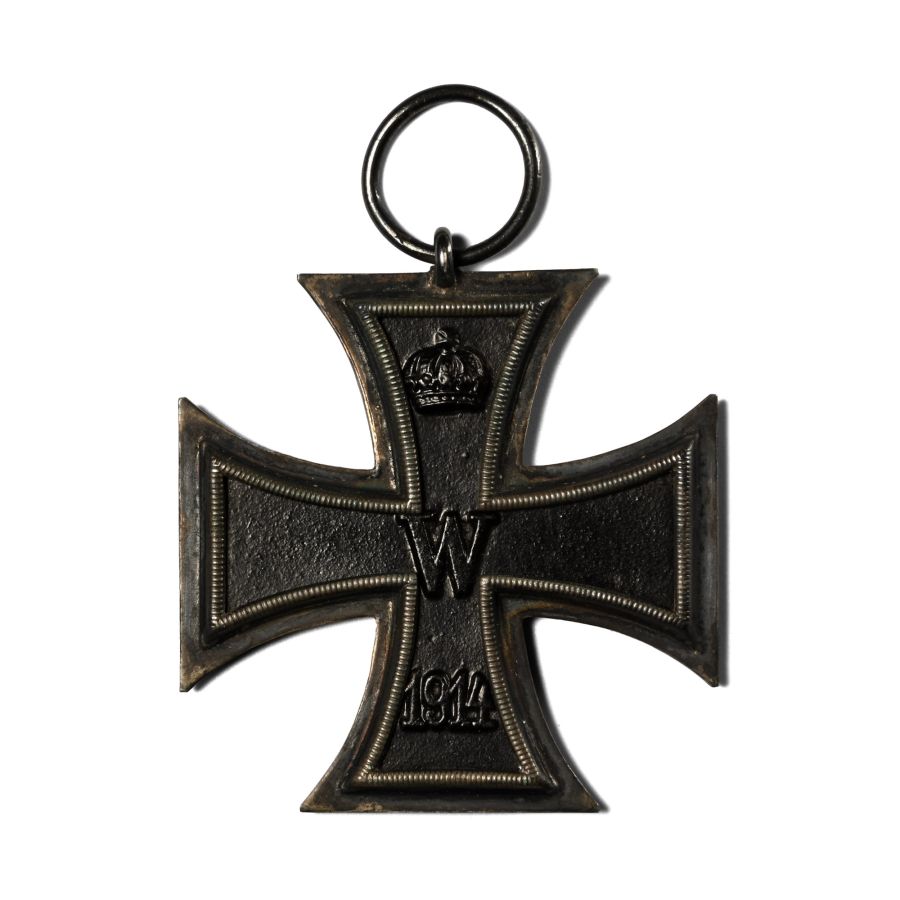
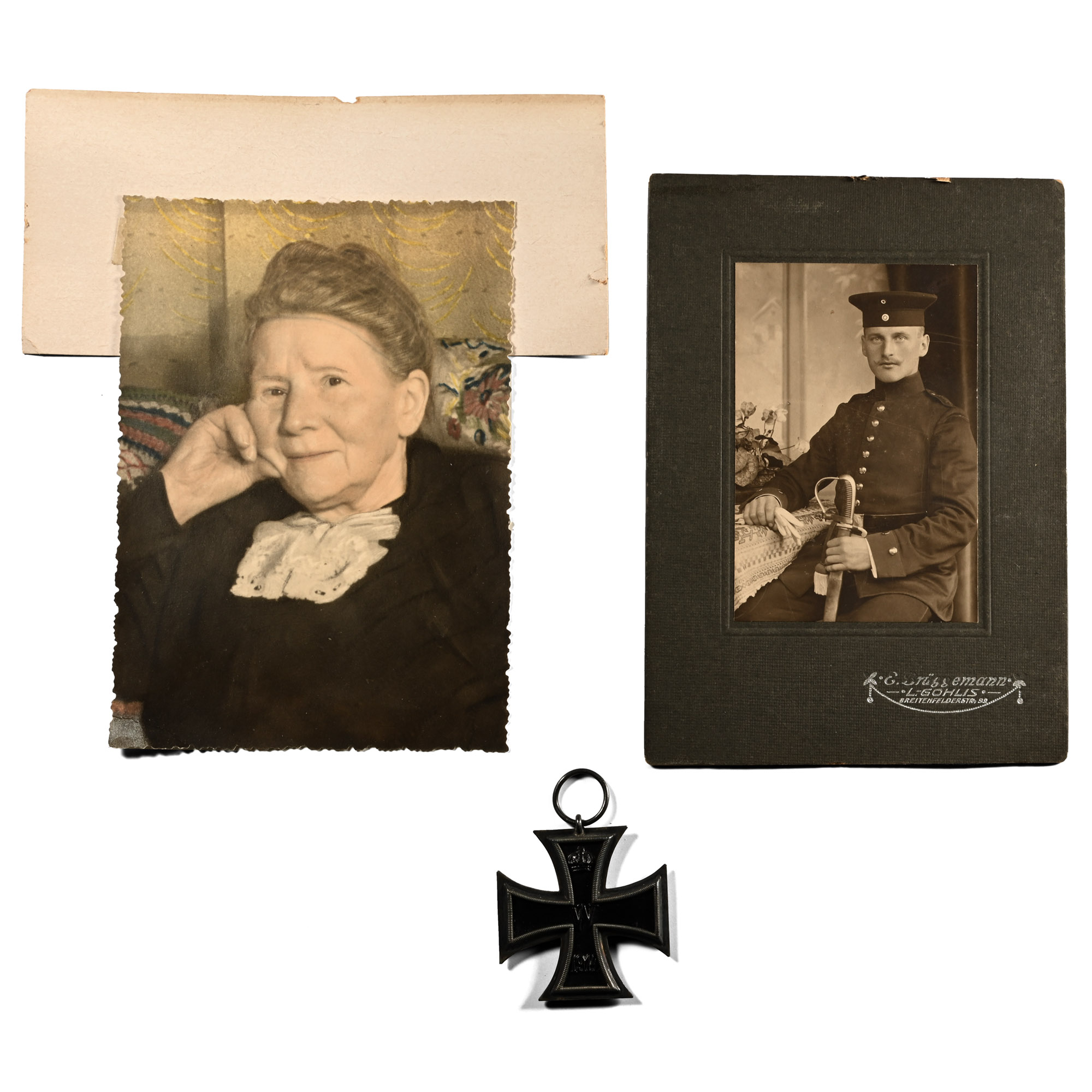
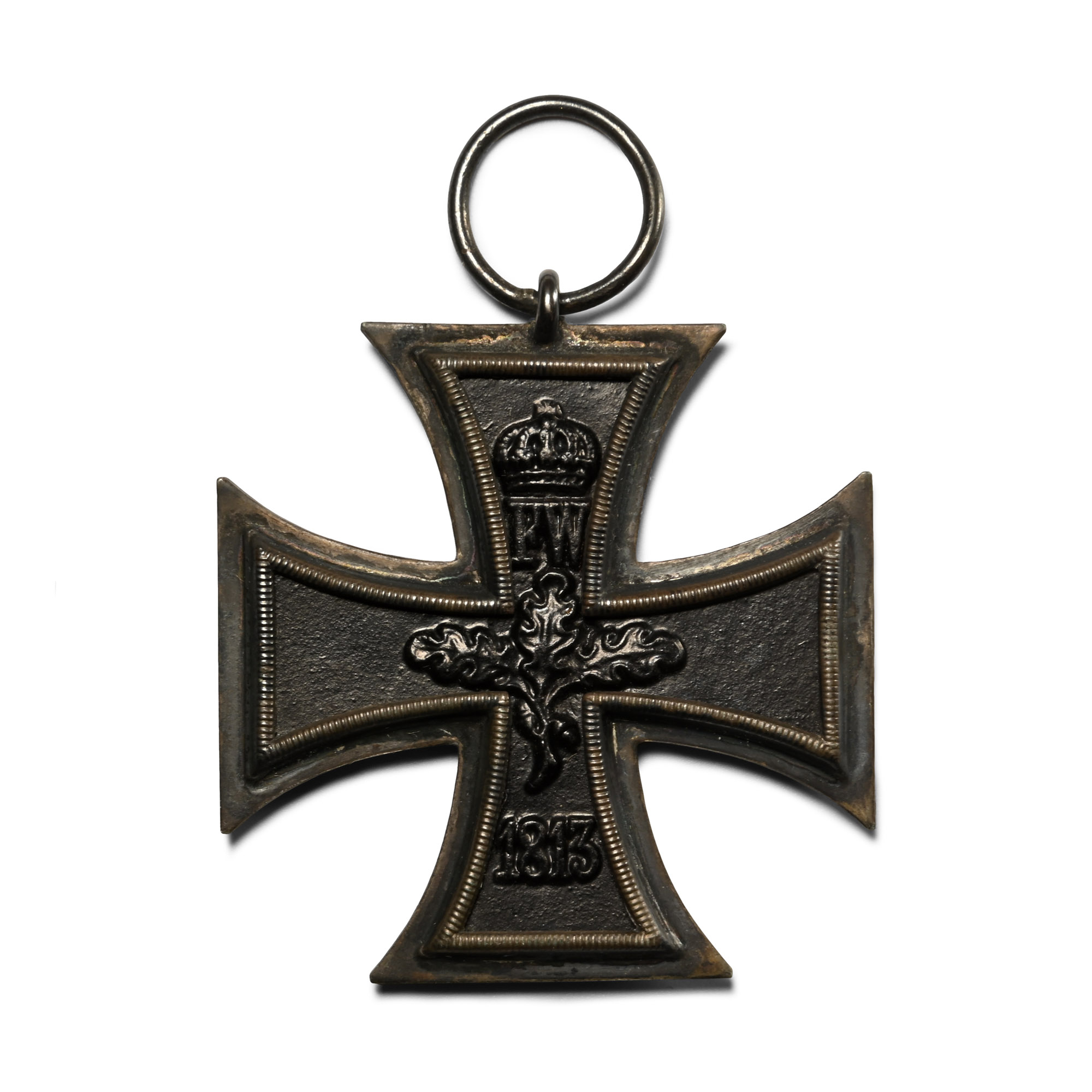
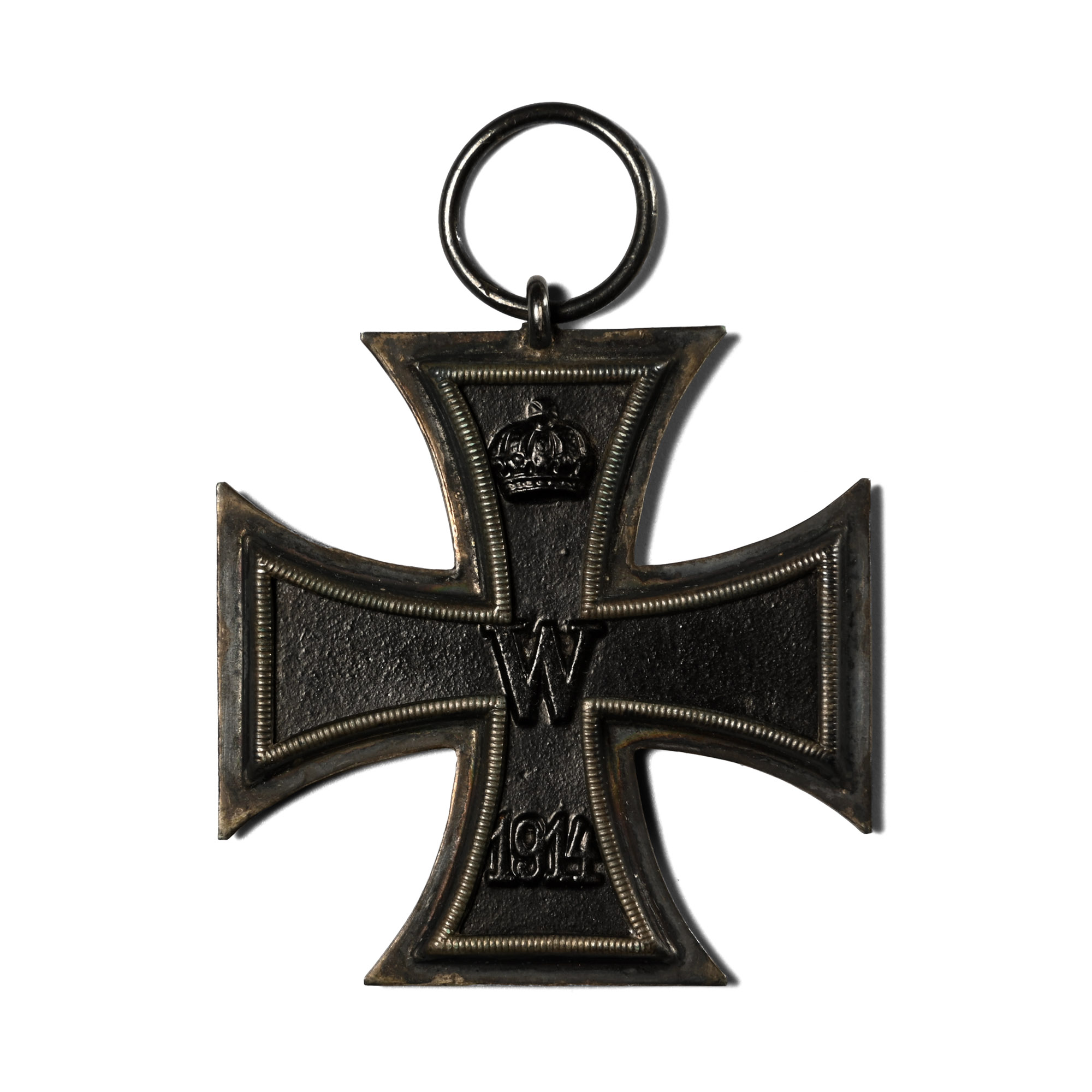
WWI Imperial German Iron Cross with Military Photograph
1914-1918 A.D.
2 1/4 - 6 3/4 in. (49 grams, 5.8-17 cm).
2nd class; with KO' on ring, probably for 'Königliches Munzamt Orden, Berlin'; offered with a photograph of the awardee, and another of his relative. [3, No Reserve]
ProvenanceEx Leipzig collection, Germany.
From a Leicestershire, UK, collection.
This lot is accompanied by an illustrated lot declaration signed by the Head of the Antiquities Department, Dr Raffaele D’Amato.
TimeLine Auctions follows a vetting process to ensure the authenticity and legality of all items, reinforcing our commitment to integrity and responsible trading. Each antiquity, antique, and coin lot undergoes thorough examination by a vetting committee of at least ten external specialists, professional trade association members, scientists, and archaeologists: Our Vetting Process
AUCTIONS:
TimeLine is a leading auction house specialising in antiquities, ancient art, collectables, natural history, coins, medals, and books. Our auctions offer museums, collectors, historians, and enthusiasts the opportunity to acquire unique and historically significant pieces.
-
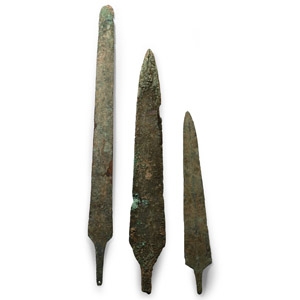
Western Asiatic Bronze Dagger Group
2nd millennium B.C.Sold for (Inc. bp): £124
With a narrow pointed blade and wide shallow raised flange to the centre, straight sides, well marked shoulders with narrow tang, one rivet hole still preserved in one specimen. 358 grams total, 20.7-33.5 cm
Acquired 1980-2015. Ex Abelita family collection. This lot is accompanied by an illustrated lot declaration signed by the Head of the Antiquities Department, Dr Raffaele D’Amato.
The type was technically more advanced than previous types of blades in the Near East, owing to the shape of the weapon, with its slightly convex sides widening out near the point, which combined the advantages of the leaf-shaped and straight-sided forms. This kind of dagger was used in the early second millennium in Mesopotamia and in Syria, and as late as the mid-first millennium in Luristan. -
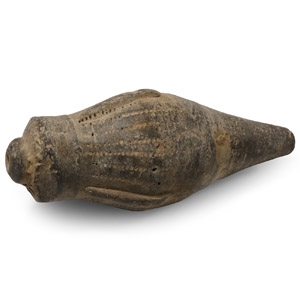
Turco-Mongol 'Greek Fire' Ceramic Fire Bomb or Hand Grenade
14th-15th century A.D.Sold for (Inc. bp): £182
Cylindrical in form with tapering foot, vertical flanges to the body with pointillé decoration between, carinated shoulder with impressed points, domed mouth. 393 grams, 16 cm
From an important specialist collection, London, UK, 1990s onwards. Accompanied by an academic paper by military specialist Dr Raffaele D'Amato, dated 15 July 2019 and titled 'Eastern Roman Empire - Greek Fire Bomb or Hand Grenade (μεσαίον kακάβιον) 9th-11th century AD'. This lot is accompanied by an illustrated lot declaration signed by the Head of the Antiquities Department, Dr Raffaele D’Amato. -
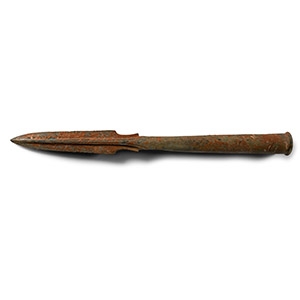
Chinese Zhou Bronze Socketted Spearhead
Zhou Dynasty, 1046-256 B.C.Estimate: £600 - 800 (‡+bp*)
Opening Bid: £300
With thick midrib, leaf-shaped blade with lateral spurs, deep tubular socket with fastening hole for the attachment to the wooden shaft. 250 grams, 32 cm
Acquired in the mid 1980s-1990s. Private collection, Switzerland, thence by descent. Private collection, since the late 1990s. This lot is accompanied by an illustrated lot declaration signed by the Head of the Antiquities Department, Dr Raffaele D’Amato.
