
Loading, please wait...
LOT 2126
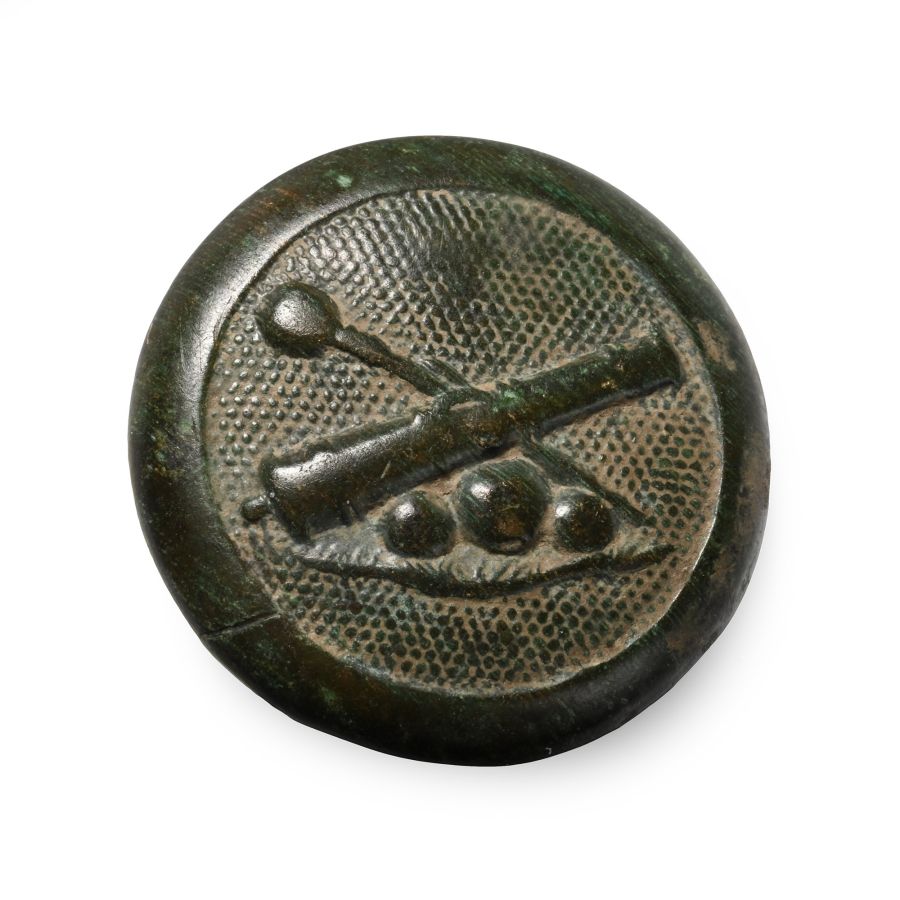
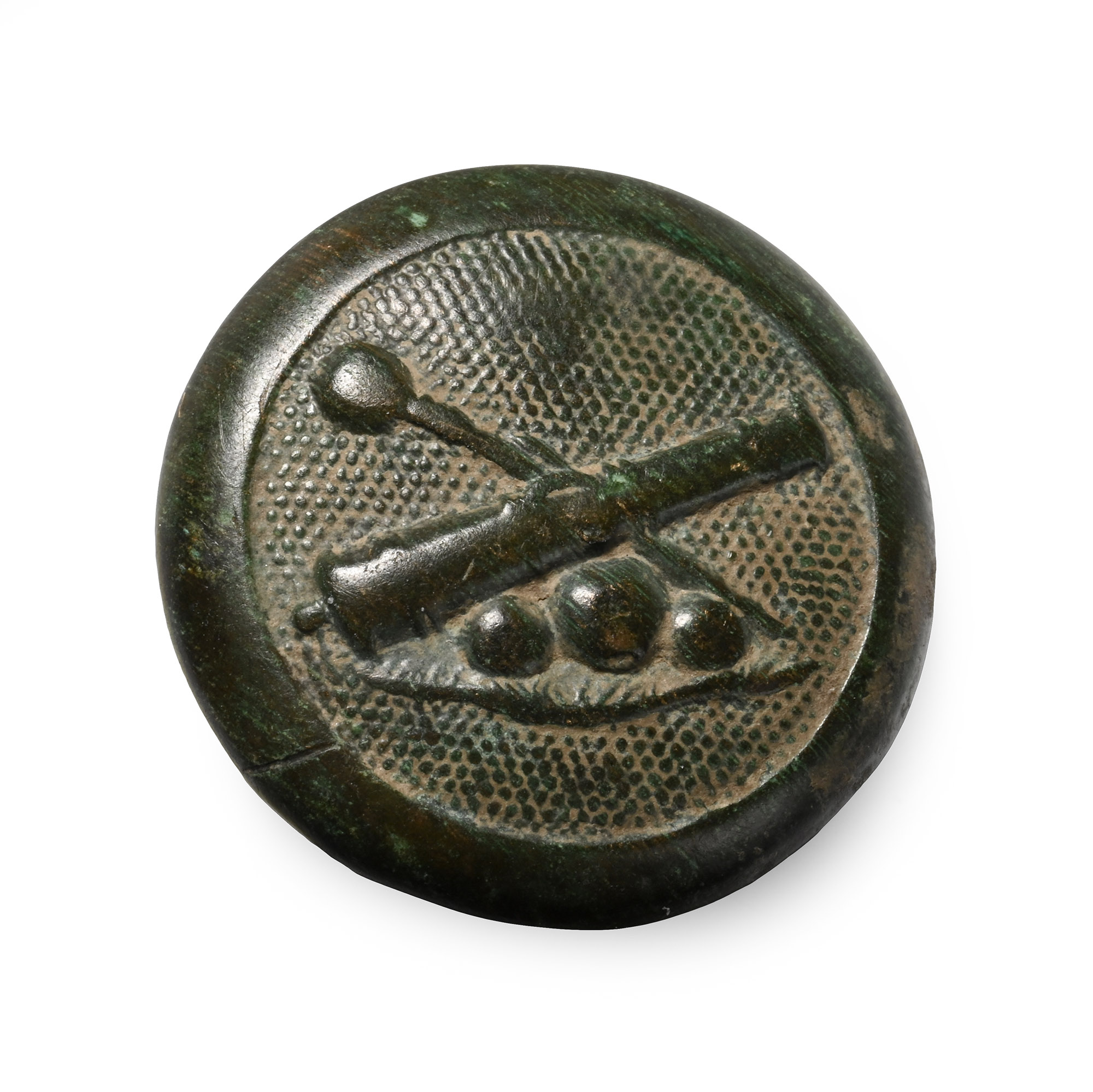
WWI Bronze Button with Cannon and Shot
20TH CENTURY A.D.
7/8 in. (3.8 grams, 23 mm).
Military uniform button, domed in profile with loop to reverse; low-relief cannon, ramrod and shot reserved against a hatched field; Austro-Hungarian field artillery regimen. [No Reserve]
ProvenanceFrom the private collection of Mr Brian Edwards, New Malden, Surrey, UK, formed from the late 1970s-early 1980s; thence by descent.
Accompanied by the original collector's data sheet(s) with reference no.A95.
TimeLine Auctions follows a vetting process to ensure the authenticity and legality of all items, reinforcing our commitment to integrity and responsible trading. Each antiquity, antique, and coin lot undergoes thorough examination by a vetting committee of at least ten external specialists, professional trade association members, scientists, and archaeologists: Our Vetting Process
AUCTIONS:
TimeLine is a leading auction house specialising in antiquities, ancient art, collectables, natural history, coins, medals, and books. Our auctions offer museums, collectors, historians, and enthusiasts the opportunity to acquire unique and historically significant pieces.
-
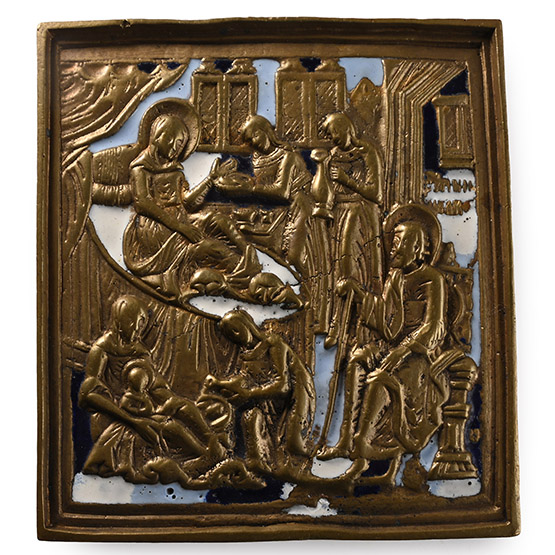
Russian Orthodox Enamelled Bronze Travel Icon with the Birth of the Virgin
19th century A.D.Sold for (Inc. bp): £494
Presenting an architectural setting with figures in two chambers framed with cornices, columns and furnitures; the upper chamber showing Saint Anna in birthing bed with two attendants; the lower room with two attendants bathing an infant; on the right Saint Joachim seated upon a cathedra; Old Slavonic inscription reciting ‘The birth of the most holy mother of God’. 230 grams, 98 mm
Acquired from Chris Martin-Zakheim, Iconastas, 5 Piccadilly Arcade, London SW1. From the private collection of a West London, UK, gentleman, formed since the early 2000s.
According to the Protoevangelium of James, Mary's parents were called Anna and Joachim and conceived Mary at a late age. -
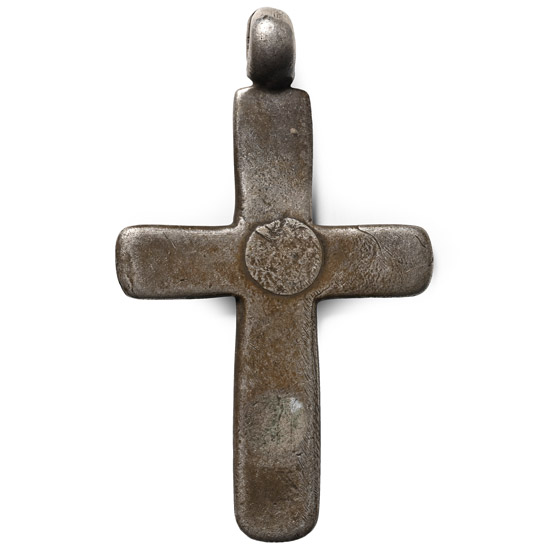
Large Post Medieval Silver Cross
Circa 17th century A.D.Sold for (Inc. bp): £104
Rectangular-section arms with a round disc to the centre and an integral loop. 18.7 grams, 67 mm
Ex Cambridgeshire, UK, collection, 1990s. -
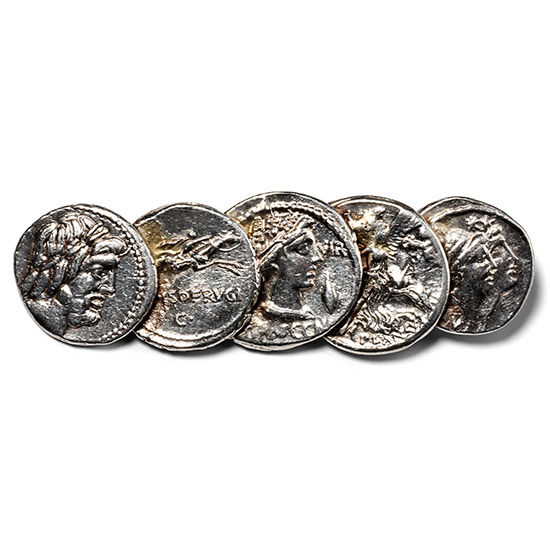
FIve Republican Denarii Formed as A Victorian Tie Pin.
Late 19th century A.D.Sold for (Inc. bp): £156
Group of five coins soldered together and with hinge and catch fittings with a pin to the reverse. 21 grams, 62 mm
From a UK collection. Property of a London, UK, antiquarian.
