
Loading, please wait...
LOT 2142
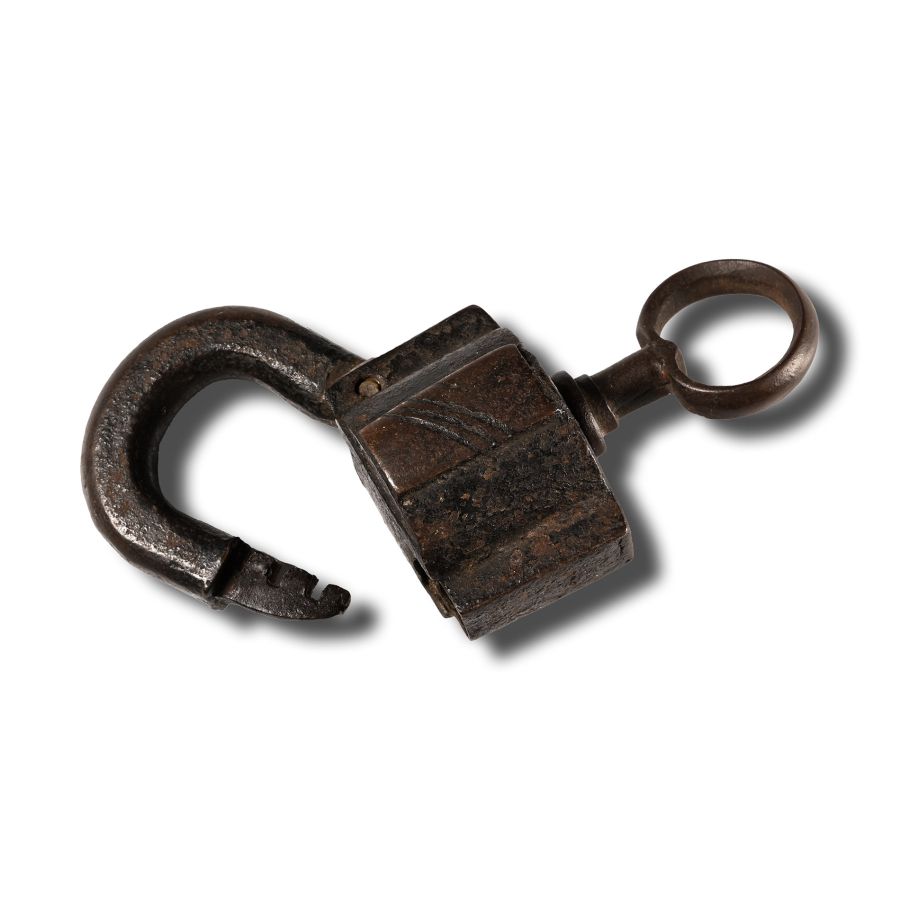
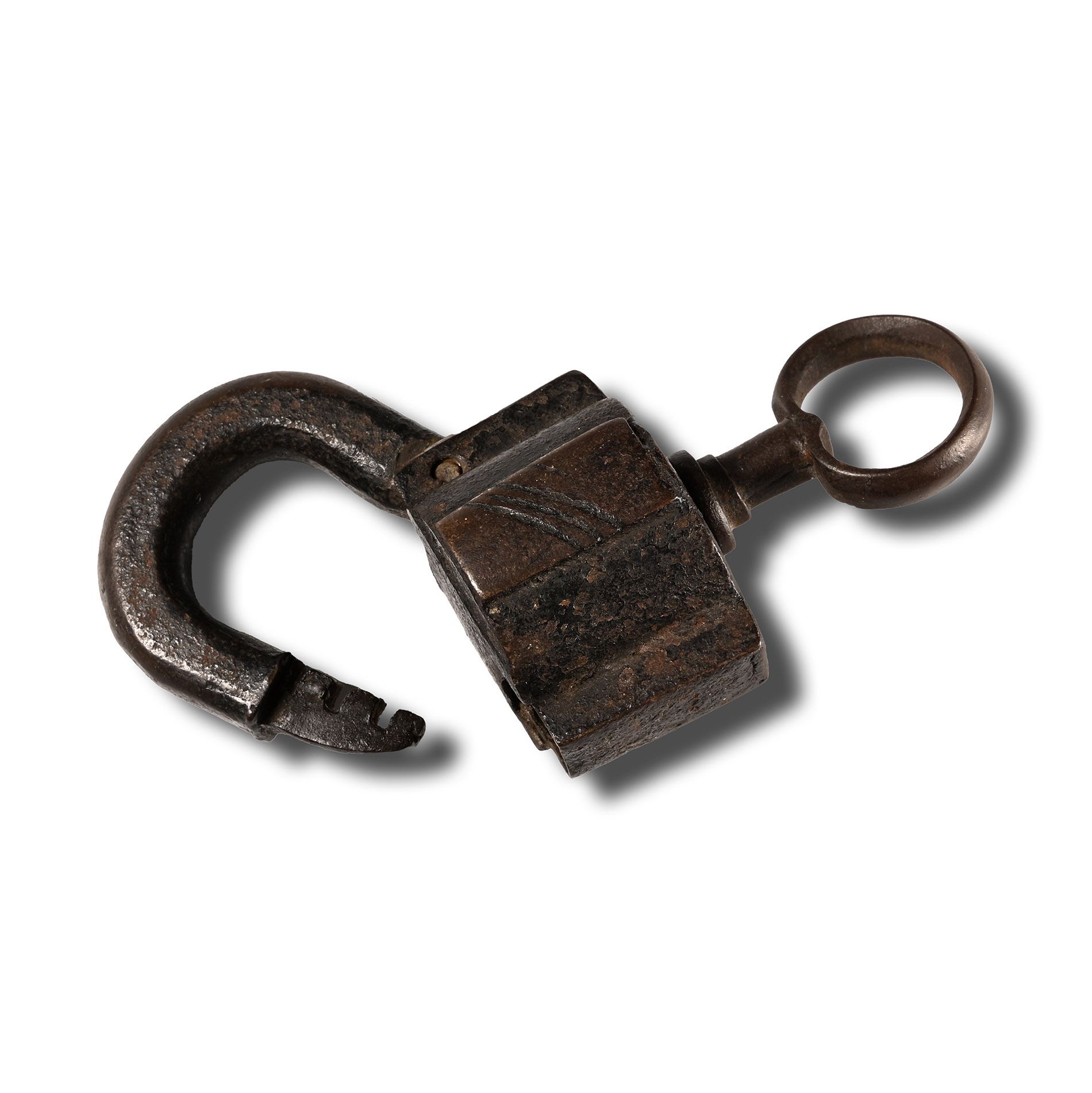
Working Iron Padlock and Key
17TH-18TH CENTURY A.D.
4 1/4 in. (196 grams, 10.9 cm).
With a D-shaped shank and cylindrical body with lateral extensions, loop handle to the key. [2]
ProvenanceEx private collection, 1970s.
Property of a Nottinghamshire gentleman.
This lot is accompanied by an illustrated lot declaration signed by the Head of the Antiquities Department, Dr Raffaele D’Amato.
TimeLine Auctions follows a vetting process to ensure the authenticity and legality of all items, reinforcing our commitment to integrity and responsible trading. Each antiquity, antique, and coin lot undergoes thorough examination by a vetting committee of at least ten external specialists, professional trade association members, scientists, and archaeologists: Our Vetting Process
AUCTIONS:
TimeLine is a leading auction house specialising in antiquities, ancient art, collectables, natural history, coins, medals, and books. Our auctions offer museums, collectors, historians, and enthusiasts the opportunity to acquire unique and historically significant pieces.
-

Tudor Period Lead 'Hornbook' Writing Aid
Circa 1500-1633 A.D.Sold for (Inc. bp): £520
A Tudor or Stuart period lead-alloy 'hornbook': incomplete rectangular plaque with small rectangular handle; bearing raised, moulded text on the obverse with hatched forms between four registers, which frame the letters of the alphabet 'ABCDE/FG[reversed]HIKL/MNOPq/RST[VW]XYZ'; low-relief octofoil in centre to the reverse. 51 grams, 75 mm
Found Yorkshire, UK. This lot is accompanied by an illustrated lot declaration signed by the Head of the Antiquities Department, Dr Raffaele D’Amato.
The letter 'U' has been omitted from the alphabet as is common with such objects, as has the letter 'J', suggesting that the book was produced prior to the publication of Charles Butler's English Grammar (1633) which first distinguished between I and J. The letter Z is reversed. Hornbooks were employed as learning aids and commonly made from paper mounted onto wood together with a transparent sheet of horn. Smaller, more portable lead-alloy examples such as this one are generally believed to have been mass produced, whilst still falling within the genre of 'hornbooks'. Interestingly, some scholars have argued that the mistakes and inconsistencies found on lead examples rendered them less effective learning tools, used as children's toys in families with low levels of literacy, or possibly serving as dolls' accessories. -
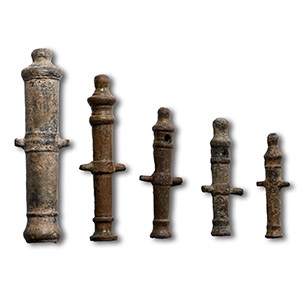
Georgian Bronze Toy Cannon Collection
18th-19th century A.D.Sold for (Inc. bp): £98
Five barrels for toy cannons, each with lateral trunnions. 68 grams total, 37-70 mm
Found on various UK sites since 1974. Property of an Essex collector. This lot is accompanied by an illustrated lot declaration signed by the Head of the Antiquities Department, Dr Raffaele D’Amato. -
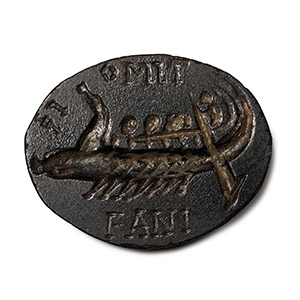
Roman Style Gemstone with Galley
19th-20th century A.D.Sold for (Inc. bp): £59
Ellipsoid in plan with incuse galley and legend '[??] OMIT FANI'. 1.84 grams, 21 mm
From the collection of a London antiquarian, formed since the 1980s. This lot is accompanied by an illustrated lot declaration signed by the Head of the Antiquities Department, Dr Raffaele D’Amato.
