
Loading, please wait...
LOT 2349
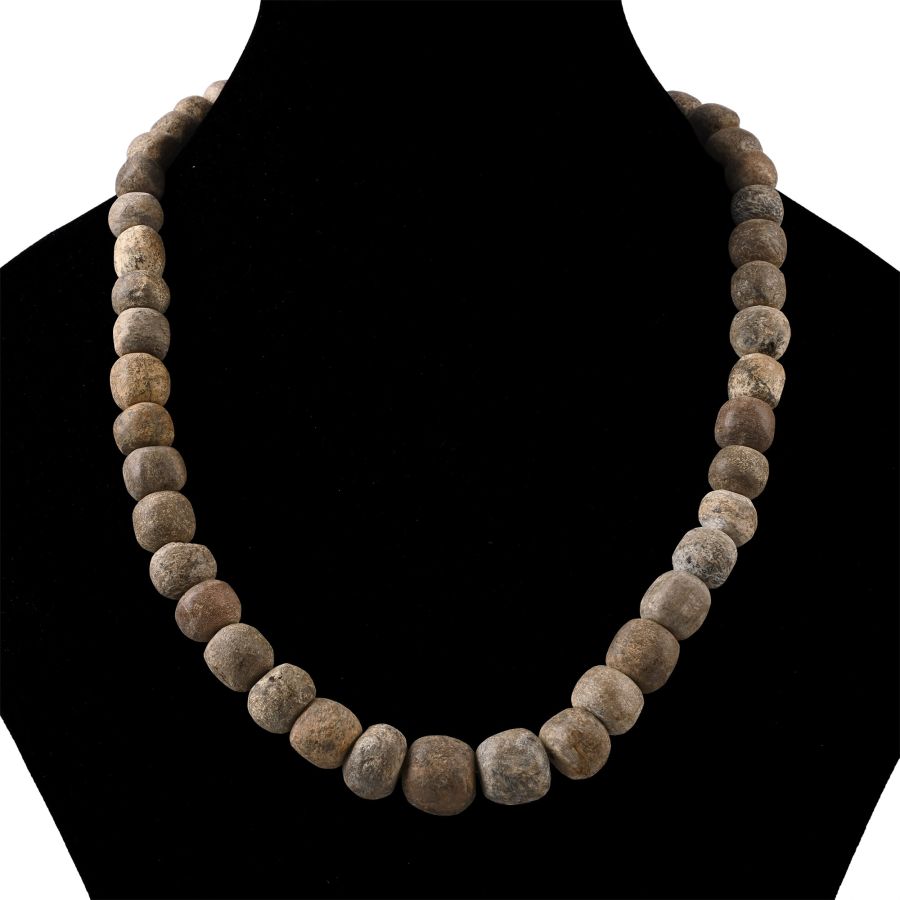
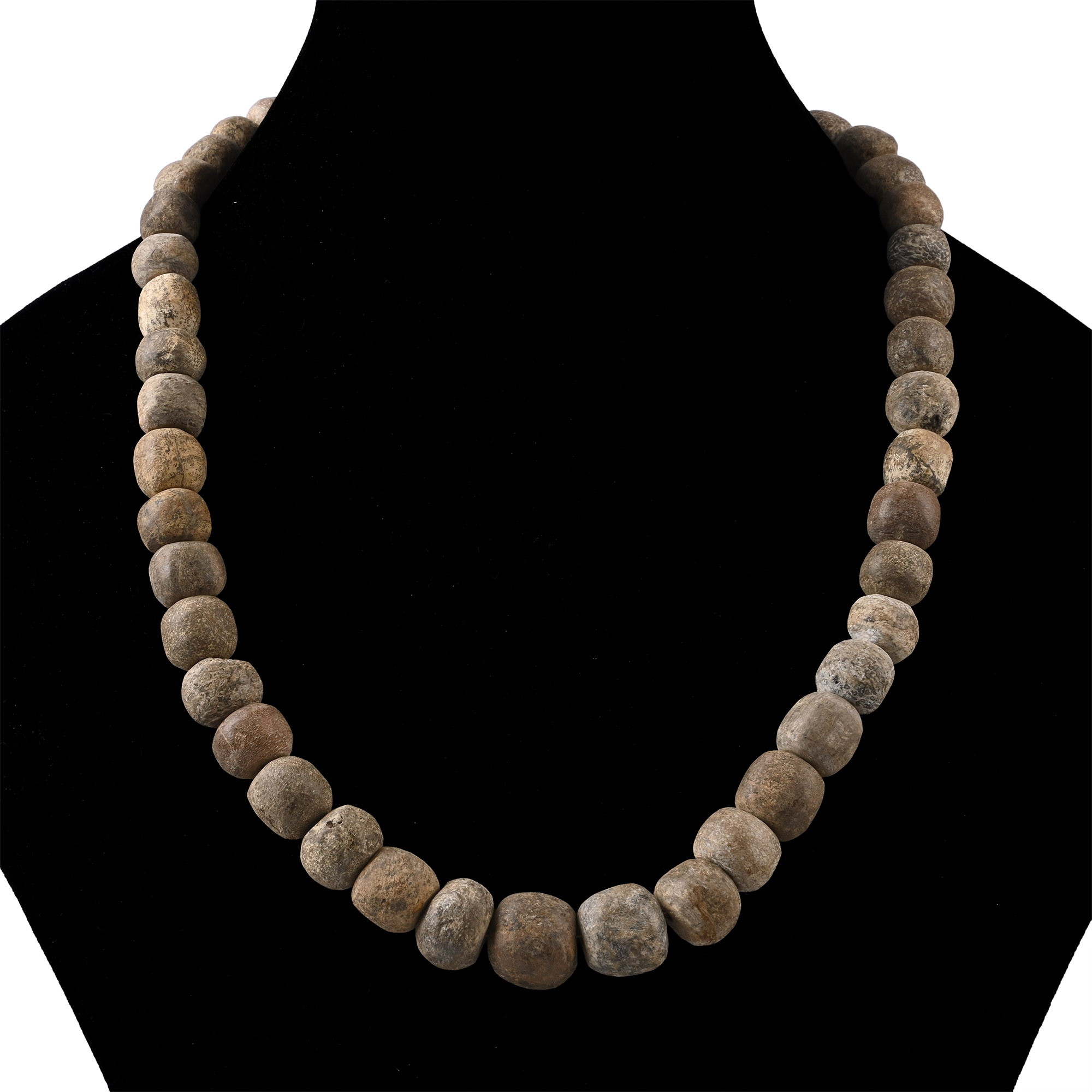
Woolly Mammoth Bone Bead Necklace String
PLEISTOCENE EPOCH, 2.6 MILLION-11,700 YEARS B.P.
22 7/8 in. (155 grams, 58 cm).
Restrung, using recently polished Mammuthus primigenius spherical bone beads. [No Reserve]
ProvenanceEx Ancient Art Shop, Windsor, UK, 1990s.
Ex private West County, UK, collection.
See Guide to the Elephants (Recent and Fossil) in the British Museum (Natural History), BM, 1922, pp.35-47, for discussion.
FootnotesThe mammoth lineage branched from the Asian elephant around 6 million years ago, and later on, the Woolly Mammoth, Mammuthus primigenius, evolved in eastern Siberia. Woolly mammoths, being slightly smaller than living African elephants, were foragers and ate grass, as well as small, nutritious flowering plants that flourished in the environment where they lived. They may also have used their curved tusks to dig through snow and eat plants that other foragers were unable to reach.
CONDITIONTimeLine Auctions follows a vetting process to ensure the authenticity and legality of all items, reinforcing our commitment to integrity and responsible trading. Each antiquity, antique, and coin lot undergoes thorough examination by a vetting committee of at least ten external specialists, professional trade association members, scientists, and archaeologists: Our Vetting Process
AUCTIONS:
TimeLine is a leading auction house specialising in antiquities, ancient art, collectables, natural history, coins, medals, and books. Our auctions offer museums, collectors, historians, and enthusiasts the opportunity to acquire unique and historically significant pieces.
-
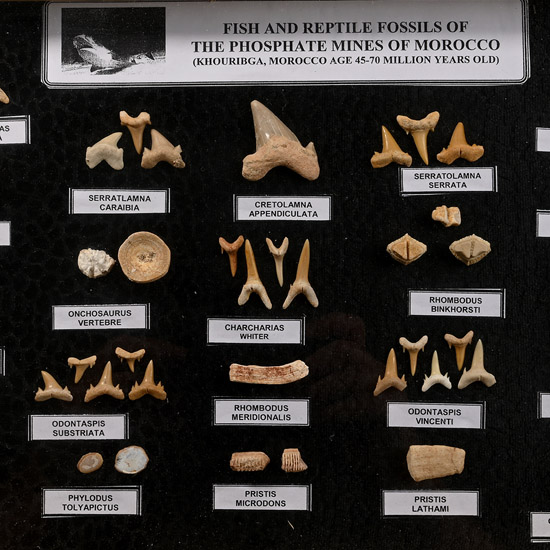
Fossil Shark's Teeth in Display Case
Cretaceous-Eocene Period, circa 70-45 million years B.P.Sold for (Inc. bp): £72
A glazed display case with mounted specimens of various teeth, vertebrae and ray palates, with identifying labels. 927 grams total, 34.6 x 24.6 cm
From a Cambridgeshire, UK, collection. -
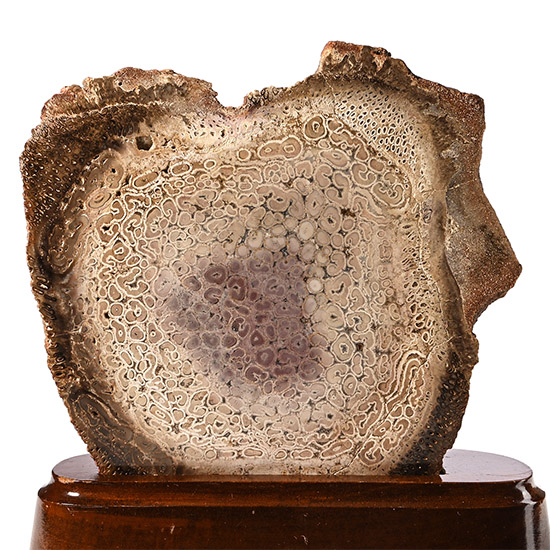
Cut and Polished Psaronius Brasiliensis Fossil Fern Slice on Stand
Paleozoic Era, Permian Age, circa 280,000-250,000 B.P.Sold for (Inc. bp): £72
Cut section from the trunk of an extinct tree fern showcasing the complex central vascular system. 1.07 kg total including stand, 14.8 cm
From Brazil. From the private collection of Kenneth Machin (1936-2020), Buckinghamshire, UK; his collection of antiquities and natural history was formed since 1948; thence by descent. Accompanied by a copy of an old typed information slip. -
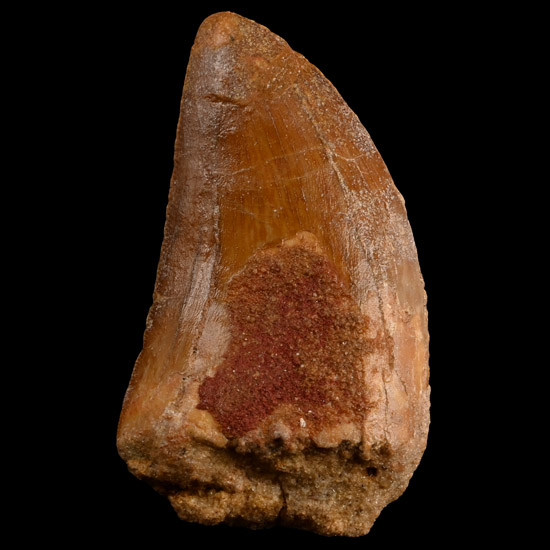
Carcharodontosaurus North African 'T-Rex' Fossil Dinosaur Tooth
Cretaceous Period, circa 110 million years B.P.Sold for (Inc. bp): £468
From Carcharodontosaurus saharicus, displaying some serrations. 15.4 grams, 47 mm
From a Cambridgeshire, UK, collection.
The Carcharodontosaurus saharicus was one of the largest predators (larger than its distant North American T-Rex cousin) of all time and is also related to Allosaurus and the South American Giganotosaurus.
