
Loading, please wait...
LOT 2128
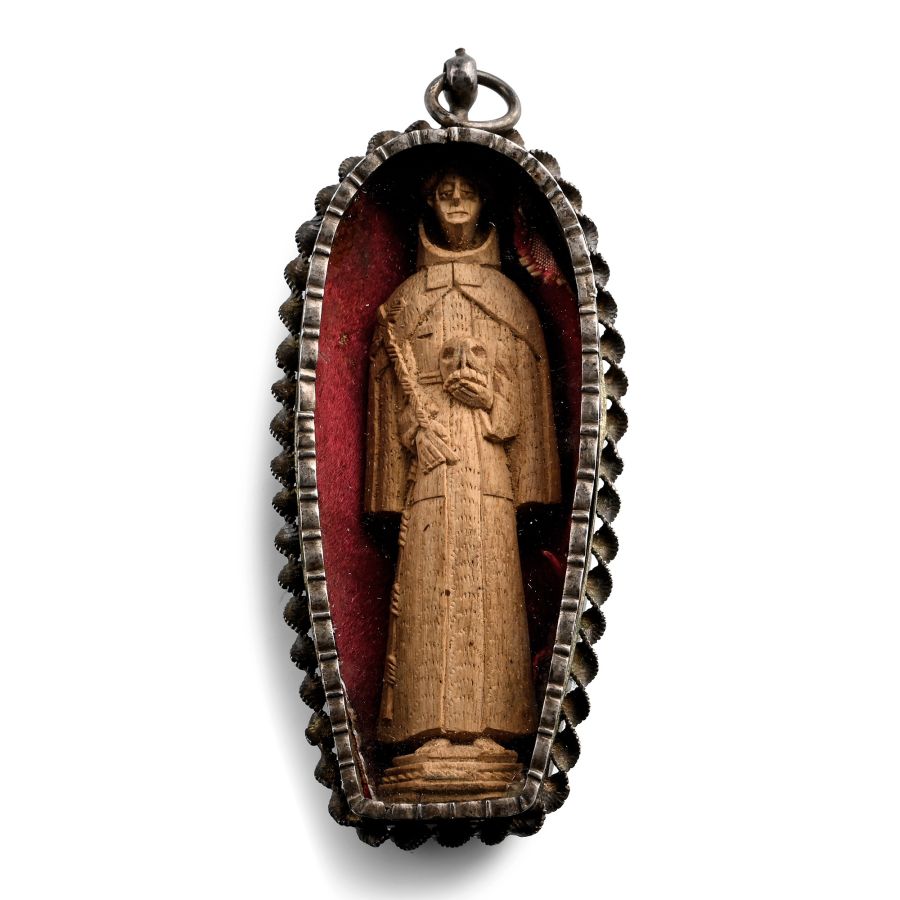
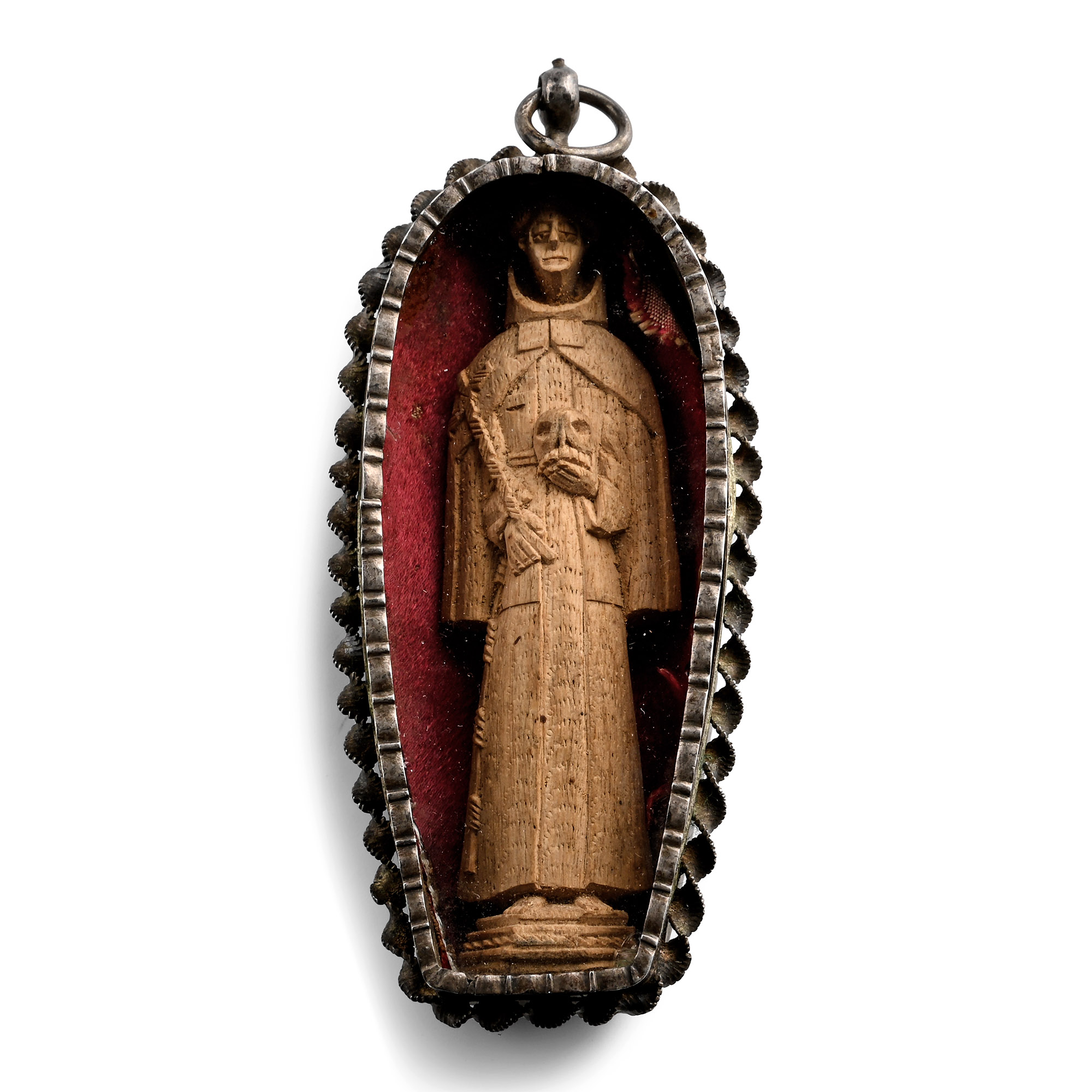
Wooden Sculpture of Saint Francis of Assisi in Silver Pendant
SPANISH COLONIES, 17TH-18TH CENTURY A.D.
4 3/8 in. (48.1 grams, 11 cm).
A carved wooden figure of St.Francis of Assisi holding a skull in left hand and cross in right hand, set on a red fabric inside a silver tongue-shaped case with applied twisted wire decoration to the outter rim; attachment loop with ring to the top.
ProvenancePrivate collection, Europe.
Acquired on the French art market.
TimeLine Auctions follows a vetting process to ensure the authenticity and legality of all items, reinforcing our commitment to integrity and responsible trading. Each antiquity, antique, and coin lot undergoes thorough examination by a vetting committee of at least ten external specialists, professional trade association members, scientists, and archaeologists: Our Vetting Process
AUCTIONS:
TimeLine is a leading auction house specialising in antiquities, ancient art, collectables, natural history, coins, medals, and books. Our auctions offer museums, collectors, historians, and enthusiasts the opportunity to acquire unique and historically significant pieces.
LOT 2128
Wooden Sculpture of Saint Francis of Assisi in Silver Pendant
Estimate £400 - 600€460 - 700 (for guidance only)$540 - 810 (for guidance only)
-
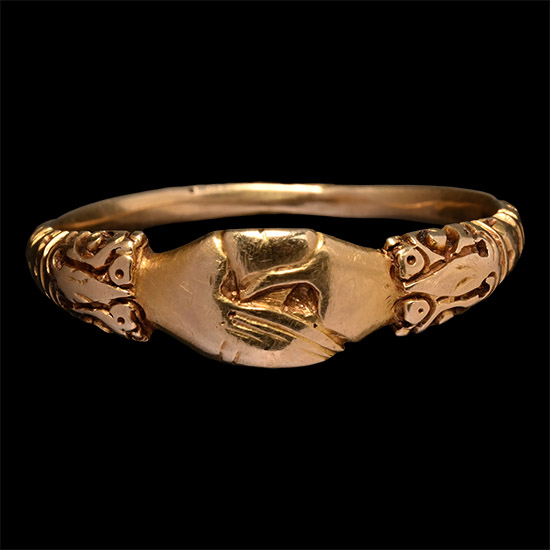
Post Medieval Gold Fede Ring
England, 16th-17th century A.D.Sold for (Inc. bp): £1,690
Slender shank and expanding shoulders formed as lace cuffs, the bezel a pair of clasped hands gripping a heart. 3.71 grams, 23.07 mm overall, 20.14 mm internal diameter (approximate size British T, USA 9 1/2, Europe 21.26, Japan 20)
Private collection, Europe. Acquired on the English art market.
The two clasping hands with elaborate cuffs clutch a heart. This ring features the ancient fede motif of two hands clasped together, however in their grasp is a heart. These symbols represented love and fidelity. The ring was likely a token of love symbolising everlasting devotion, or possibly a betrothal ring. The word Fede takes its name from the Italian word for faith or trust with the two clasped hands symbolising an attachment that usually led to marriage. The motif of the two clasped hands was already in use in ancient Rome, it was a symbol of pledging of vows, which derives from the Roman ‘dextarum iunctio’ (right hand joined). Fede rings remained popular throughout Europe until well into the 19th century with their peak of manufacture during the Middle Ages and the Renaissance. -
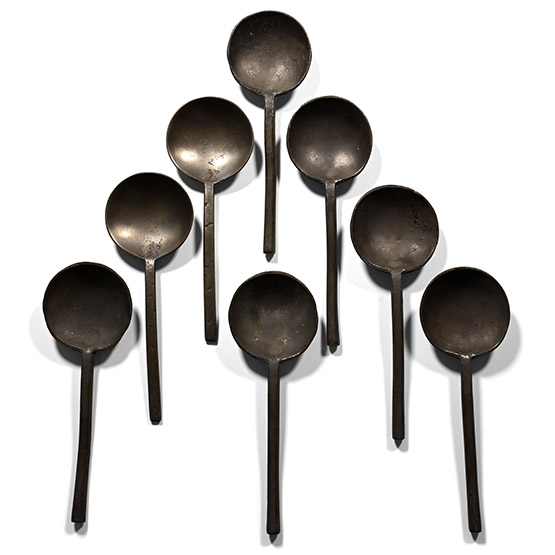
Pewter Spoon Collection
Circa 17th-18th century A.D.Sold for (Inc. bp): £46
Each with a shallow circular bowl and sturdy stem, six with a stamped X-motif within pelletted border to the bowl, and two with three stamped rosettes above letters(?). 839 grams total, 16.5 cm
Acquired in the Netherlands in the 1990s. Ex Cambridgeshire, UK, gentleman. -

Silver-Coloured Metal Pendant with Rock Crystal Calligraphic Gem
Late 20th century A.D.Sold for (Inc. bp): £234
Rectangular in plan with openwork ornament to the underside, suspension bale, inset facetted panel with calligraphic text to each face. 53.2 grams, 78 mm
Private collection, UK.
