
Loading, please wait...
LOT 2103
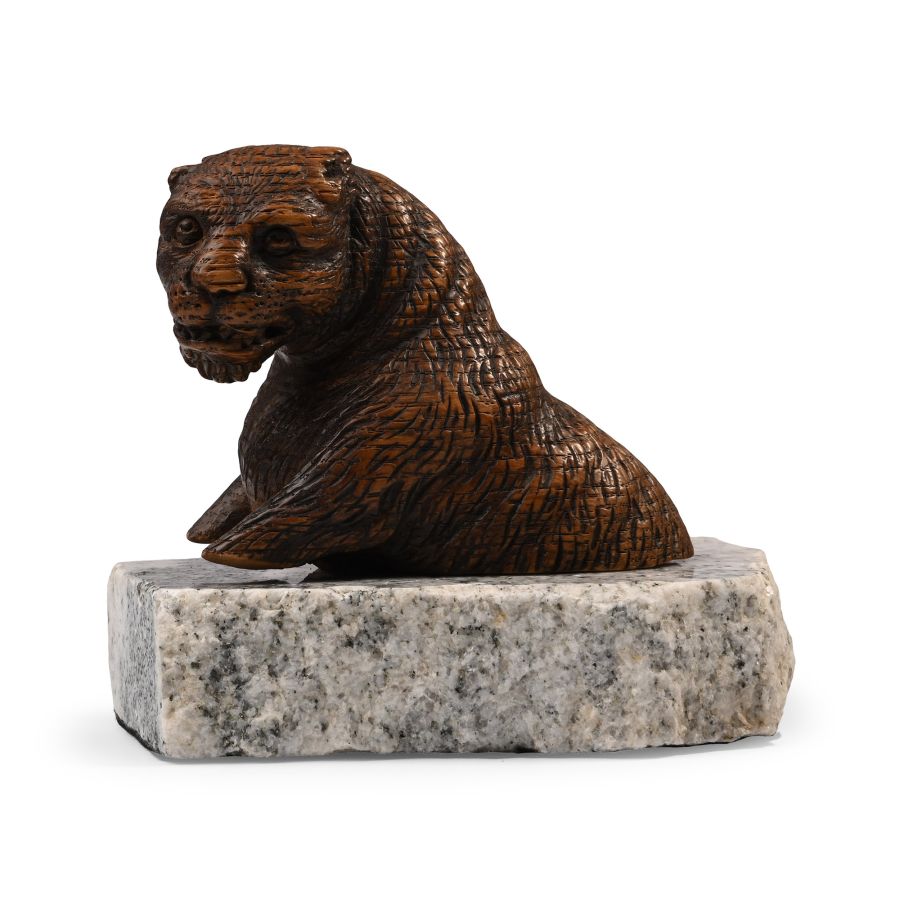
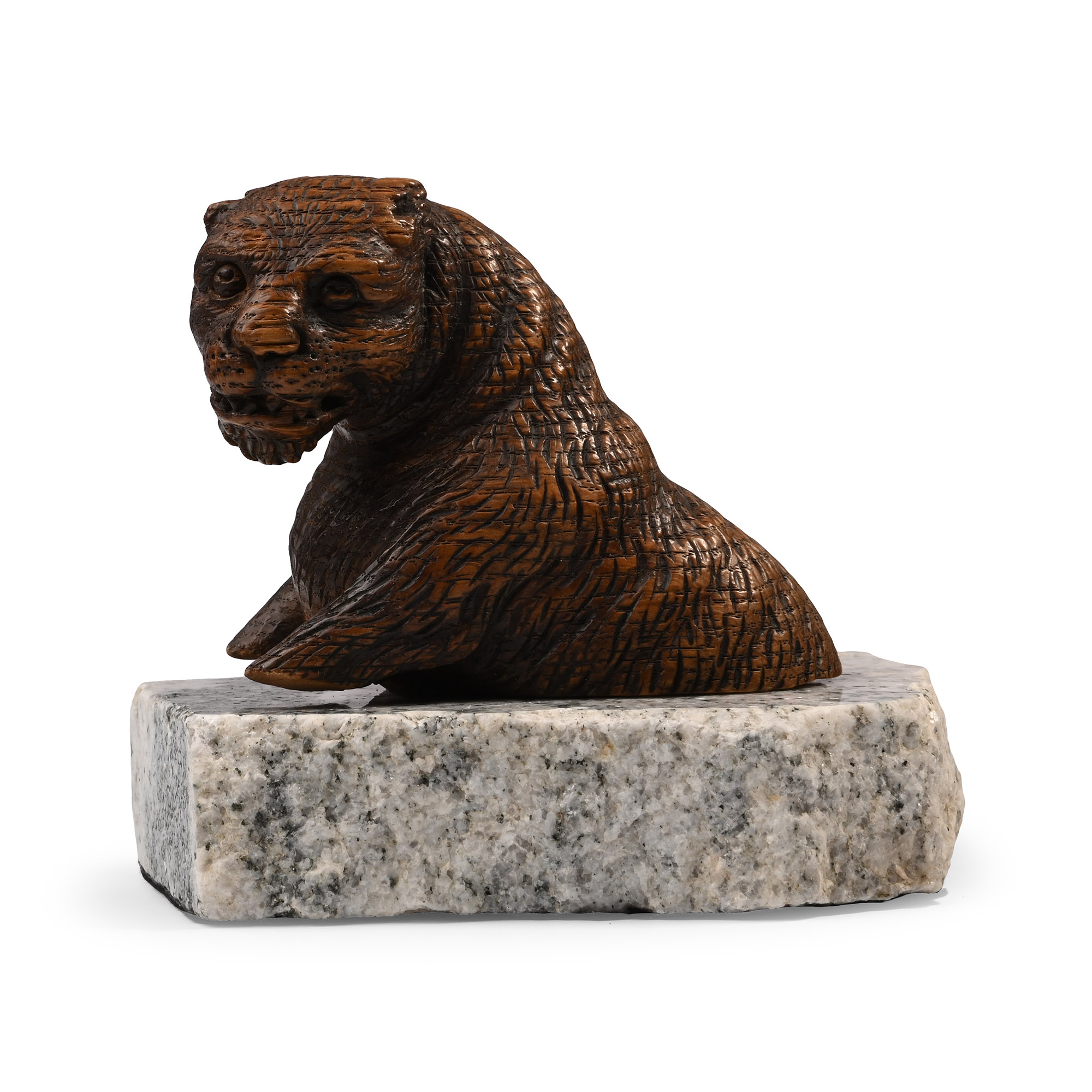
Wood Carving of a Lioness
18TH-19TH CENTURY A.D.
5 1/4 in. (920 grams total, 13.5 cm wide including stand).
The upper body of a lioness in a seated position with its head turned to the left, looking up with jaws slightly open and teeth exposed, detailed coat; mounted on an irregular granite base with felt lining to the bottom. [No Reserve]
ProvenanceAcquired on the UK art market, early 2000s.
This lot is accompanied by an illustrated lot declaration signed by the Head of the Antiquities Department, Dr Raffaele D'Amato.
TimeLine Auctions follows a vetting process to ensure the authenticity and legality of all items, reinforcing our commitment to integrity and responsible trading. Each antiquity, antique, and coin lot undergoes thorough examination by a vetting committee of at least ten external specialists, professional trade association members, scientists, and archaeologists: Our Vetting Process
AUCTIONS:
TimeLine is a leading auction house specialising in antiquities, ancient art, collectables, natural history, coins, medals, and books. Our auctions offer museums, collectors, historians, and enthusiasts the opportunity to acquire unique and historically significant pieces.
-
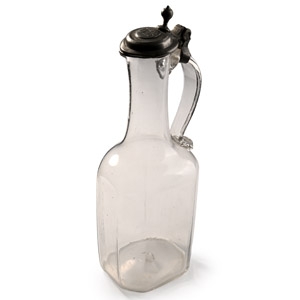
Glass Jug with Pewter Lid and Crowned Monogram
18th century A.D.Sold for (Inc. bp): £98
Octagonal-section glass ewer with strap handle and pouring lip to the rim; pewter hinged lid with thumb-knop, central raised tondo with impressed initials 'I[W]S', the central character partly obscured by later stamp of a rectangular shield with coronet above, lozengy field with escutcheon bearing crossed batons (or swords) and a crown above. 320 grams, 24 cm
From the private family collection of Ersula Barter-Hemmerich, the longest serving member of staff working at the United Nations, her private collection formed in the 1950s and 1960s; thence by descent to her grandson. This lot is accompanied by an illustrated lot declaration signed by the Head of the Antiquities Department, Dr Raffaele D'Amato. -
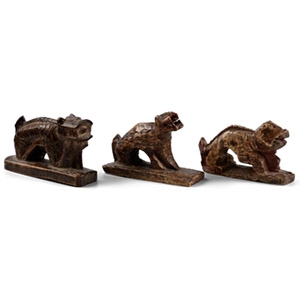
Post Medieval Carved Bone Lion Collection
20th century A.D.Sold for (Inc. bp): £39
Each standing with arched back on a rectangular base, head tilted and tongue protruding. 311 grams total, 9.7-10.2 cm
Acquired on the UK art market in the 1990s. From the Dr Ince collection, N.W. London, UK. This lot is accompanied by an illustrated lot declaration signed by the Head of the Antiquities Department, Dr Raffaele D'Amato. -
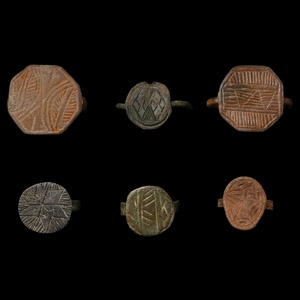
Post Medieval Bronze Ring Group
16th-18th century A.D.Sold for (Inc. bp): £65
Each a flat-section hoop and bezel with hatched detailing and reserved motif. 13 grams total, 18-21mm
Property of a Middlesex gentleman; acquired in the 1980s. Property of a Cheshire, UK, gentleman. This lot is accompanied by an illustrated lot declaration signed by the Head of the Antiquities Department, Dr Raffaele D'Amato.
