
Loading, please wait...
LOT 1085
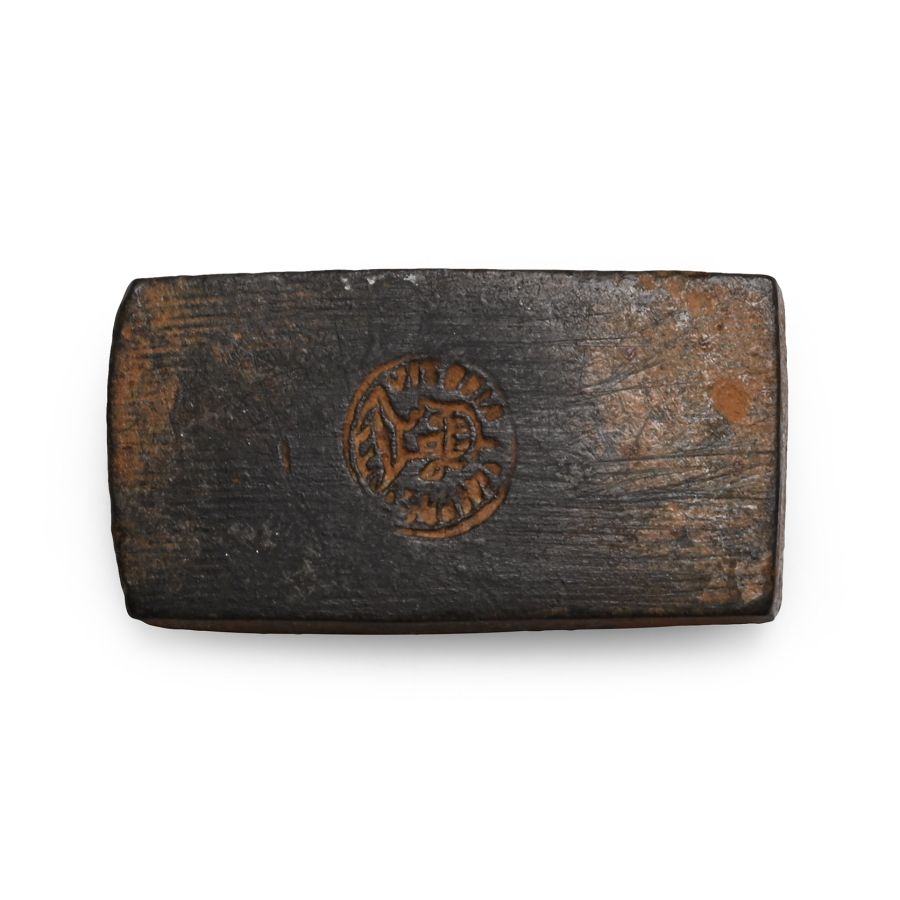
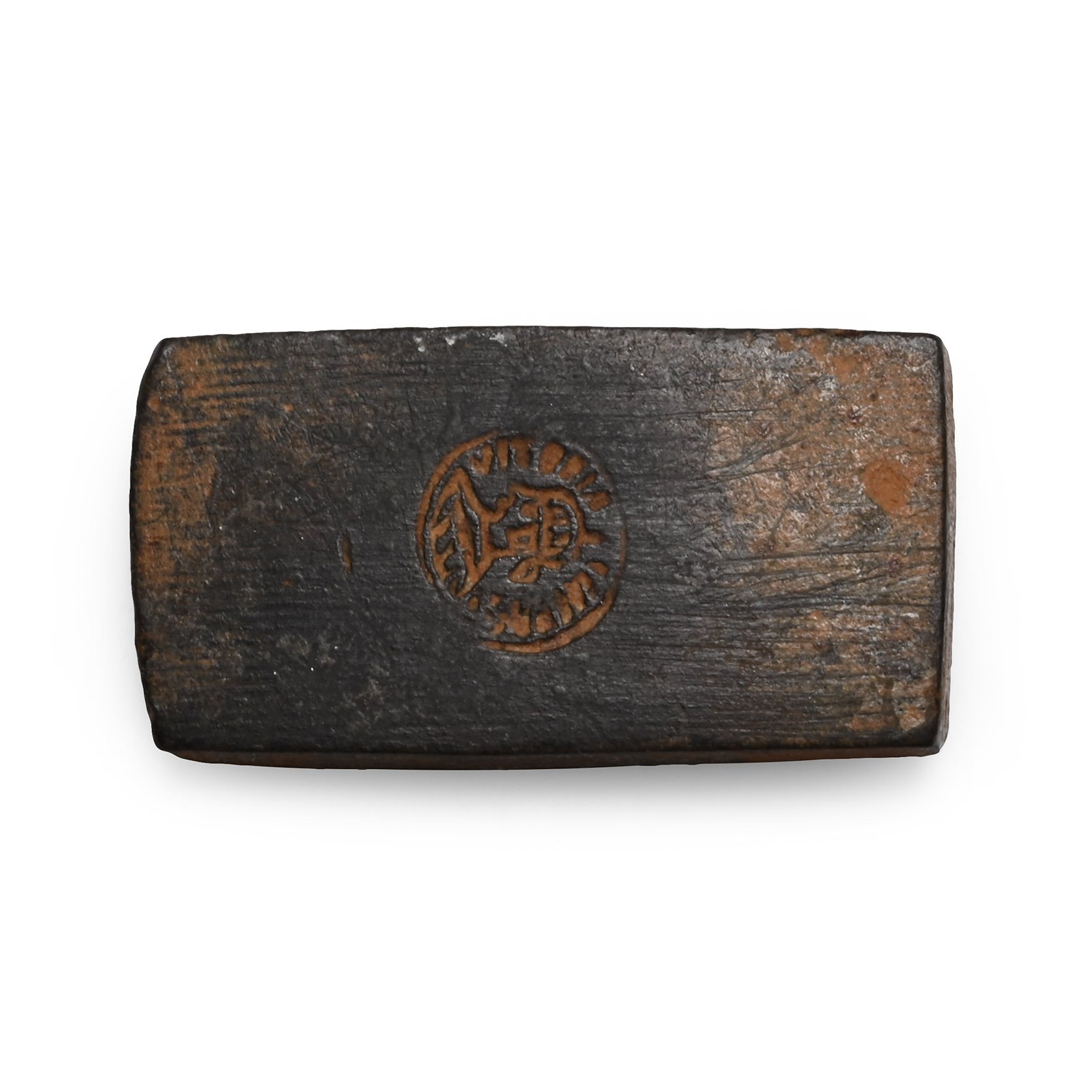
Western Silicia Bronze Jeweller's Stamp with Bust
ARMENIA, 12TH-13TH CENTURY A.D.
1 1/8 in. (10.5 grams, 29 mm).
Rectangular panel, hollow to the rverse with attachment lug, incised die with profile crowned bust and legend. [No Reserve]
ProvenanceFrom the collection of a gentleman, acquired on the London art market in the 1990s.
CONDITIONTimeLine Auctions follows a vetting process to ensure the authenticity and legality of all items, reinforcing our commitment to integrity and responsible trading. Each antiquity, antique, and coin lot undergoes thorough examination by a vetting committee of at least ten external specialists, professional trade association members, scientists, and archaeologists: Our Vetting Process
AUCTIONS:
TimeLine is a leading auction house specialising in antiquities, ancient art, collectables, natural history, coins, medals, and books. Our auctions offer museums, collectors, historians, and enthusiasts the opportunity to acquire unique and historically significant pieces.
-
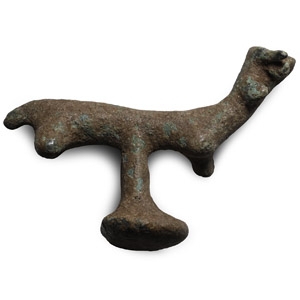
Luristan Bronze Animal
13th-7th century B.C.Sold for (Inc. bp): £7
Slender beast with multiple legs, head raised, mounted on a conical disc. 34 grams, 56 mm wide
Acquired 1980-2015. Ex Abelita family collection. -
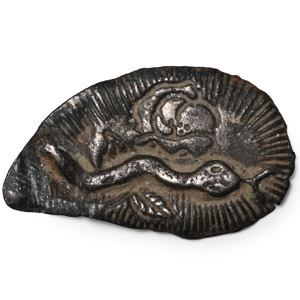
Western Asiatic Silver Applique with Snake
16th-17th century A.D.Sold for (Inc. bp): £39
Teardrop-shaped in plan with repoussé detailing: hatched face, rosette and serpent. 1.6 grams, 36 mm
From the collection of a gentleman, acquired on the London art market in the 1990s. -
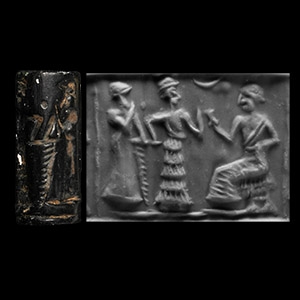
Babylonian Hardstone Cylinder Seal with Worship Scene
Circa 2nd millennium B.C.Estimate: £300 - 400 (+bp*)
Opening Bid: £150
Featuring a finely carved single register with a male figure seated on a throne, probably a deified king, resting one of his arms on the throne and the other outstretched in the act of giving or receiving, wearing a flounced robe of descending layers in Babylonian style, a crescent moon above the king; before him a worshipper and a supplicant goddess. 1.8 grams, 20 mm
Ex property of the late Mr S.M., London, UK, 1970-1990s, thence by descent. Accompanied by a previous typed cataloguing card.
