
Loading, please wait...
LOT 0854
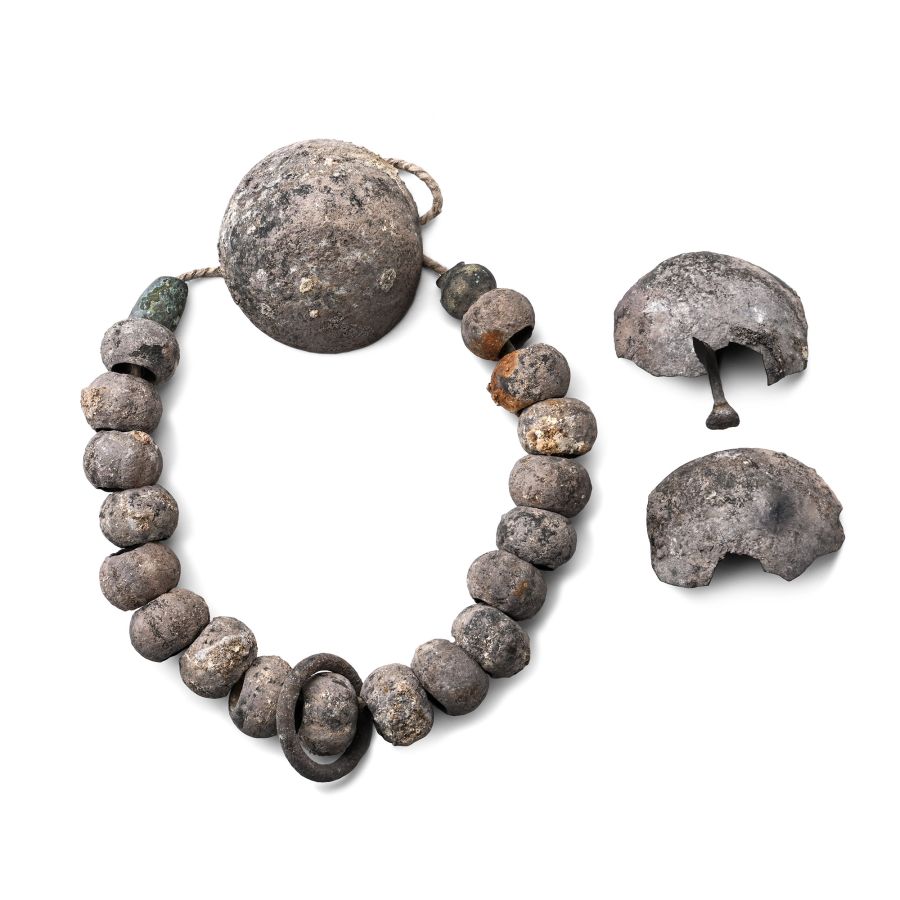
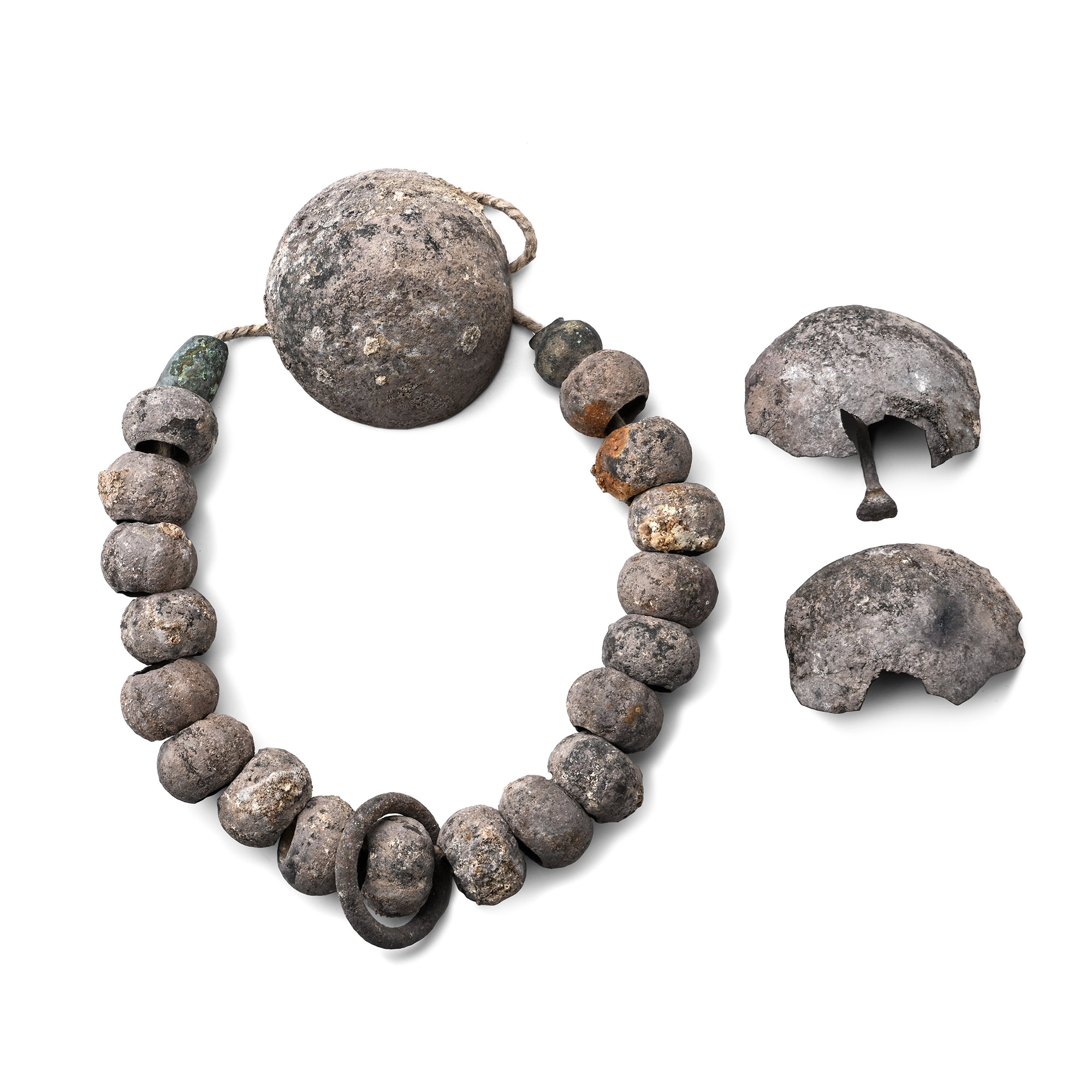
Western Greek Silver Bead Necklace
5TH-3RD CENTURY B.C.
1 3/4 - 12 1/4 in. (121 grams total, 4.5-31 cm).
A restrung necklace composed of annular beads with one tubular and one vase-shaped, a round-section ring; with a hollow conical pendant with an attachment loop to the underside, the same pendant broken included separately. [2]
ProvenancePrivate collection, Switzerland; thence by descent.
LiteratureSee The Metropolitan Museum of Art, object number 74.51.3595 and 74.51.3591 for the bead type, 1995.163.3, for applique.
CONDITIONTimeLine Auctions follows a vetting process to ensure the authenticity and legality of all items, reinforcing our commitment to integrity and responsible trading. Each antiquity, antique, and coin lot undergoes thorough examination by a vetting committee of at least ten external specialists, professional trade association members, scientists, and archaeologists: Our Vetting Process
AUCTIONS:
TimeLine is a leading auction house specialising in antiquities, ancient art, collectables, natural history, coins, medals, and books. Our auctions offer museums, collectors, historians, and enthusiasts the opportunity to acquire unique and historically significant pieces.
LOT 0854
Western Greek Silver Bead Necklace
Estimate £500 - 700€580 - 810 (for guidance only)$680 - 950 (for guidance only)
Opening Bid
£275 (EUR 319; USD 371) ‡+BP*
-
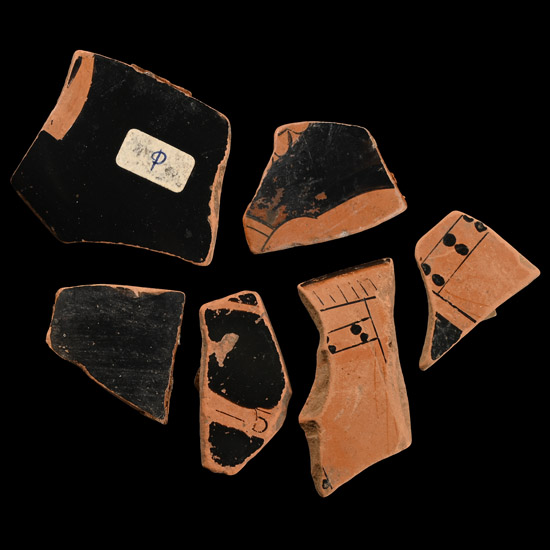
Greek Red-Figure Fragment Collection
5th century B.C.Estimate: £50 - 70 (+bp*)
Opening Bid: £5
Comprising irregular mainly curved sidewall fragments with reserved and applied geometric ornament on a black field; each with old collector's label. 23 grams total, 25-41 mm
Iris Cornelia Love (1933-2020) collection, New York, formed primarily in the 1950s-1970s; on long-term loan to Dietrich von Bothmer, New York, late 1960s/early 1970s to late 1990s. -
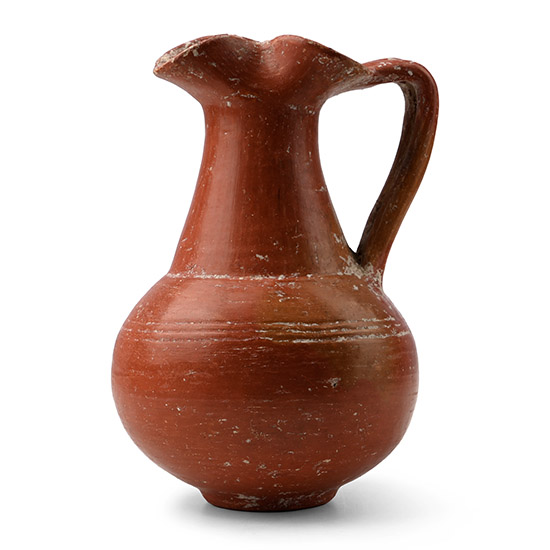
Graeco-Phoenician Glazed Terracotta Oinochoe
7th century B.C.Estimate: £600 - 800 (‡+bp*)
Opening Bid: £325
With a folded trefoil mouth, an applied ribbed handle and basal ring, and incised concentric rings above the equator. 491 grams, 17 cm
Private collection, acquired in the late 1980s-early 1990s; thence by descent.
Throughout the 7th century BC, the Phoenician ports received goods from the East, from Cyprus, Eastern Greece, Pithecussa, and even Etruria, likely in exchange for grain, oil, and wine. Among the various archaeological finds unearthed in these ports are Attic, Corinthian, and Rhodian pottery, some of which was manufactured by the Greek colonies of the West, such as Ischia-Pithecussa. -
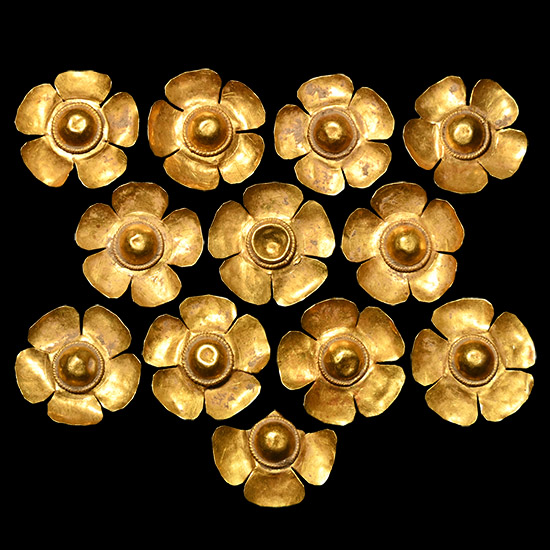
Greek Gold Rosette Mount Set
Circa 500-400 B.C.Estimate: £800 - 1,000 (‡+bp*)
Opening Bid: £400
Each a cinquefoil in sheet gold with central boss and beaded wire collar, two loops to the reverse; one rosette lacking two petals; in a jewellery presentation case. 4.97 grams total, 12 mm each
Acquired from Derek Content, 6 June 1975. Private collection of Kal Noselson, New York, acquired between 1976 and the late 1990s; thence by descent. Accompanied by an original invoice from Derek Content, 6 June 1975.
