
Loading, please wait...

LOT 1461
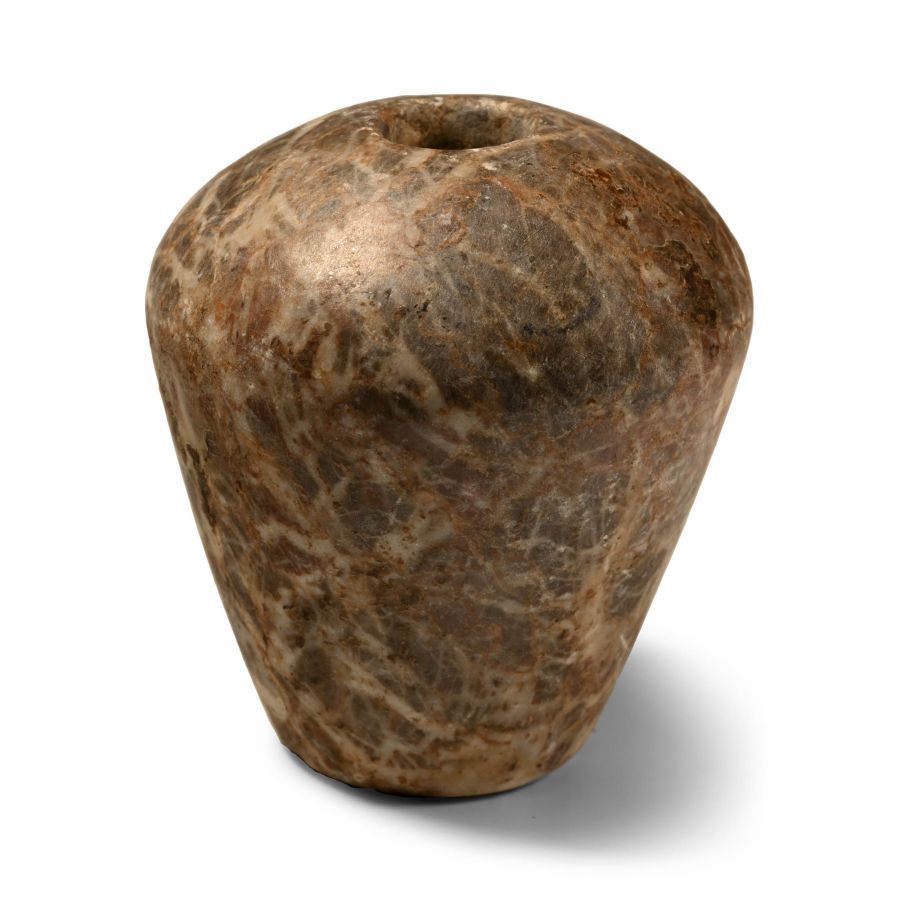
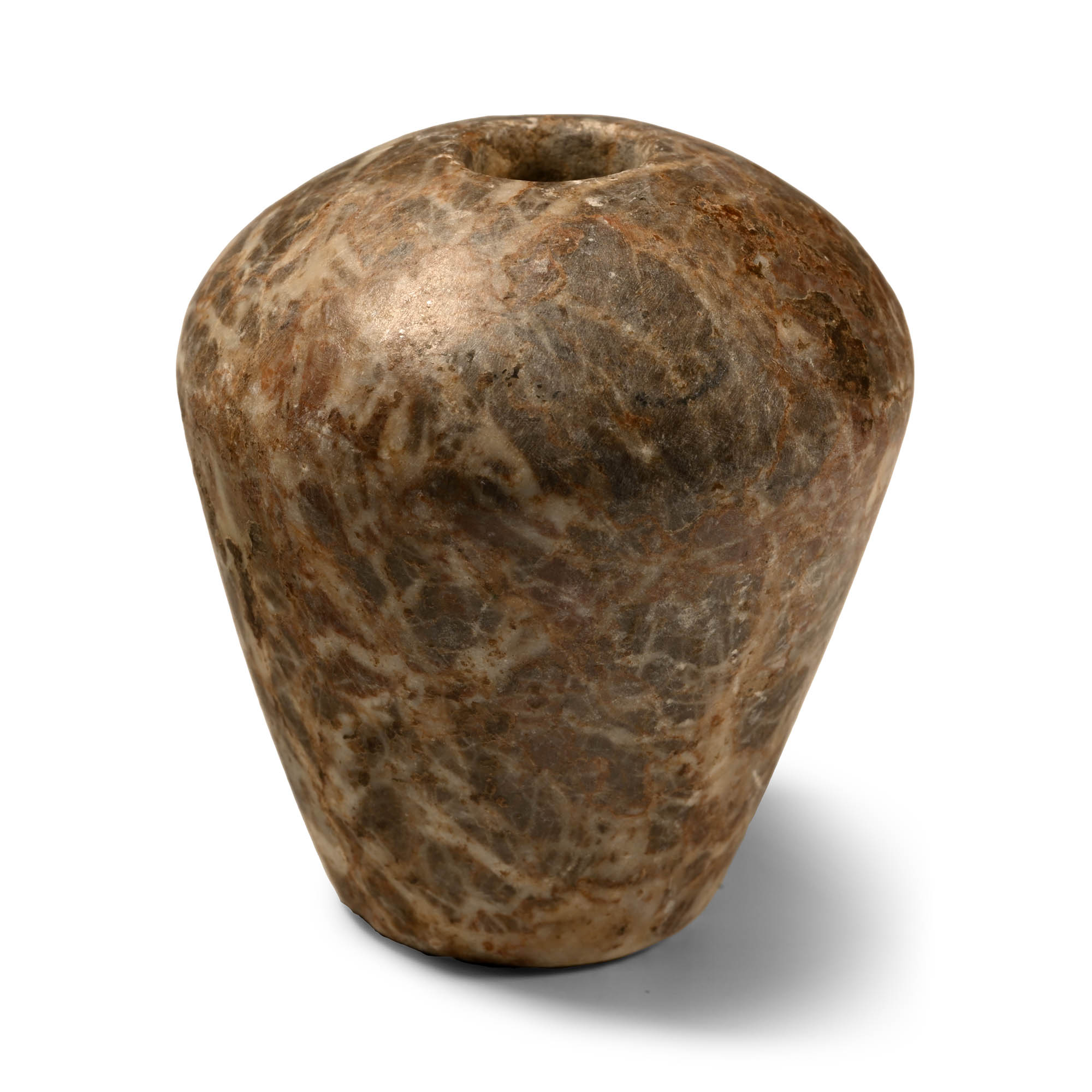
Western Asiatic White Flecked Grey Stone Mace Head
3RD-2ND MILLENNIUM B.C.
2 3/4 in. (351 grams, 70 mm).
Piriform in profile with vertical socket expanding towards the base.
ProvenanceEx London gentleman's collection, 1990s.
CONDITIONTimeLine Auctions follows a vetting process to ensure the authenticity and legality of all items, reinforcing our commitment to integrity and responsible trading. Each antiquity, antique, and coin lot undergoes thorough examination by a vetting committee of at least ten external specialists, professional trade association members, scientists, and archaeologists: Our Vetting Process
AUCTIONS:
TimeLine is a leading auction house specialising in antiquities, ancient art, collectables, natural history, coins, medals, and books. Our auctions offer museums, collectors, historians, and enthusiasts the opportunity to acquire unique and historically significant pieces.
-
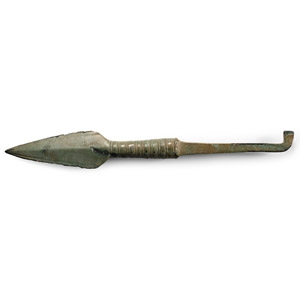
Luristan Decorated Bronze Spearhead
13th-6th century B.C.Estimate: £200 - 300 (+bp*)
Opening Bid: £80
With broad leaf-shaped blade and tapering square-section tang, ribbed neck. 147 grams, 21.5 cm
From the private collection of Mr K.A., acquired in the 1990s-early 2000s. -
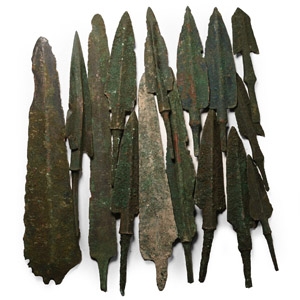
Luristan Bronze Arrows and Blades Group
13th-7th century B.C.Sold for (Inc. bp): £221
Comprising mainly narrow two-edged blades, barbed-and-tanged arrowheads and other types. 503 grams total, 9-20.7 cm
Ex London, UK, collection, 1990s. -
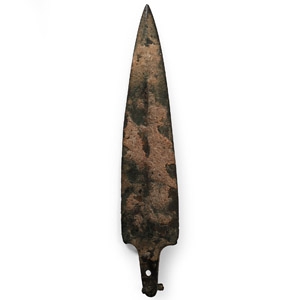
Luristan Bronze Rivetted Dagger
13th-7th century B.C.Sold for (Inc. bp): £46
Leaf-shaped blade with slight midrib, slightly recurved shoulders, stub tang pierced to accept attachment rivets, two in situ. 68 grams, 16.6 cm
Acquired in Oxford, UK. From the private collection of Kenneth Machin (1936-2020), Buckinghamshire, UK; with collection no.BA20; his collection of antiquities and natural history was formed since 1948; thence by descent.
