
Loading, please wait...
LOT 1423
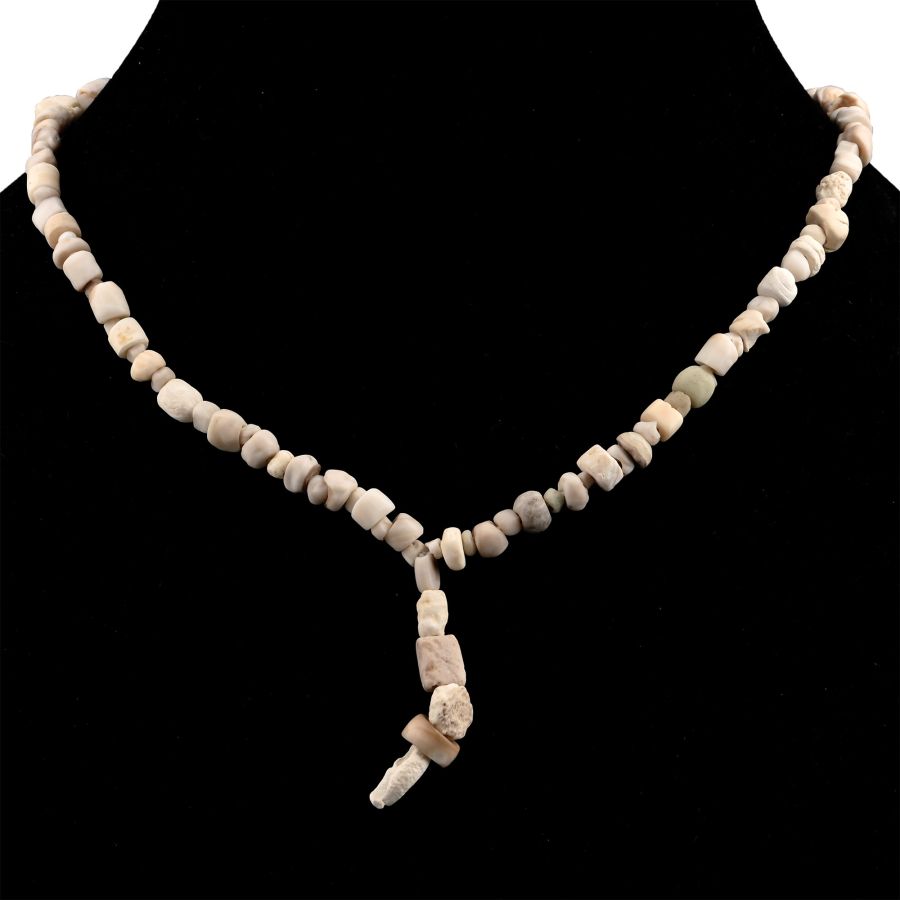
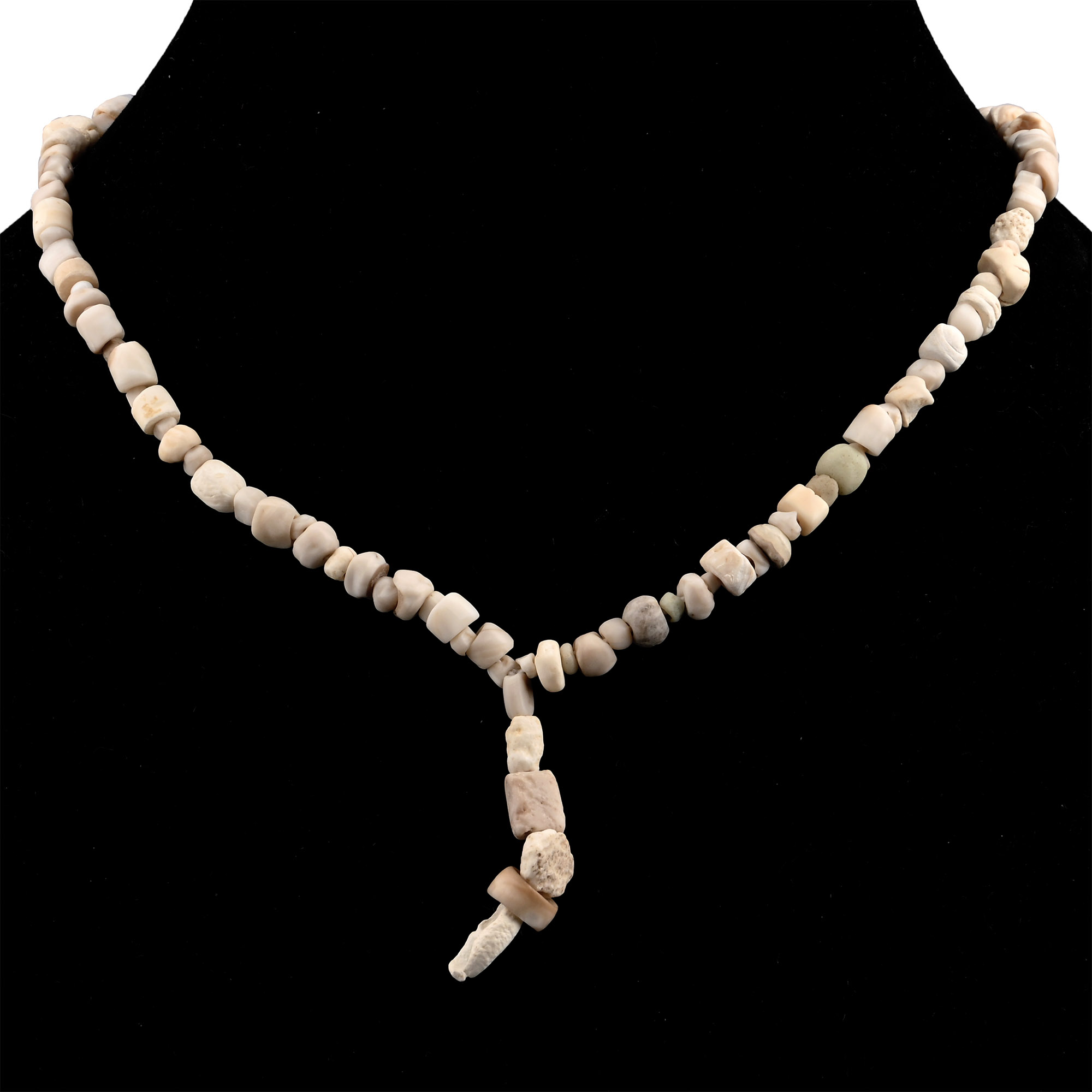
Western Asiatic White and Beige Stone Bead Necklace String
1ST MILLENNIUM B.C. AND LATER
12 3/8 in. (16.56 grams, 31.5 cm).
A mixed group of beads restrung to a Y-shape. [No Reserve]
ProvenanceFrom London, UK, gallery collection, 1990s.
CONDITIONTimeLine Auctions follows a vetting process to ensure the authenticity and legality of all items, reinforcing our commitment to integrity and responsible trading. Each antiquity, antique, and coin lot undergoes thorough examination by a vetting committee of at least ten external specialists, professional trade association members, scientists, and archaeologists: Our Vetting Process
AUCTIONS:
TimeLine is a leading auction house specialising in antiquities, ancient art, collectables, natural history, coins, medals, and books. Our auctions offer museums, collectors, historians, and enthusiasts the opportunity to acquire unique and historically significant pieces.
LOT 1423
Western Asiatic White and Beige Stone Bead Necklace String
Sold for (Inc. bp): £46
-
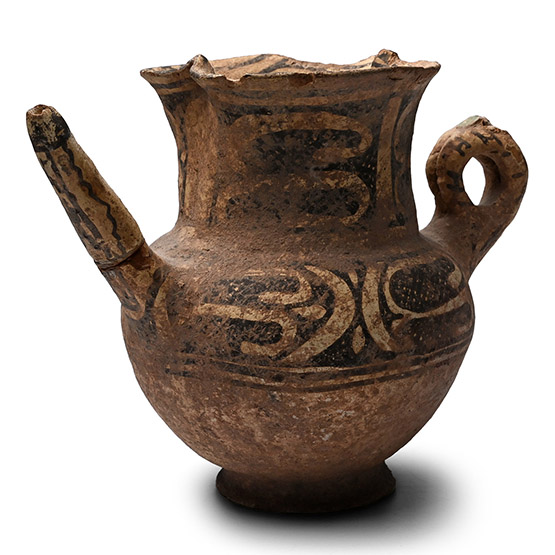
Western Asiatic Terracotta Spouted Vessel
8th-9th century A.D.Estimate: £300 - 400 (+bp*)
Opening Bid: £150
With bulbous body, looped handle and tapering spout, broad columnar neck with crimped detailing, bands of reserved tendrils on a hatched field. 523 grams, 18.5 cm wide
UK collection, 1990s. Acquired on the UK art market, before 2000. Private collection, Mr M.V., a London-based businessman. -
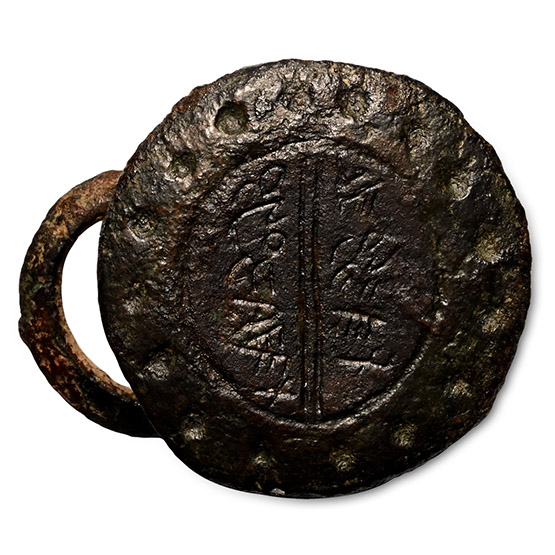
Western Asiatic Aramaic Pendant Seal Matrix
Mid 1st millennium A.D.Estimate: £1,600 - 2,000 (+bp*)
Opening Bid: £850
Discoid in plan with lug to upper face and suspension loop; underside with incuse pellets to the rim surrounding a tondo with two lines of incised text. 10.77 grams, 24 mm
From the collection of a gentleman, acquired on the London art market in the 1990s. This lot has been checked against the Interpol Database of stolen works of art and is accompanied by a search certificate number no.12717-233043. -
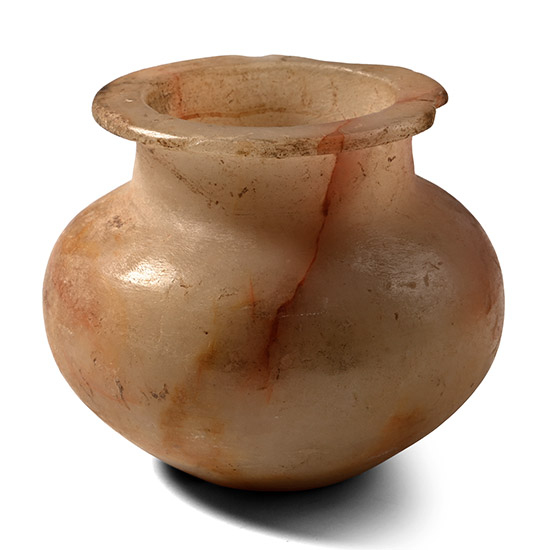
Western Asiatic Banded Alabaster Pot
2nd-1st millennium B.C.Sold for (Inc. bp): £286
With squat body and rounded shoulder, low neck and everted rim. 155 grams, 69 mm
Private collection, UK.
