Loading, please wait...

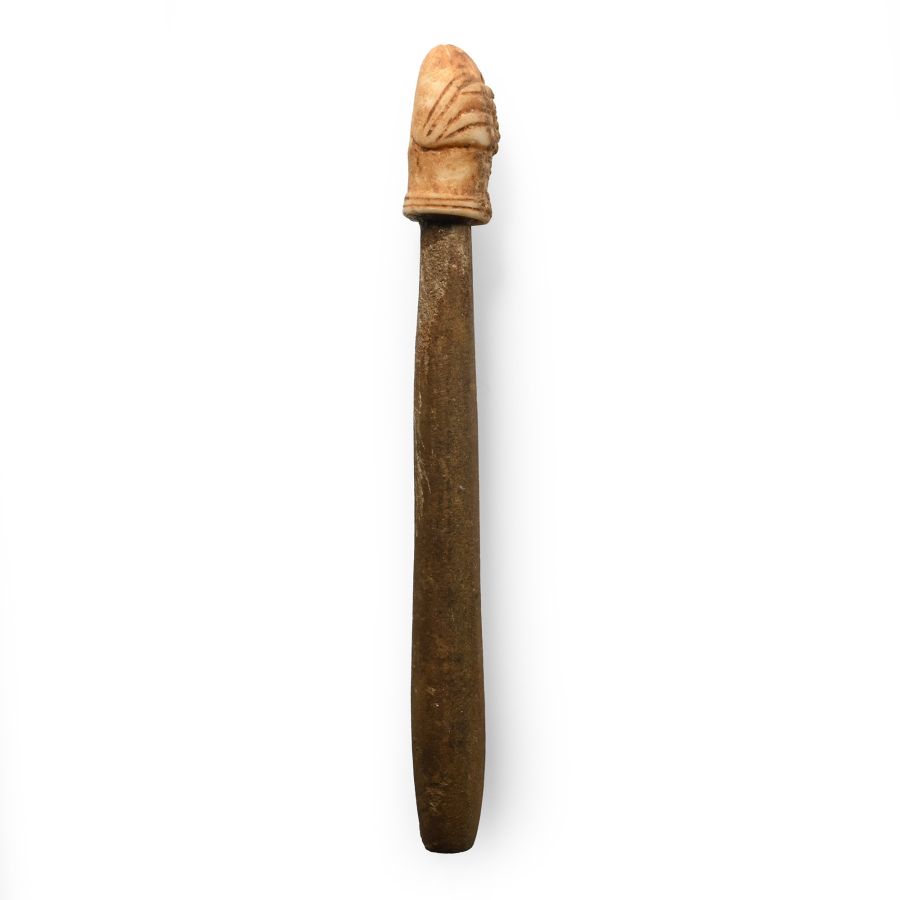
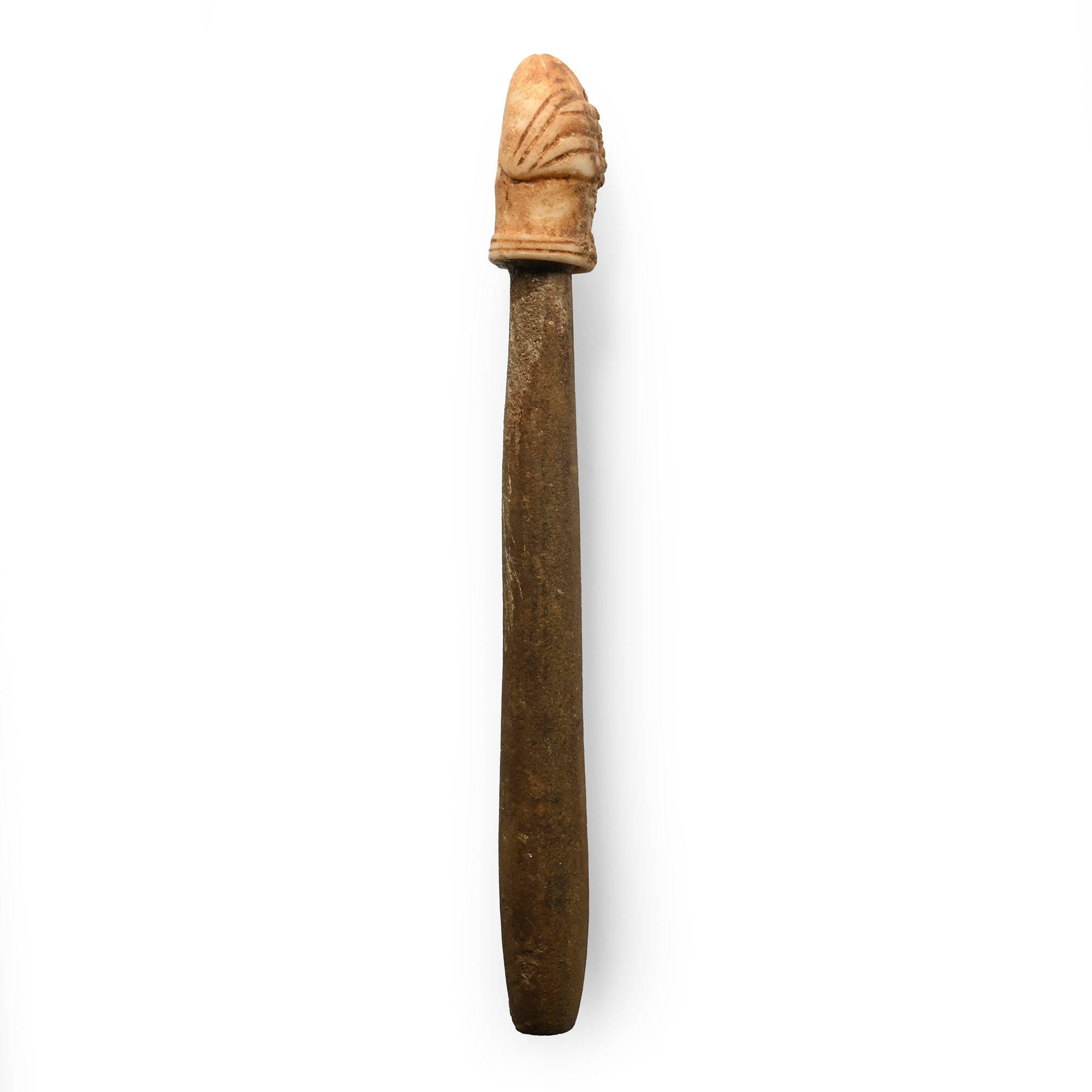
Western Asiatic Whetstone with Lion-Headed Terminal Western Asiatic Whetstone with Lion-Headed Terminal Western Asiatic Whetstone with Lion-Headed Terminal
Use mousewheel to zoom in and out, click to enlarge
Details

LOT 1494

Western Asiatic Whetstone with Lion-Headed Terminal

13TH-7TH CENTURY B.C.

5 1/4 in. (38 grams, 13.4 cm).

Columnar in form with slight swelling to the lower end, carved lion-head finial with ribbed mouth.

Provenance

Acquired before 1983.
Ex London gallery, 1990s.
This lot has been cleared against the Art Loss Register database, and is accompanied by an illustrated lot declaration signed by the Head of the Antiquities Department, Dr Raffaele D'Amato.

CONDITION
VETTING:

TimeLine Auctions follows a vetting process to ensure the authenticity and legality of all items, reinforcing our commitment to integrity and responsible trading. Each antiquity, antique, and coin lot undergoes thorough examination by a vetting committee of at least ten external specialists, professional trade association members, scientists, and archaeologists: Our Vetting Process


AUCTIONS:

TimeLine is a leading auction house specialising in antiquities, ancient art, collectables, natural history, coins, medals, and books. Our auctions offer museums, collectors, historians, and enthusiasts the opportunity to acquire unique and historically significant pieces.

LOT 1494

Western Asiatic Whetstone with Lion-Headed Terminal

Sold for (Inc. bp): £260

Print page

RELATED LOTS
  • Kushan Blue-Glazed Decorated Bowl
    Kushan Blue-Glazed Decorated Bowl
    Late 12th–early 13th century A.D.

    Sold for (Inc. bp): £468

    Squat turquoise-glazed dish with three bun feet, carinated profile, flared rim, painted band of arabesque panels to the shoulder and scrolled tendril motif to the centre. 250 grams, 12.5 cm


    Ex London, UK, gallery, 1971-early 2000s. London, UK, collection. This lot has been cleared against the Art Loss Register database, and is accompanied by an illustrated lot declaration signed by the Head of the Antiquities Department, Dr Raffaele D'Amato.

    Lot Details

  • Large South Arabian Alabaster Standing Figure of a Goddess
    Large South Arabian Alabaster Standing Figure of a Goddess
    1st century B.C.-1st century A.D.

    Sold for (Inc. bp): £54,600

    Modelled in the round figure of a standing deity with textural detailing to the hair, naïve facial features with exaggerated eyes to accept inserts (absent) and slit mouth, gripping hands held out at the chest and one pierced to accept an attribute, knee-length garment, collar or necklace below the throat; mounted on a custom-made stand. 15.55 kg total, 47.5 cm high including stand


    Ex Hans G. collection, Belgium, 1967-1983. Belgian art market, 1983. Private German collection of Mrs H., 1985-1993. with Pierre Bergé & Associés, Paris, 26 November 2013, no.198 (€40,000-45,000). Accompanied by an academic report by Dr Raffaele D’Amato. Accompanied by a copy of the relevant Pierre Bergé & Associés printed catalogue pages (double page spread). Accompanied by a copy of an Art Loss Register certificate no.S00119290. This lot has been checked against the Interpol Database of stolen works of art and is accompanied by search certificate number no.12468-230327. This lot has been cleared against the Art Loss Register database, and is accompanied by an illustrated lot declaration signed by the Head of the Antiquities Department, Dr Raffaele D'Amato.

    Similar free-standing statues have been found in the royal cemetery in Aswan (probably Khazinet ed-Darb in the Wādī Markha), and at Hayd ibn Aqil (Timna), in Yemen. They are mainly statuettes from the Yemeni kingdoms of Awsan and Qataban, which developed in the Beihan Valley. They represent rulers or important dignitaries of both reigns. The statue is remarkable for the detailed treatment of the facial features, hair and dress: the woman is portrayed wearing a long plain dress, similar to the modern futah of Yemenite people. The eyes were originally inlaid with shell set with polished obsidian pupils, giving a life-like effect to the static statuettes.

    Lot Details

  • Achaemenid Bronze Phiale Mesomphalos
    Achaemenid Bronze Phiale Mesomphalos
    6th-4th century B.C.

    Sold for (Inc. bp): £338

    With flanged rim, central mesomphalos boss surrounded by radiating lotus petals. 167 grams, 16.5 cm


    Acquired 1980-2015. Ex Abelita family collection. This lot has been cleared against the Art Loss Register database, and is accompanied by an illustrated lot declaration signed by the Head of the Antiquities Department, Dr Raffaele D'Amato.

    Phiale mesomphalos (literally: bowl with central boss) were the most popular form of vessel and were produced in a number of materials, including clay, bronze, silver and gold. They are a distinctive type of Achaemenid tableware, made by hammering or raising sheet metal, with decoration added in repoussé. They were used in banquets held by the nobility and for pouring libations at religious festivals. Phiales of this kind were a common gift from the Achaemenid king to the nobility which helped cement alliances among the different tribes of the Empire. The central boss to the underside allowed the user to secure their fingers and ensure a solid grip whilst drinking or pouring.

    Lot Details

Stay up-to-date with the latest from TimeLine Auctions by joining our mailing list