
Loading, please wait...


LOT 1027
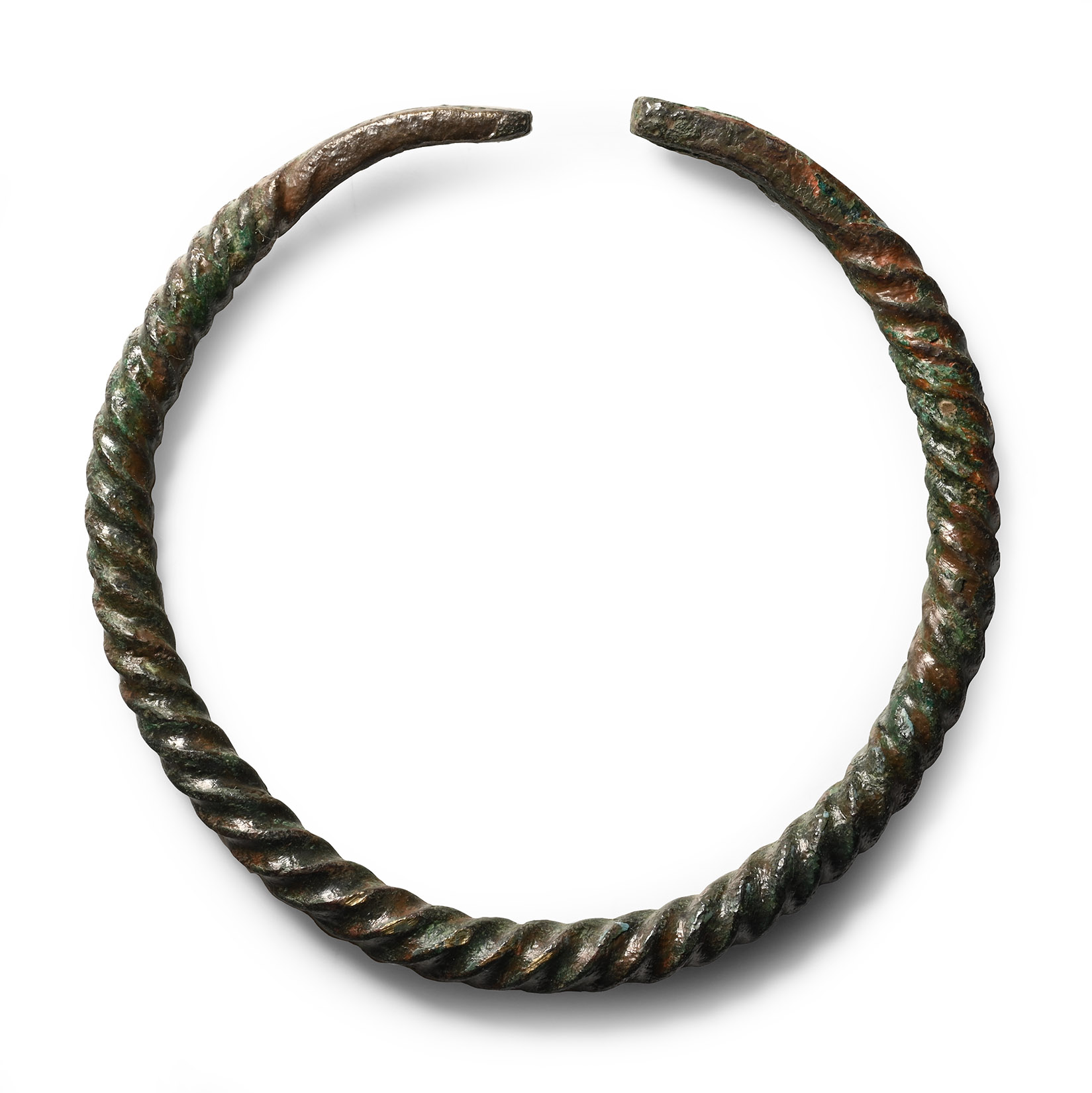
Western Asiatic Twisted Bronze Bracelet
1ST MILLENNIUM B.C.
2 3/8 in. (21.8 grams, 60 mm).
Comprising a round-section twisted shank and tapering flat-section finials. [No Reserve]
ProvenanceUK private collection before 2000.
Acquired on the UK art market.
Property of a London gentleman.
TimeLine Auctions follows a vetting process to ensure the authenticity and legality of all items, reinforcing our commitment to integrity and responsible trading. Each antiquity, antique, and coin lot undergoes thorough examination by a vetting committee of at least ten external specialists, professional trade association members, scientists, and archaeologists: Our Vetting Process
AUCTIONS:
TimeLine is a leading auction house specialising in antiquities, ancient art, collectables, natural history, coins, medals, and books. Our auctions offer museums, collectors, historians, and enthusiasts the opportunity to acquire unique and historically significant pieces.
-
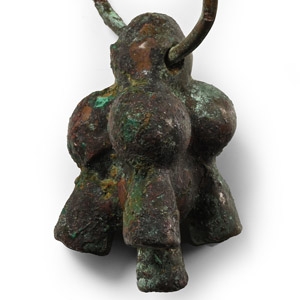
Luristan Bronze Pendant
9th-7th century B.C.Sold for (Inc. bp): £7
Comprising a cluster of four spheres with flared legs below, pierced to accept a bronze suspension loop. 45.5 grams, 58 mm
UK private collection before 2000. Acquired on the UK art market. Property of a London gentleman. -
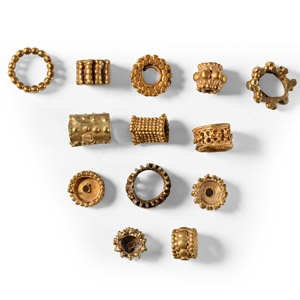
Western Asiatic Granulated Gold Bead Group
2nd-1st millennium B.C.Sold for (Inc. bp): £538
Mainly annular and tubular types with regularly placed granules and other detailing. 8.27 grams total, 6-8 mm
Ex property of a late Japanese collector, 1970s-2000s. -
.jpg)
Sumerian Stone Bull Amulet
3rd millennium B.C. or laterSold for (Inc. bp): £624
Carved in the half-round, a bull with the legs folded beneath the body and head turned backwards. 21.56 grams, 49 mm
Acquired in the 1980s. From the collection of a London antiquarian.
