
Loading, please wait...
LOT 0272
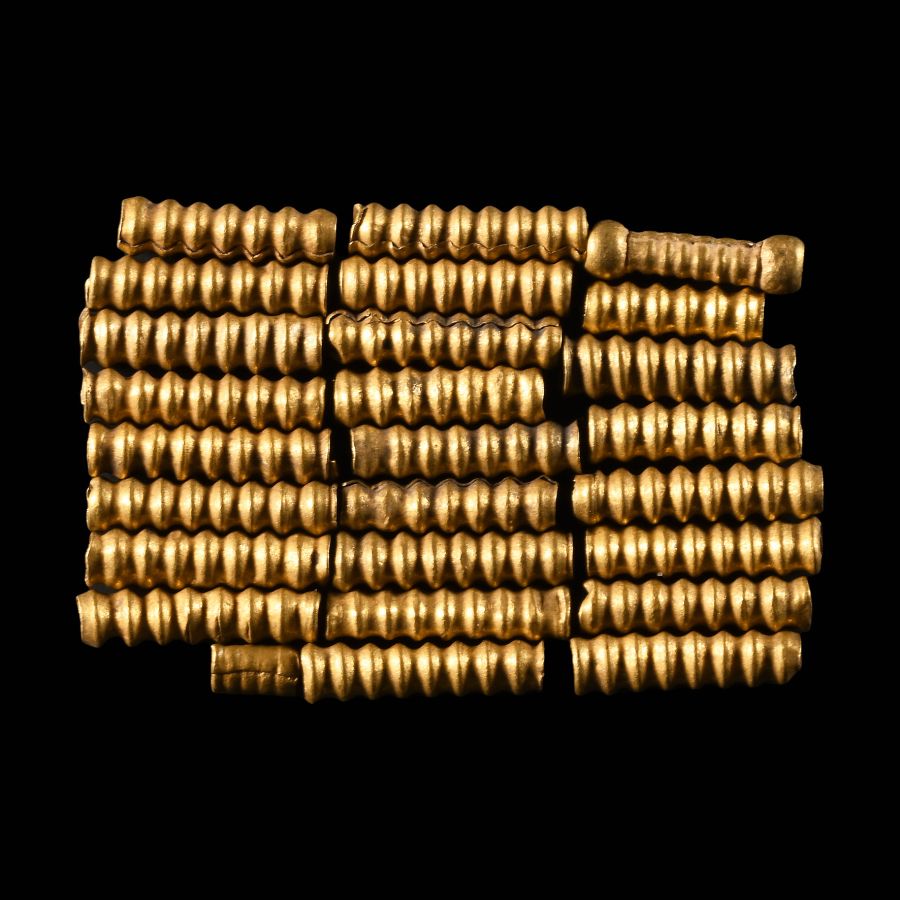
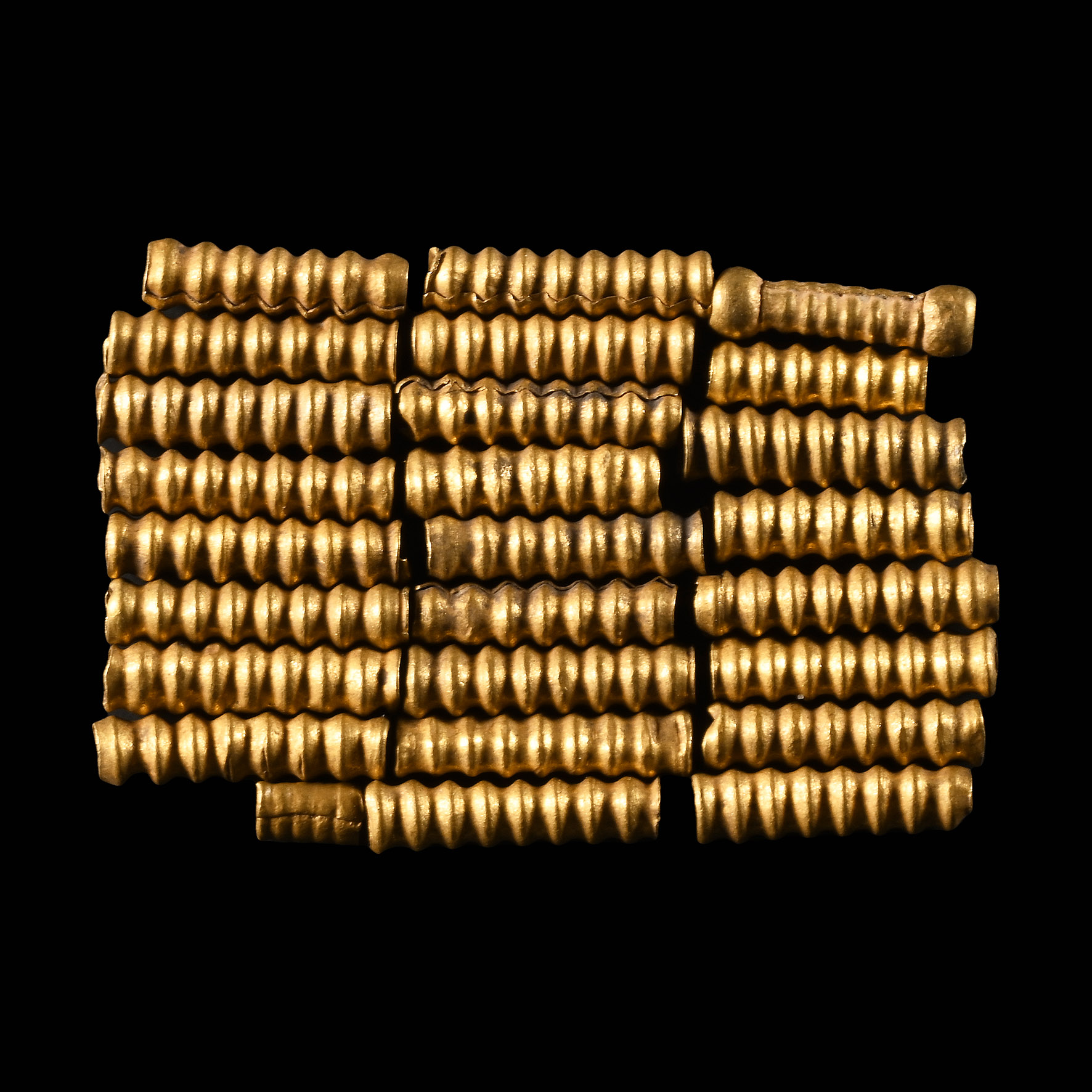
Western Asiatic Tubular Gold Bead Group
1ST MILLENNIUM B.C.
1/8 - 1/4 in. (4.38 grams total, 4-11 mm).
Group of twenty-six corrugated tubular sheet-gold beads. [26]
ProvenanceFrom a late Japanese specialist collector, 1970-2000s.
CONDITIONTimeLine Auctions follows a vetting process to ensure the authenticity and legality of all items, reinforcing our commitment to integrity and responsible trading. Each antiquity, antique, and coin lot undergoes thorough examination by a vetting committee of at least ten external specialists, professional trade association members, scientists, and archaeologists: Our Vetting Process
AUCTIONS:
TimeLine is a leading auction house specialising in antiquities, ancient art, collectables, natural history, coins, medals, and books. Our auctions offer museums, collectors, historians, and enthusiasts the opportunity to acquire unique and historically significant pieces.
-

Western Asiatic Haematite Cylinder Seal with Presentation Scene and Inscription
Circa 2nd millennium B.C.Sold for (Inc. bp): £1,170
With frieze depicting a seated figure holding up a vessel in one extended hand, star and crescent above; before him, a facing figure in fringed robe and another in flounced robe with hands raised; two columns of cuneiform text; supplied with a museum-quality impression. 2.23 grams, 17 mm
From an important London, UK, collection, 1970-1990. Examined by Professor Wilfrid George Lambert FBA (1926-2011), historian, archaeologist, and specialist in Assyriology and Near Eastern archaeology, in the late 1980s and early 1990s. -
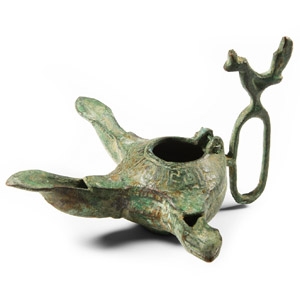
Western Asiatic Bronze Multi-Spouted Oil Lamp
Circa 10th-12th century A.D.Sold for (Inc. bp): £72
With hollow-formed bulbous body, three radiating nozzles each with a leaf-shaped lip, central filler-hole with hinge for a lid (absent), ellipsoid rod handle to the rear with bird-shaped thumb-pad; band of low-relief pseudo-text to the discus. 257 grams, 12.6 cm
Ex old English collection. London art market, pre 2000. Property of a London, UK, gentleman. -
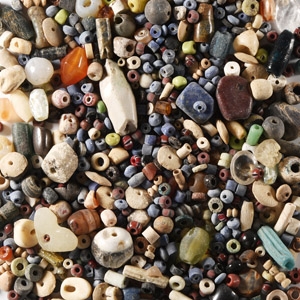
Western Asiatic and Other Mixed Stone and Glass Necklace Bead Collection
1st millennium B.C.-20th century A.D.Sold for (Inc. bp): £85
Composed of stone and glass beads in a variety of sizes, shapes and colours, some from Asia, North and West Africa, with some glass Venetian chevrons and millefiori trade beads. 69.5 grams total, 1-23 mm
UK gallery, early 2000s.
