
Loading, please wait...
LOT 1080
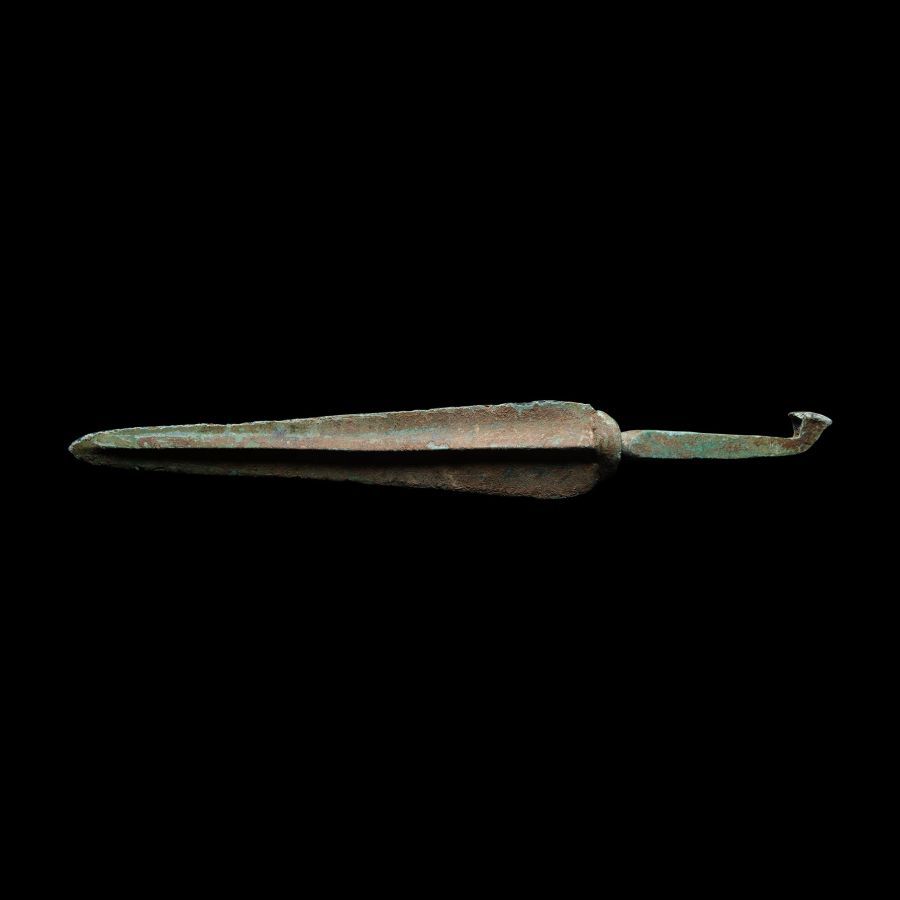
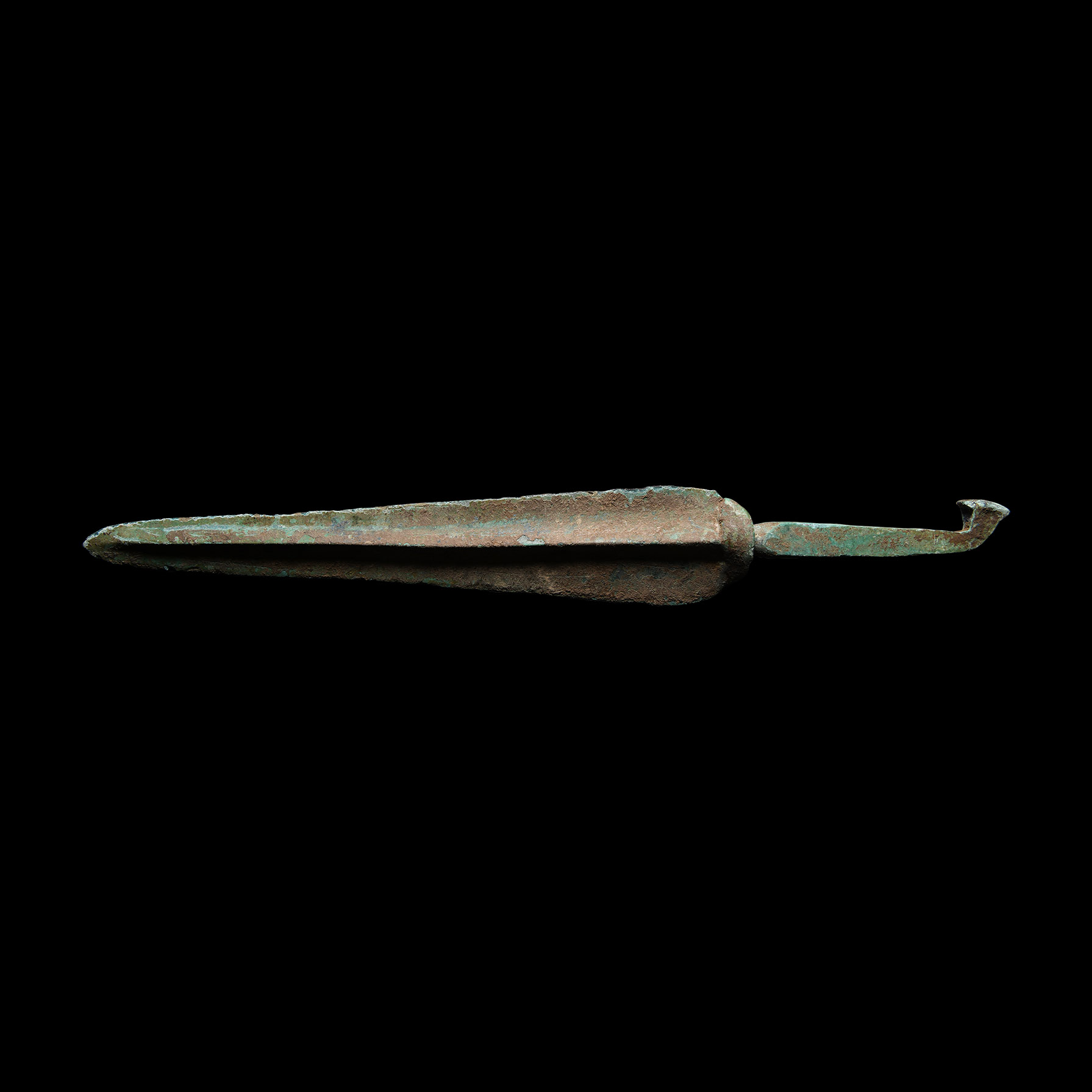
Western Asiatic Tripartite Spearhead
2ND MILLENNIUM B.C.
13 3/8 in. (310 grams, 34 cm).
A leaf-shaped blade with prominent midrib, square-section tang with expanding bent finial.
ProvenanceAcquired 1980-2015.
Ex Abelita family collection.
Cf. Gernez, G., L’armament en métal au Proche et Moyen-Orient: des origines a 1750 av. J.C., Paris, 2007, p. 310 vol. I, pl.188 vol.II, subtype L2F.A (?), for the type.
CONDITIONTimeLine Auctions follows a vetting process to ensure the authenticity and legality of all items, reinforcing our commitment to integrity and responsible trading. Each antiquity, antique, and coin lot undergoes thorough examination by a vetting committee of at least ten external specialists, professional trade association members, scientists, and archaeologists: Our Vetting Process
AUCTIONS:
TimeLine is a leading auction house specialising in antiquities, ancient art, collectables, natural history, coins, medals, and books. Our auctions offer museums, collectors, historians, and enthusiasts the opportunity to acquire unique and historically significant pieces.
-
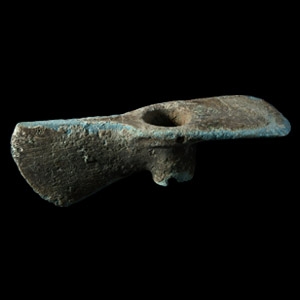
Luristan Socketted Axe-Adze
13th-7th century B.C.Sold for (Inc. bp): £121
A substantial copper-alloy adze-axe head composed of a cylindrical socket, one blade at a right angle to the socket with tapering sides and D-section cutting edge; one blade upright with convex cutting edge. 559 grams, 16.5 cm
Fine condition.
Acquired in the 1980s. London, UK, private collection. Property of an Essex gentleman. -
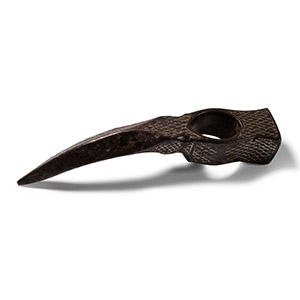
Eastern European Silver Inlaid War-Hammer
16th century A.D.Sold for (Inc. bp): £598
A copper-alloy war-hammer composed of ellipsoidal socket, waisted butt with shallow conical face and tapering, lozenge-section head, inlaid with a silver 'net' design. 453 grams, 18.5 cm
Private collection of Mr M.B., Mainz, Germany, 1990s. Property of a London businessman. This lot has been checked against the Interpol Database of stolen works of art and is accompanied by search certificate no.11203-186235.
The name obuch is Polish and means 'the blind end of an axe', but already at the beginning of the 15th century it meant a [unspecified] war hammer. According to Polish sources of 17th century, the war-hammer could have been formed into the shape of an axe (czekan), or in the form of a thick, slightly sloping spike (nadziak), or curved like a round cracknel (obuch). A 17th century description states: 'It was a terrible instrument in the hand of a Pole...With the sabre one could cut off somebody’s hand, cut the face, injure the head, and the running blood of the adversary would calm down the rancour. But with the obuch one could cause a deadly wound without even seeing the blood, and – not seeing it – he would not calm down instantly, but would strike several times without cutting the skin, breaking ribs and bones at the same time.' -
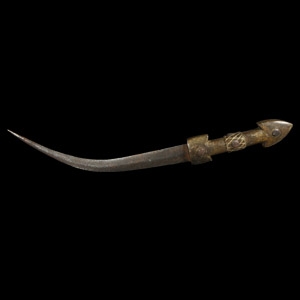
Khandjar Type Dagger
19th century A.D.Estimate: £180 - 240 (+bp*)
Opening Bid: £100
A very large iron dagger, curved with a thick double edge blade, handle composed of wood and iron, ornately decorated with lozenges, fastened by eight iron flat-headed rivets. 118 grams, 32 cm long
Fine condition.
Private family collection formed in London, mid 1980s to early 1990s.
Among the various Arab dagger groups, the one from North Africa is characterised by rather fine blades made in the Turkish-Persian style. Usually the handles (in wood, ivory and metal) feature a large rounded pommel in the guise of peacock feathers. This type is common in Morocco, Tunisia and all the way to Egypt, and is a type of Khandjar usually called Koummiya or Goummiya (a term later adopted in Spanish as Goumia, to indicate all the short Arab daggers).
