
Loading, please wait...


LOT 1049
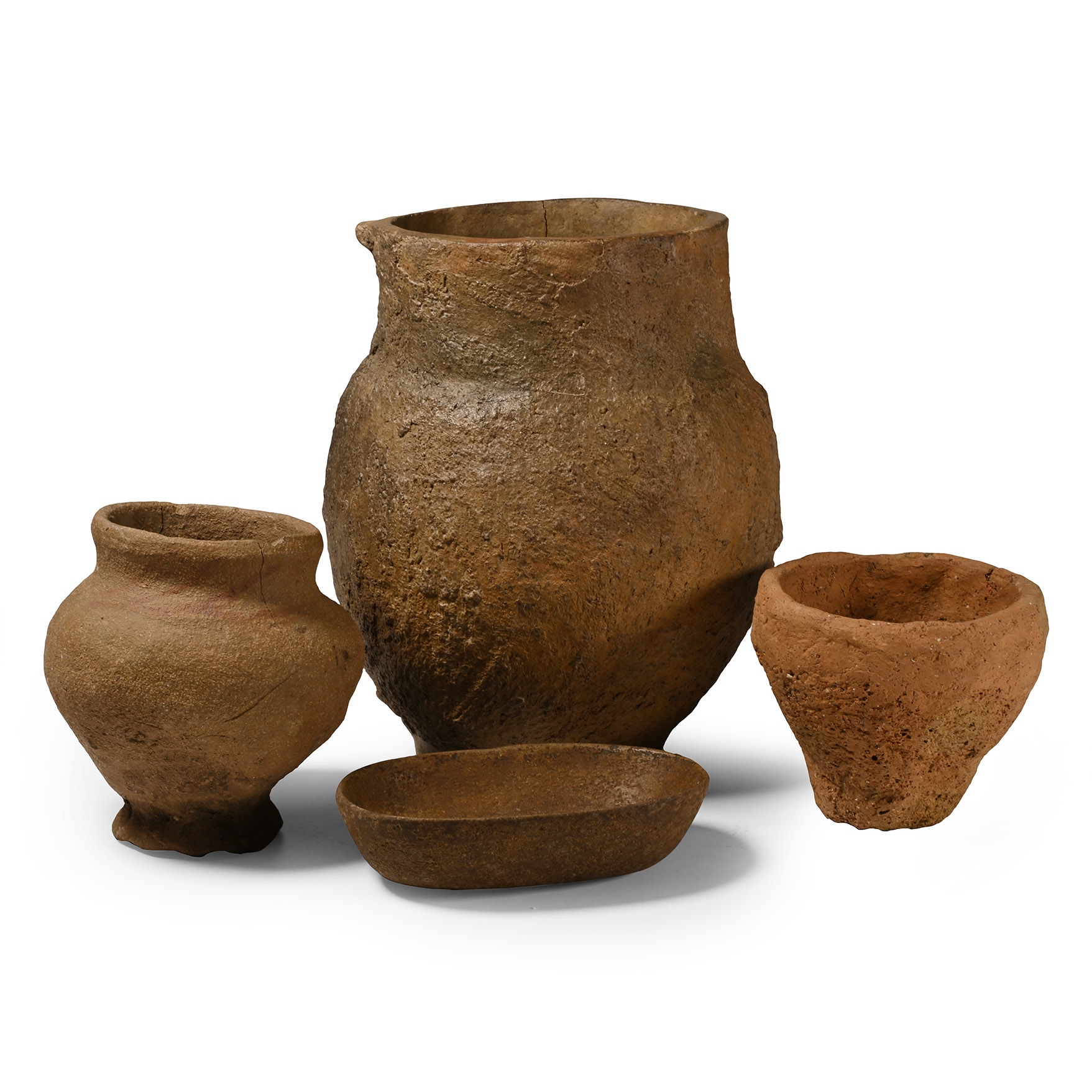
Western Asiatic Terracotta Vessel Group
1ST MILLENNIUM B.C.
2 3/4 - 6 7/8 in. (1.36 kg total, 7-17.5 cm).
Comprising a tall jar with broad mouth, textured finish; small footed jar with flared rim; cup with tapering foot; ellipsoid dish with flat underside. [4, No Reserve]
ProvenanceFrom a family collection mostly formed in the 1940s-1950s, thence by descent.
CONDITIONTimeLine Auctions follows a vetting process to ensure the authenticity and legality of all items, reinforcing our commitment to integrity and responsible trading. Each antiquity, antique, and coin lot undergoes thorough examination by a vetting committee of at least ten external specialists, professional trade association members, scientists, and archaeologists: Our Vetting Process
AUCTIONS:
TimeLine is a leading auction house specialising in antiquities, ancient art, collectables, natural history, coins, medals, and books. Our auctions offer museums, collectors, historians, and enthusiasts the opportunity to acquire unique and historically significant pieces.
-

Western Silicia Bronze Jeweller's Stamp with Bust
Armenia, 12th-13th century A.D.Sold for (Inc. bp): £117
Rectangular panel, hollow to the rverse with attachment lug, incised die with profile crowned bust and legend. 10.5 grams, 29 mm
From the collection of a gentleman, acquired on the London art market in the 1990s. -

Western Asiatic Bronze Elephant
Circa 18th-19th century A.D.Sold for (Inc. bp): £494
In advancing pose with trunk extended, tail draped along the hindleg; old inked number '27' to underside; supplied with a custom-made stand. 115 grams, 73 mm (251 grams total, 10 cm wide including stand)
Ex European collection since 1970. with Herman Historica, Munich, Germany, Auction 95, no.6031 (Part). Property of a French collector. -
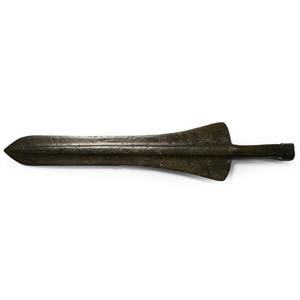
Early Urartu Bronze Spearhead
17th-16th century B.C.Estimate: £250 - 350 (+bp*)
Opening Bid: £130
With leaf-shaped blade, raised midrib extending to a tubular split socket with fastening holes. 165 grams, 29.7 cm
Acquired 1980-2015. Ex Abelita family collection.
With the introduction of the socketted spearhead in the Middle East in the second half of the 3rd millennium B.C., by the middle of the 2nd millennium, these kind of spearheads became predominant throughout the ancient Near East, and the design of the spearhead remained practically unchanged since then.
