
Loading, please wait...
LOT 1382
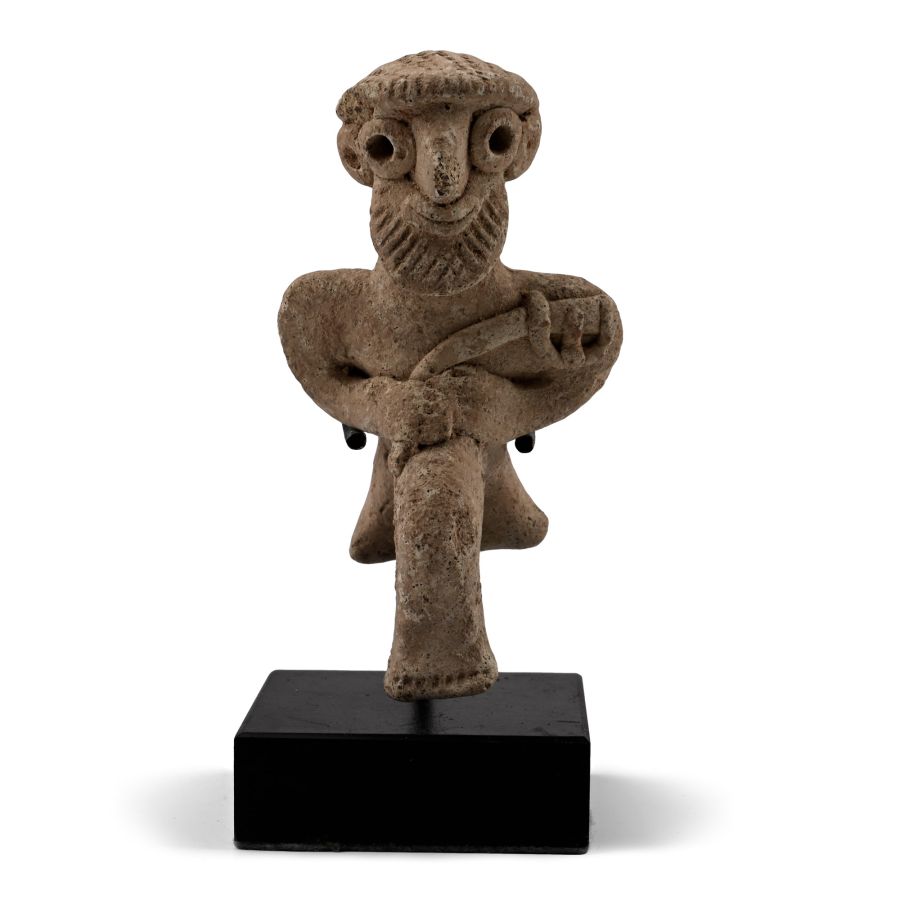
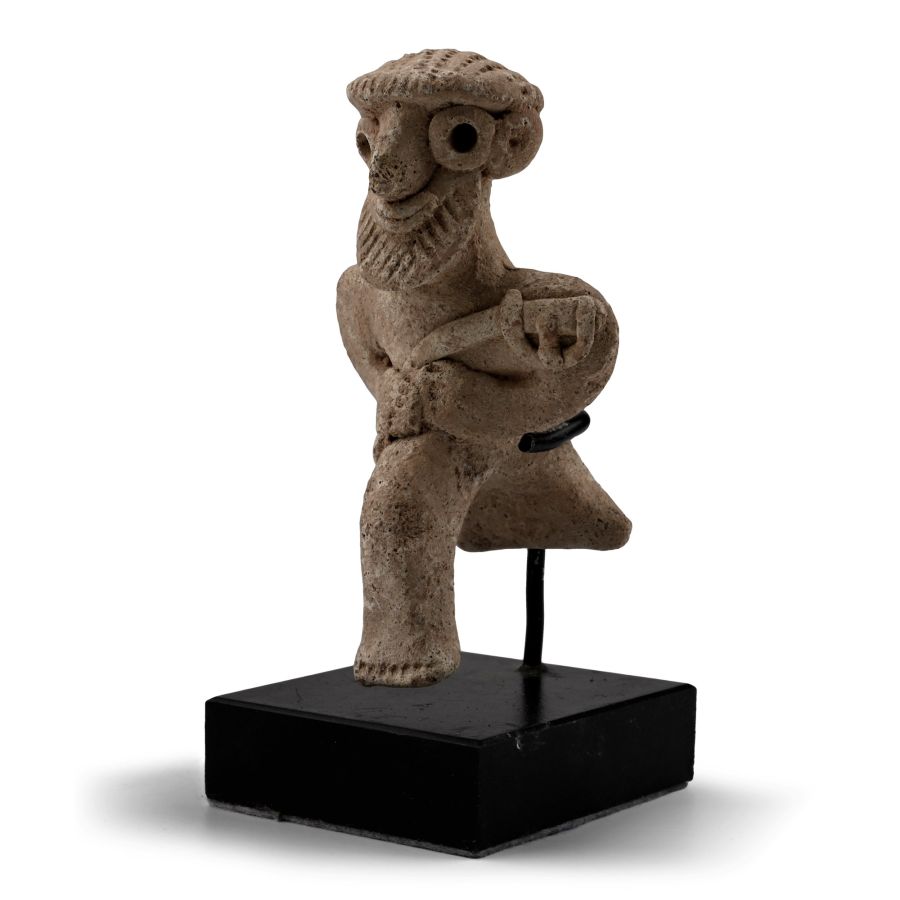
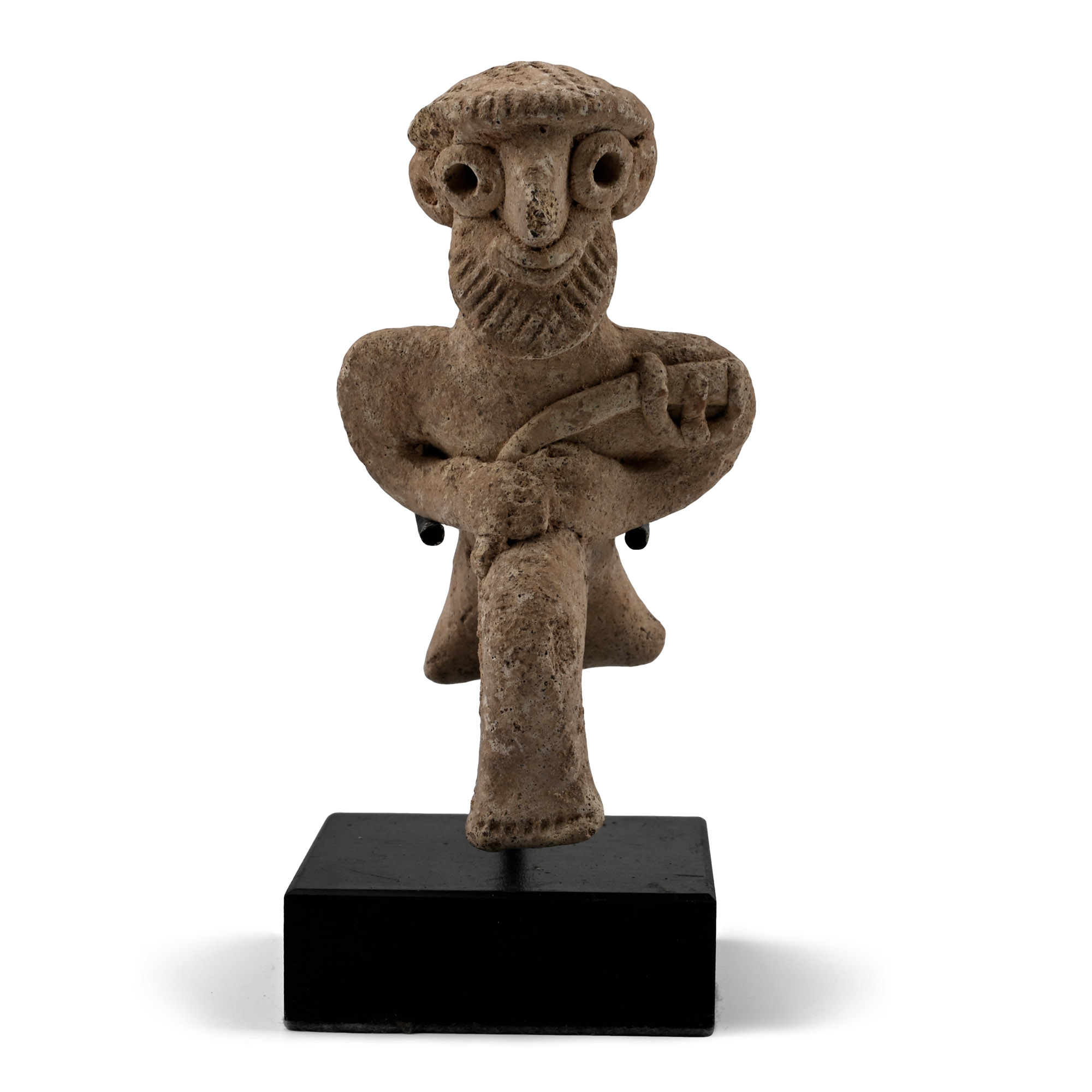
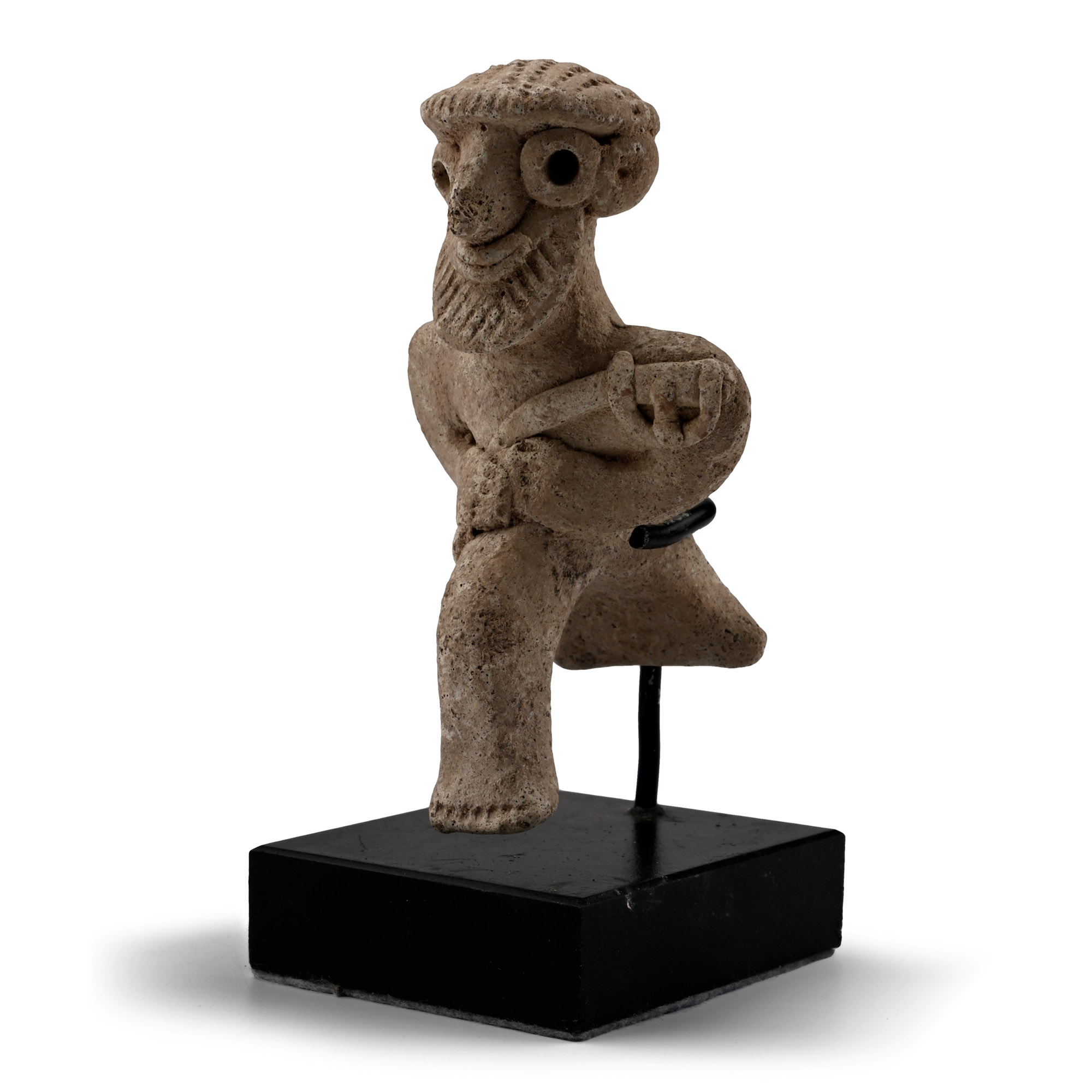
Western Asiatic Terracotta Seated Male Figure Holding an Axe
CIRCA 2ND-1ST MILLENNIUM B.C. OR LATER
4 3/8 in. (155 grams total, 11 cm high including stand).
Free-standing and with stylised applied face, hair and beard detailing, his hands held together in his lap. [No Reserve]
ProvenanceCollected from 1979-1999.
From the collection of the late Mr S.M., London, UK.
From the private collection of John Meredith, acquired since the 1990s; thence by descent.
This lot has been cleared against the Art Loss Register database, and is accompanied by an illustrated lot declaration signed by the Head of the Antiquities Department, Dr Raffaele D'Amato.
TimeLine Auctions follows a vetting process to ensure the authenticity and legality of all items, reinforcing our commitment to integrity and responsible trading. Each antiquity, antique, and coin lot undergoes thorough examination by a vetting committee of at least ten external specialists, professional trade association members, scientists, and archaeologists: Our Vetting Process
AUCTIONS:
TimeLine is a leading auction house specialising in antiquities, ancient art, collectables, natural history, coins, medals, and books. Our auctions offer museums, collectors, historians, and enthusiasts the opportunity to acquire unique and historically significant pieces.
LOT 1382
Western Asiatic Terracotta Seated Male Figure Holding an Axe
Sold for (Inc. bp): £468
-
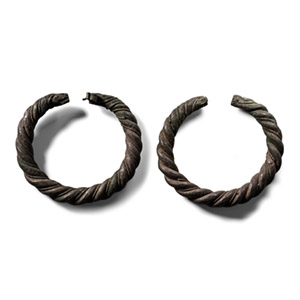
Western Asiatic Twisted Silver Bracelet Pair
10th-12th century A.D.Estimate: £800 - 1,000 (‡+bp*)
Opening Bid: £444
Each a penannular round-section band with a twisted filigree band coiled around the shank; clubbed finials, one with closure clip fitting. 259 grams total, 75-78 mm
Acquired in the mid 1980s-1990s. Private collection, Switzerland, thence by descent. Private collection, since the late 1990s. This lot has been cleared against the Art Loss Register database, and is accompanied by an illustrated lot declaration signed by the Head of the Antiquities Department, Dr Raffaele D'Amato. -
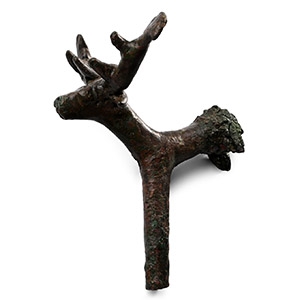
Western Asiatic Bronze Stag Finial
Circa 1000-600 B.C.Estimate: £100 - 140 (+bp*)
Opening Bid: £50
Tubular shank with a stylised stag finial with large curving horns, pierced through the chest. 38 grams, 66 mm
Nicolas Koutoulakis (1910-1996), thence by descent. Ex Galerie Khnoum, Geneva, Switzerland. Private collection of Mr K.A. This lot has been cleared against the Art Loss Register database, and is accompanied by an illustrated lot declaration signed by the Head of the Antiquities Department, Dr Raffaele D'Amato. -
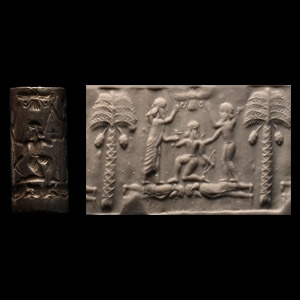
Achaemenid Silver Cylinder Seal Case with Battle Scene
5th century B.C.Estimate: £2,500 - 3,500 (+bp*)
Opening Bid: £1,250
Depicting a combat scene comprising of a standing richly dressed royal figure with a bow-case, one hand holding wrist and other piercing shoulder of a kneeling soldier; standing helmetted archer holding his other shoulder; two bearded men lying face down beneath; winged sun disc above and date palm behind; supplied with a museum-quality impression. 17.4 grams, 32 mm
From the collection of the late S, London, UK, 1970-2000. Examined by Professor Wilfrid George Lambert FBA (1926-2011), historian, archaeologist, and specialist in Assyriology and Near Eastern archaeology, in the 1990s. This lot has been checked against the Interpol Database of stolen works of art and is accompanied by search certificate number no.12821-240845. This lot has been cleared against the Art Loss Register database, and is accompanied by an illustrated lot declaration signed by the Head of the Antiquities Department, Dr Raffaele D'Amato.
