
Loading, please wait...
LOT 0948
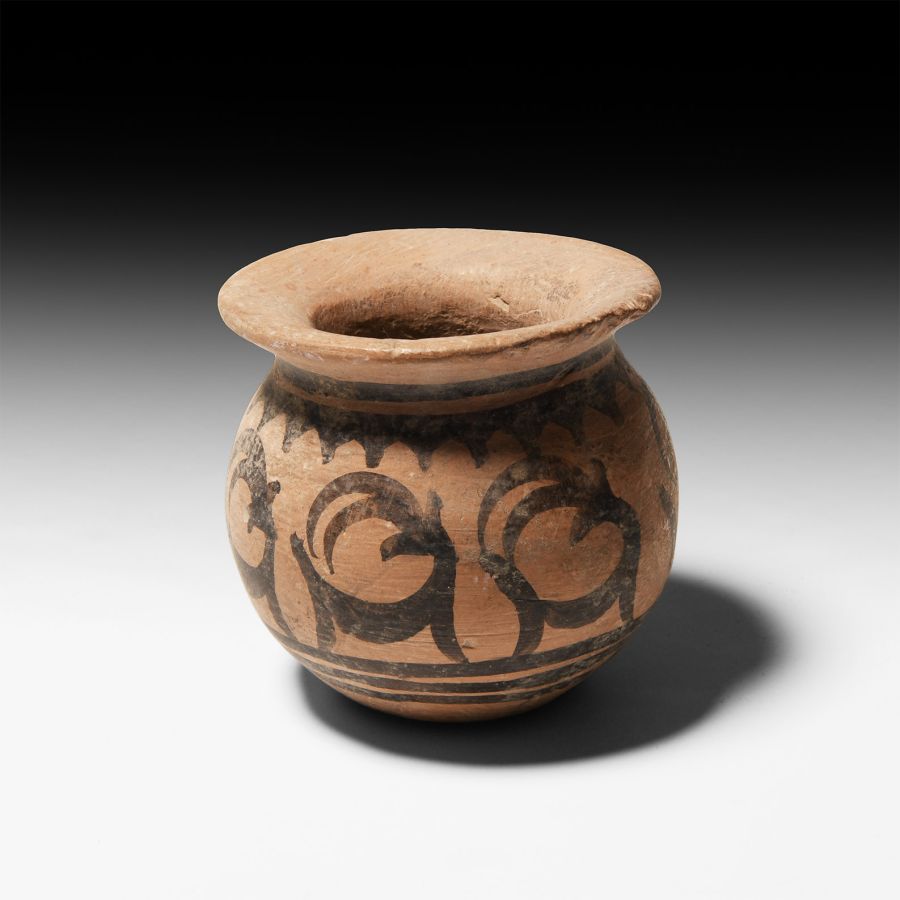
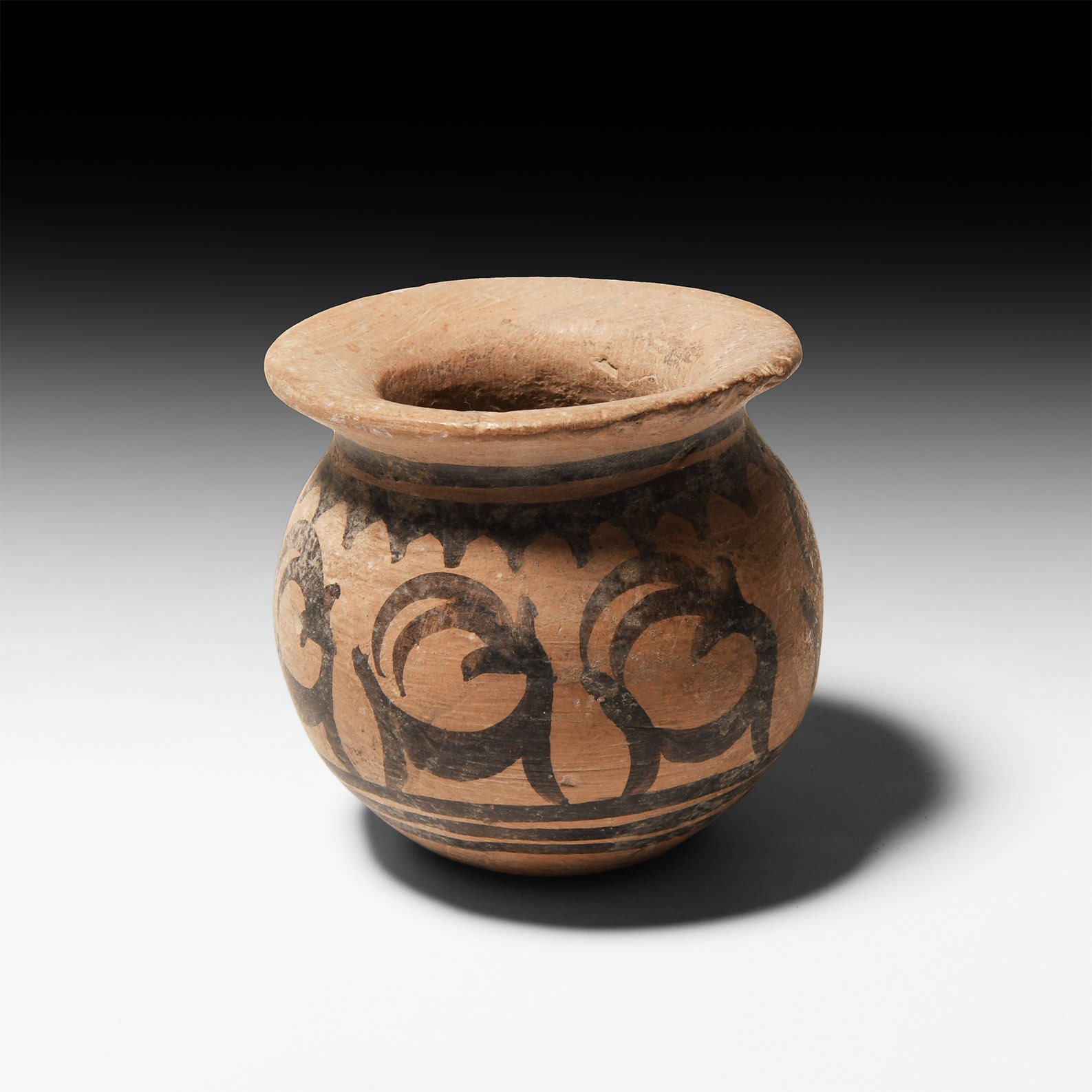
Western Asiatic Terracotta Pot with Ibexes
1ST MILLENNIUM B.C.
2 3/8 in. (134 grams, 59 mm high).
A terracotta jar with everted rim, painted with a frieze of ibexes between plain bands and arcading.
ProvenanceAcquired before 2000.
Property of a London, UK, gentleman.
Property of an Essex, UK, gentleman.
TimeLine Auctions follows a vetting process to ensure the authenticity and legality of all items, reinforcing our commitment to integrity and responsible trading. Each antiquity, antique, and coin lot undergoes thorough examination by a vetting committee of at least ten external specialists, professional trade association members, scientists, and archaeologists: Our Vetting Process
AUCTIONS:
TimeLine is a leading auction house specialising in antiquities, ancient art, collectables, natural history, coins, medals, and books. Our auctions offer museums, collectors, historians, and enthusiasts the opportunity to acquire unique and historically significant pieces.
-
.jpg)
Miniature Tel Brak Marble Eye Idol
Circa 3100-3000 B.C.Sold for (Inc. bp): £264
A miniature marble 'eye' idol composed of a squat, carinated body and two piercings to the head. 2.92 grams, 18 mm
Fine condition, repaired.
Acquired 1960-2010. Old French collection of Dr Delattre, who collected principally prehistoric objects but also ancient bronzes, natural history and curiosity around the world. Property of a French collector. -
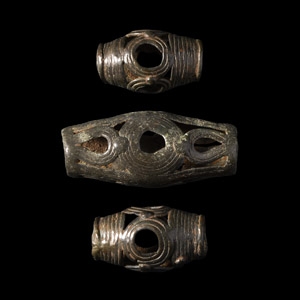
Amlash Cage Bead Collection
2nd-1st millennium B.C.Estimate: £120 - 170 (+bp*)
Opening Bid: £67
A group of three bronze cage beads, each composed of a biconical body featuring openwork geometric motifs and pellets. 68 grams total, 38-63 mm
Fine condition.
Acquired before 1983. Ex London gallery, 1990s. -
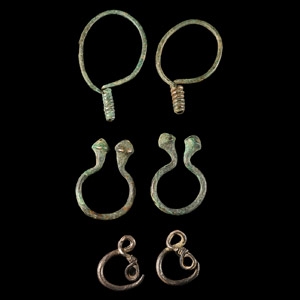
Western Asiatic Earring Pair Collection
1st millennium B.C. or laterSold for (Inc. bp): £26
A group of three pairs of copper-alloy earrings: one pair with conical terminals; one annular pair with coiled wire projections; hoop formed two additional loops with coiled sleeve between. 17 grams total, 21-43 mm
Early 1990s London collection. Acquired on the UK art market. From a private collection, Lancashire, UK.
