
Loading, please wait...

LOT 0246
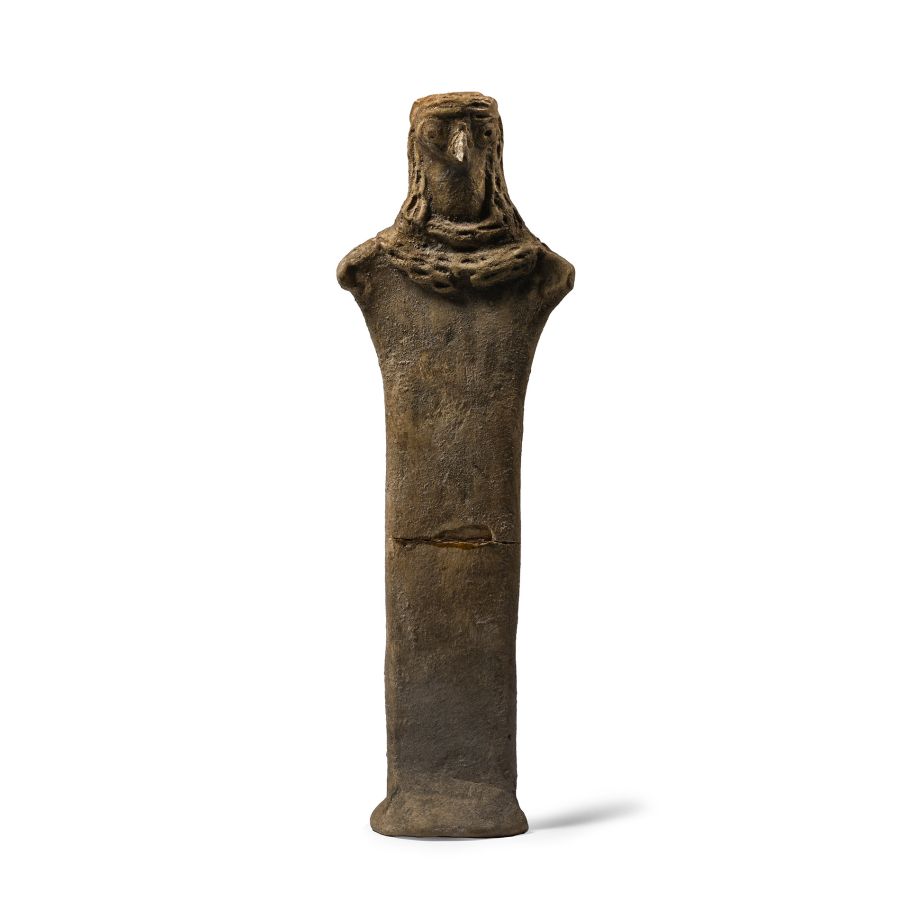
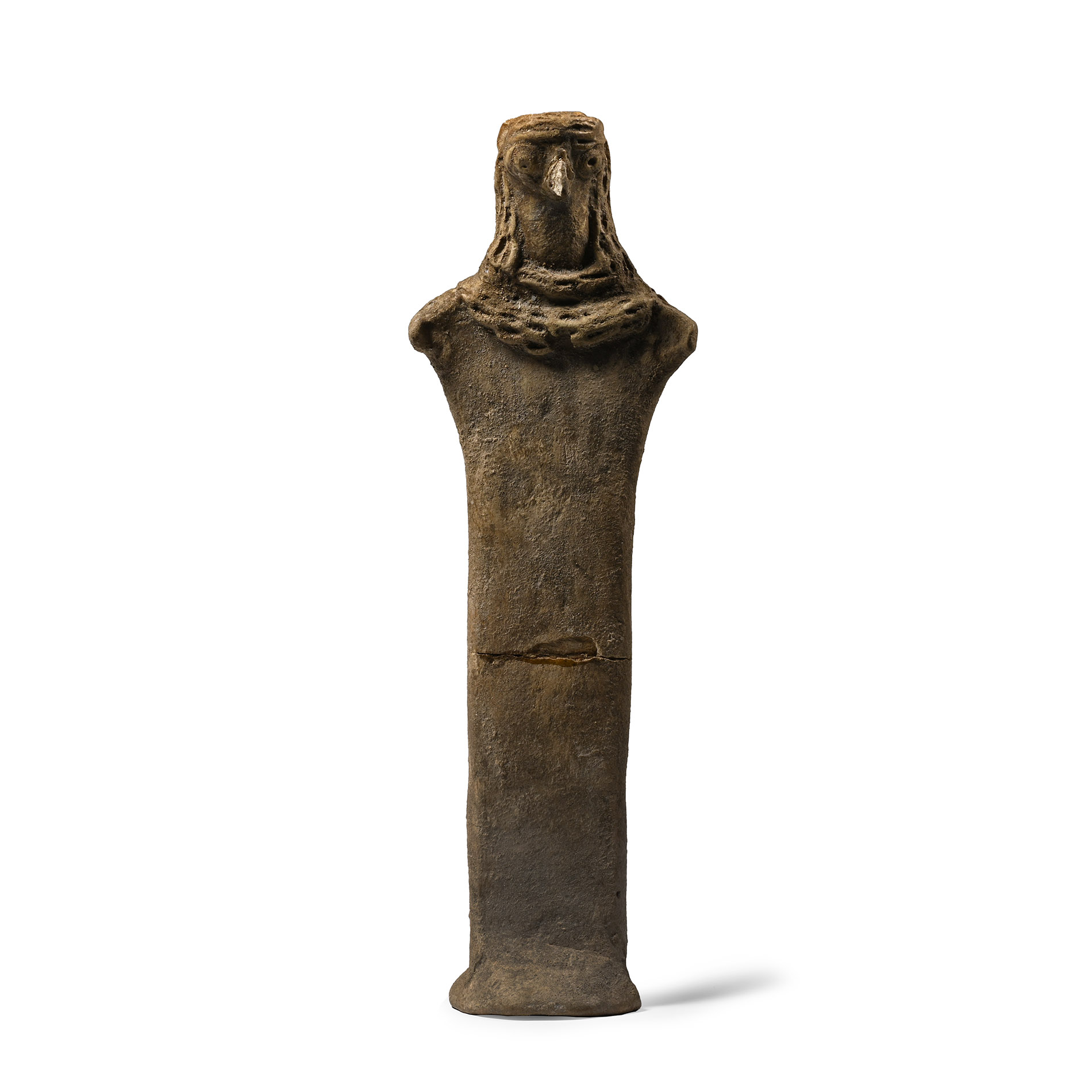
Western Asiatic Terracotta Idol
2250-2000 B.C.
6 3/4 in. (103 grams, 17.2 cm).
Modelled with a pinched, bird-like head and face with large circular eyes, two ornamental collars and wearing a headdress, stub arms and splayed foot; repaired.
ProvenancePrivate Swiss collection.
Private collection, Europe.
TimeLine Auctions follows a vetting process to ensure the authenticity and legality of all items, reinforcing our commitment to integrity and responsible trading. Each antiquity, antique, and coin lot undergoes thorough examination by a vetting committee of at least ten external specialists, professional trade association members, scientists, and archaeologists: Our Vetting Process
AUCTIONS:
TimeLine is a leading auction house specialising in antiquities, ancient art, collectables, natural history, coins, medals, and books. Our auctions offer museums, collectors, historians, and enthusiasts the opportunity to acquire unique and historically significant pieces.
-
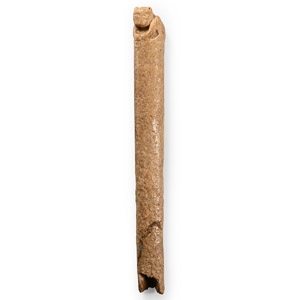
Fatimid Bone Knife Handle with Seated Lion
10th-12th century A.D.Estimate: £200 - 300 (+bp*)
Opening Bid: £60
Elliptical in section and tapering with socket to the lower end, finial to the upper end carved as a lion crouching with incised detailing. 25.4 grams, 14 cm
with a London, UK gallery, 1971-early 2000s. -
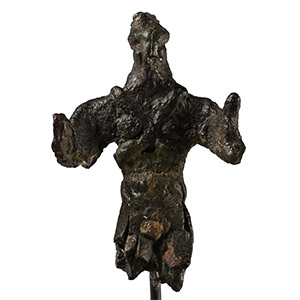
Western Asiatic Bronze Warrior Statuette
Early 1st millennium B.C.Sold for (Inc. bp): £98
Modelled standing erect with arms extended forwards, with straps and breastplates, belt and other details; mounted on a custom-made stand. 45.8 grams total, 75 mm including stand
From a collection acquired on the UK art market from various auction houses and collections mostly before 2000. From an important Cambridgeshire estate; thence by descent. -
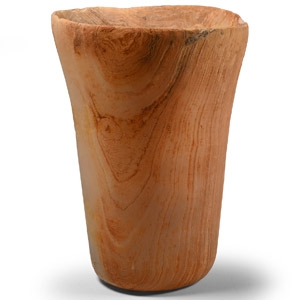
Bactrian Alabaster Vessel
1st millennium B.C.Estimate: £300 - 400 (+bp*)
Opening Bid: £150
Conical in profile with disc base, flared sidewall tapering to a narrow rim. 847 grams, 15 cm
Ex London, UK, gallery, 1971-early 2000s. London, UK, collection.
