
Loading, please wait...
LOT 0990
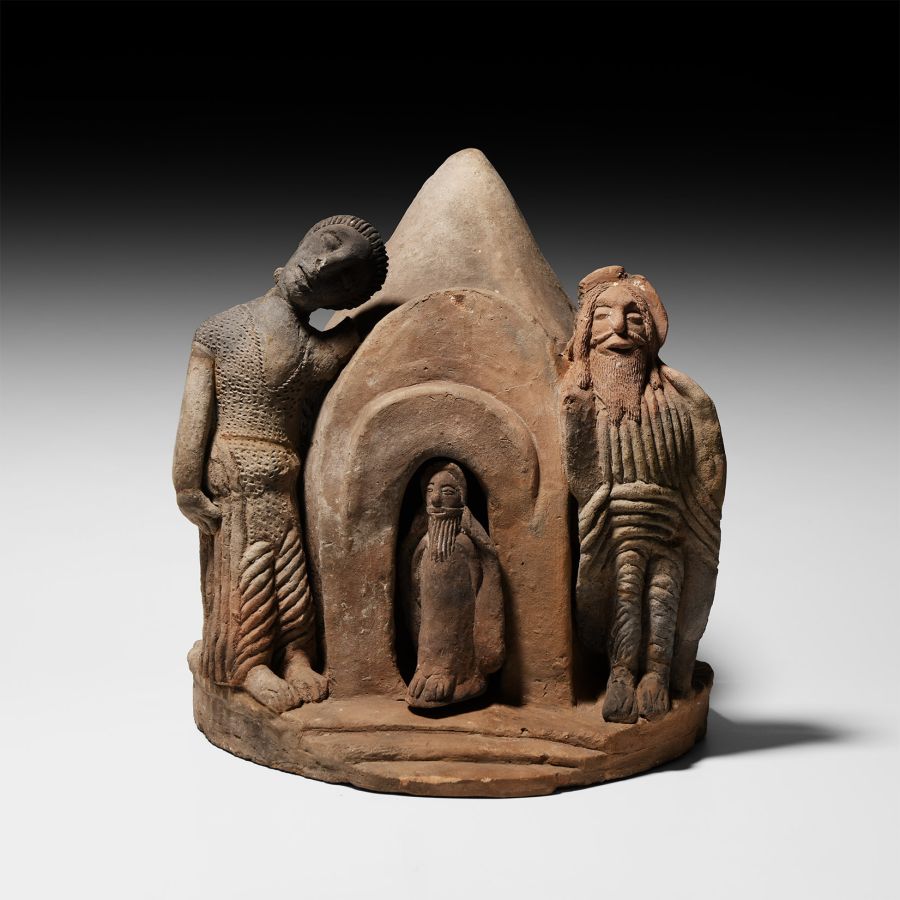
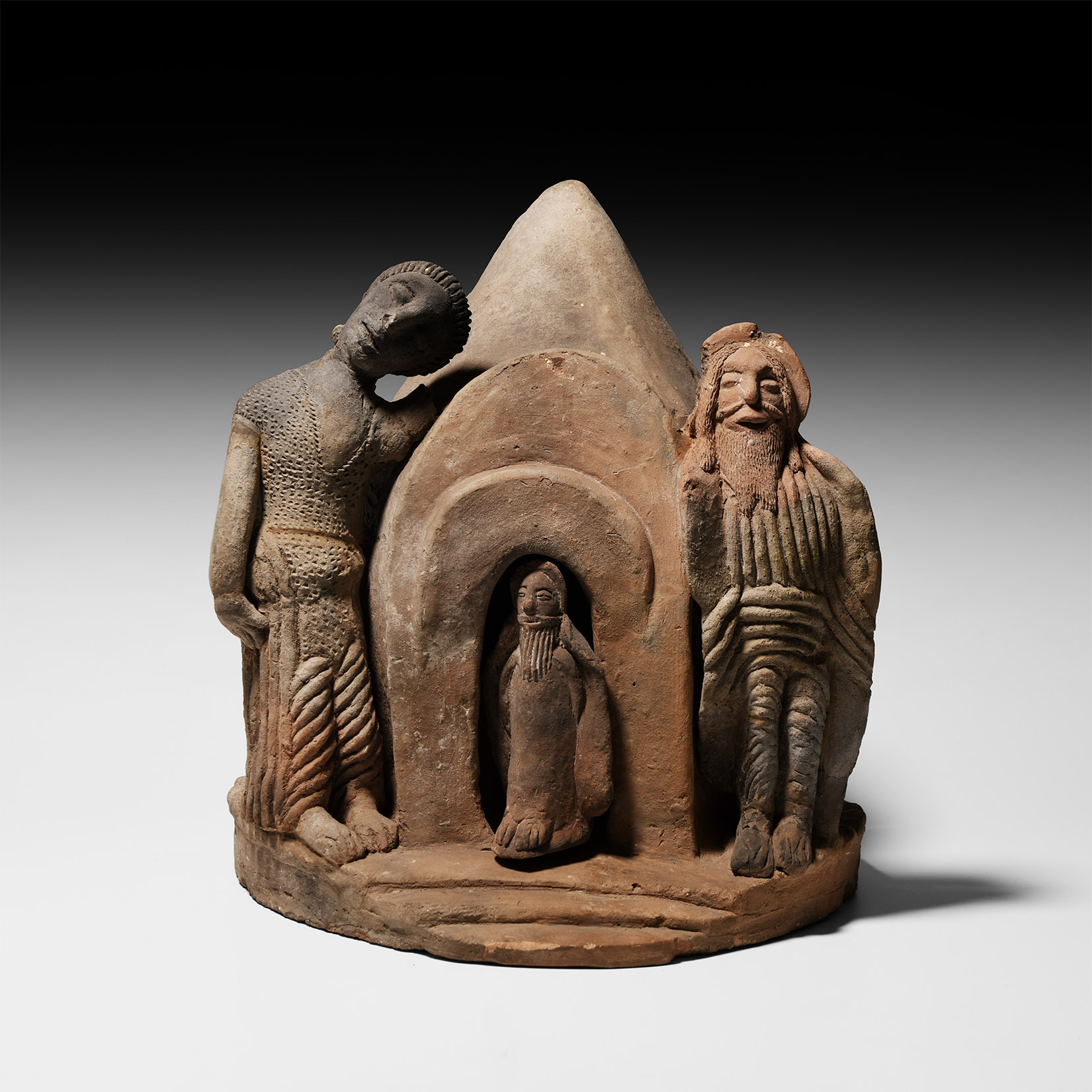
Western Asiatic Terracotta House with Inhabitants
20TH CENTURY A.D.
10 5/8 in. (9.1 kg, 27 cm).
A terracotta diorama comprising a Middle Eastern conical hut or dwelling with arched frame around the D-shaped entrance; two figures placed beside the doorway: to the left a tall slender with luxuriant curls male wearing a textured shirt (mailcoat?) and ruched trousers, barefoot, resting his head on the frame; to the right a shorter bearded male waring a cloak and quilted tunic and trousers. [No Reserve]
ProvenanceAcquired 1970-1999.
Ex collection of deceased Mayfair gentleman.
TimeLine Auctions follows a vetting process to ensure the authenticity and legality of all items, reinforcing our commitment to integrity and responsible trading. Each antiquity, antique, and coin lot undergoes thorough examination by a vetting committee of at least ten external specialists, professional trade association members, scientists, and archaeologists: Our Vetting Process
AUCTIONS:
TimeLine is a leading auction house specialising in antiquities, ancient art, collectables, natural history, coins, medals, and books. Our auctions offer museums, collectors, historians, and enthusiasts the opportunity to acquire unique and historically significant pieces.
-
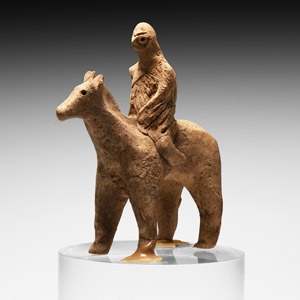
Syro-Hittite Terracotta Horse and Rider Figure
1st millennium B.C.Estimate: £800 - 1,000 (+bp*)
Opening Bid: £444
A ceramic horse and rider figure modelled in the round, standing facing, the animal's ears pricked, simple recessed eyes, tail hanging between hindlegs, the rider riding bare-back, gripping the horse's mane at the base of the neck, his legs gripping its sides, wearing a textured garment hanging from the left shoulder, pinched face featuring large circular eyes and strong furrowed brow; one arm absent; repaired; mounted on a custom-made display base. 354 grams total, 14.2 cm high including stand
Collection of a deceased London gentleman, 1979-1999, by descent. Accompanied by a copy of thermoluminescence analysis report no.N122k30 from Oxford Authentication. -
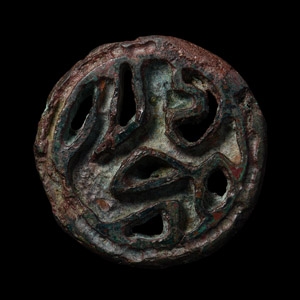
Central Asian Seal Pendant with Monkey
23rd-20th century B.C.Sold for (Inc. bp): £78
A bronze stamp seal featuring an openwork stylised monkey design; suspension loop to reverse; accompanied by a typed and signed scholarly note by W.G. Lambert, the late Professor of Assyriology at the University of Birmingham, 1970-1993, which states: '...This is round, with flat face and flat back, on which there is a small loop for suspension. The design consists of a depiction within a plain outer band. It shows a sitting monkey with tail up and front paws raised, perhaps holding something. This comes from west central Asia and dates to c.2300-2000 B.C. There is some wear and damage to the outer edge of the seal, but the design remains clear. The metal has been conserved.' 10 grams, 33 mm
1980s-early 1990s collection, UK. Accompanied by an original typed and signed scholarly note issued by the late Professor W.G. Lambert. -
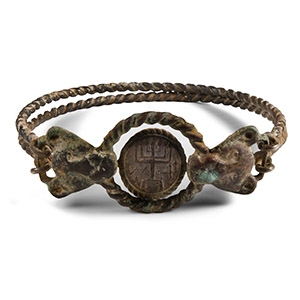
Western Asiatic Silver Bracelet with Lion Head Terminals Holding a Menorah
Circa 2nd-3rd century A.D.Estimate: £800 - 1,000 (+bp*)
Opening Bid: £400
An uncleaned silver bracelet composed of two decoratively twisted hoops, terminals formed as two facing lion (or lioness) heads supporting the bezel, a twisted roundel, in their mouths, central bifacial swivel plaque displaying a menorah flanked by letters 'W-T' on both faces; articulate join between hoops and animal heads. 40 grams, 73 mm wide
Acquired before 1988. From the collection of a deceased collector.
