
Loading, please wait...
LOT 1367
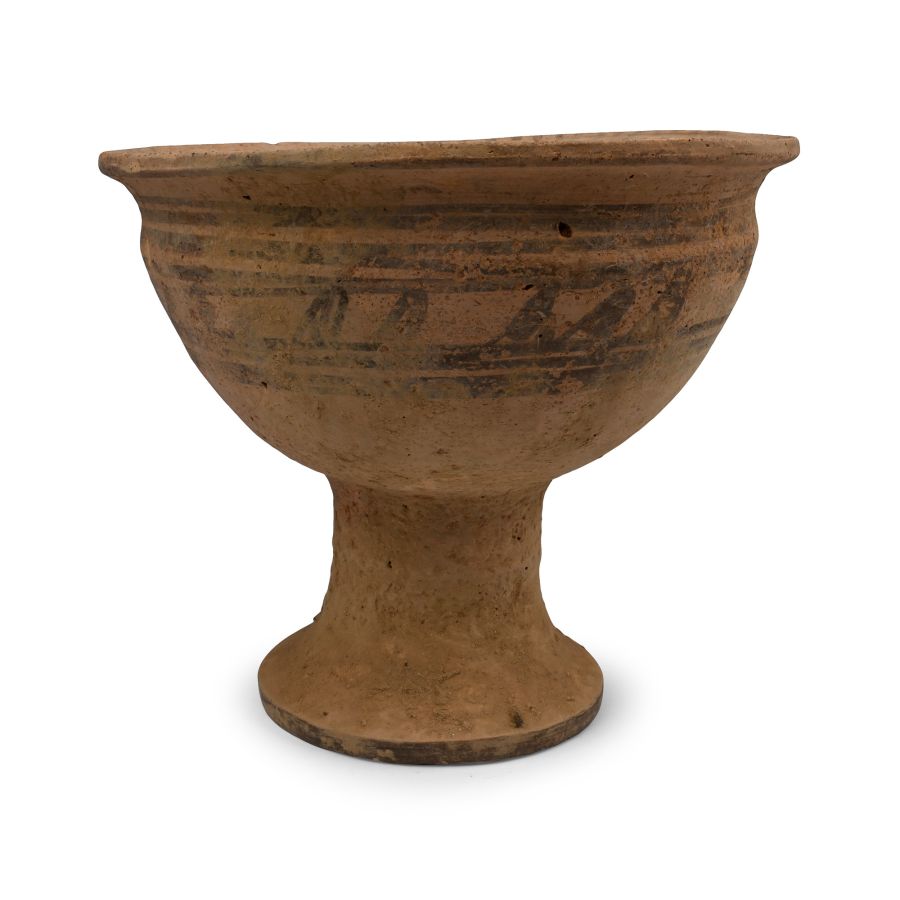
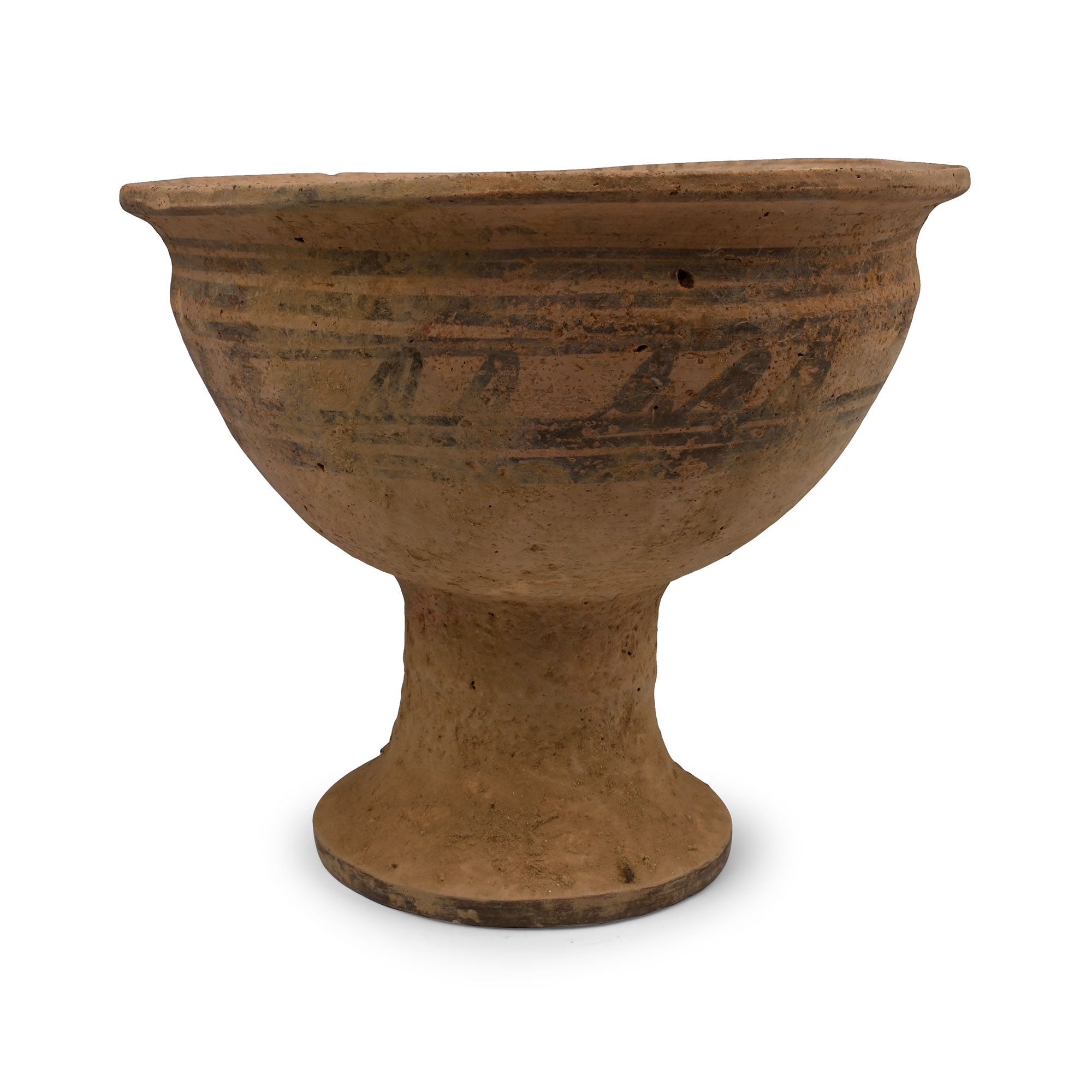
Western Asiatic Terracotta Footed Chalice
3RD-2ND MILLENNIUM B.C.
5 1/2 in. (643 grams, 14 cm).
With flared foot, broad bowl with carinated profile, everted rim; painted band to the equator. [No Reserve]
ProvenanceEx London, UK, collection, 1990-2000.
This lot has been cleared against the Art Loss Register database, and is accompanied by an illustrated lot declaration signed by the Head of the Antiquities Department, Dr Raffaele D'Amato.
TimeLine Auctions follows a vetting process to ensure the authenticity and legality of all items, reinforcing our commitment to integrity and responsible trading. Each antiquity, antique, and coin lot undergoes thorough examination by a vetting committee of at least ten external specialists, professional trade association members, scientists, and archaeologists: Our Vetting Process
AUCTIONS:
TimeLine is a leading auction house specialising in antiquities, ancient art, collectables, natural history, coins, medals, and books. Our auctions offer museums, collectors, historians, and enthusiasts the opportunity to acquire unique and historically significant pieces.
-
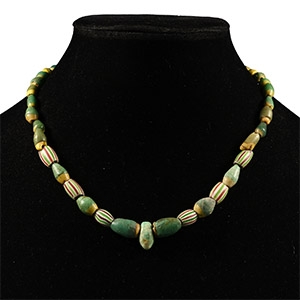
Western Asiatic and Other Green Glass Bead Necklace
20th century A.D.Estimate: £300 - 400 (+bp*)
Opening Bid: £150
A restrung designer necklace of fusiform, 'date', Venetian drawn glass rosetta beads, and other beads, some with longitudinal polychrome bands. 36.3 grams, 43 cm
From the collection of a gentleman, acquired on the London art market in the 1990s. This lot has been cleared against the Art Loss Register database, and is accompanied by an illustrated lot declaration signed by the Head of the Antiquities Department, Dr Raffaele D'Amato. -
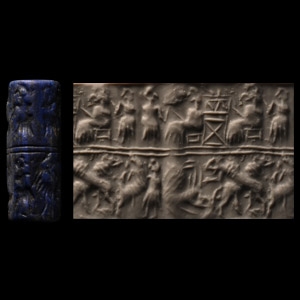
Sumerian Lapis Lazuli Cylinder Seal with Gods and Attendant
Early Dynastic III, 2600-2340 B.C.Sold for (Inc. bp): £1,105
With two sections, upper section with two seated figures and two attendants, lower section with standing figure among animals; supplied with a museum-quality impression. 12.4 grams, 33 mm
From the collection of the late S, London, UK, 1970-2000. Examined by Professor Wilfrid George Lambert FBA (1926-2011), historian, archaeologist, and specialist in Assyriology and Near Eastern archaeology, in the 1990s. This lot has been cleared against the Art Loss Register database, and is accompanied by an illustrated lot declaration signed by the Head of the Antiquities Department, Dr Raffaele D'Amato. -
.jpg)
Large Luristan Bronze Finial with Master of Animals
8th-7th century B.C.Estimate: £3,000 - 4,000 (+bp*)
Opening Bid: £1,500
Bifacial Master of Animals motif atop a collared tubular stem with flared foot; comprising two addorsed rams with their forelegs tied together; two addorsed birds standing on the rams' backs looking towards two birds' heads facing downwards and joined to slender crescentic boars with ridged backs and gaping mouths, each in the grip of the Master standing crowned between them; the Master with tubular body, animal-like ears, prominent nose above a small mouth and wearing collars, neck rings and tiered headdress; waisted socket below; mounted on a display stand. 930 grams total, 43 cm including stand
Acquired in Iran, 1967. Private collection, UK. Accompanied by an academic report by Dr Raffaele D'Amato. This lot has been checked against the Interpol Database of stolen works of art and is accompanied by a search certificate number no.12824-241323. This lot has been cleared against the Art Loss Register database, and is accompanied by an illustrated lot declaration signed by the Head of the Antiquities Department, Dr Raffaele D'Amato.
According to current knowledge, one type of Luristan standards consisted of two symmetrical animal figures standing upright on their hind legs and facing each other with an anthropomorphic character at the centre. Like the "zoomorphic standards", the "zoomorphic standards with a human head" and the "idols", this type has two faces, which means that it was conceived to be viewed from all sides.
