
Loading, please wait...
LOT 1480
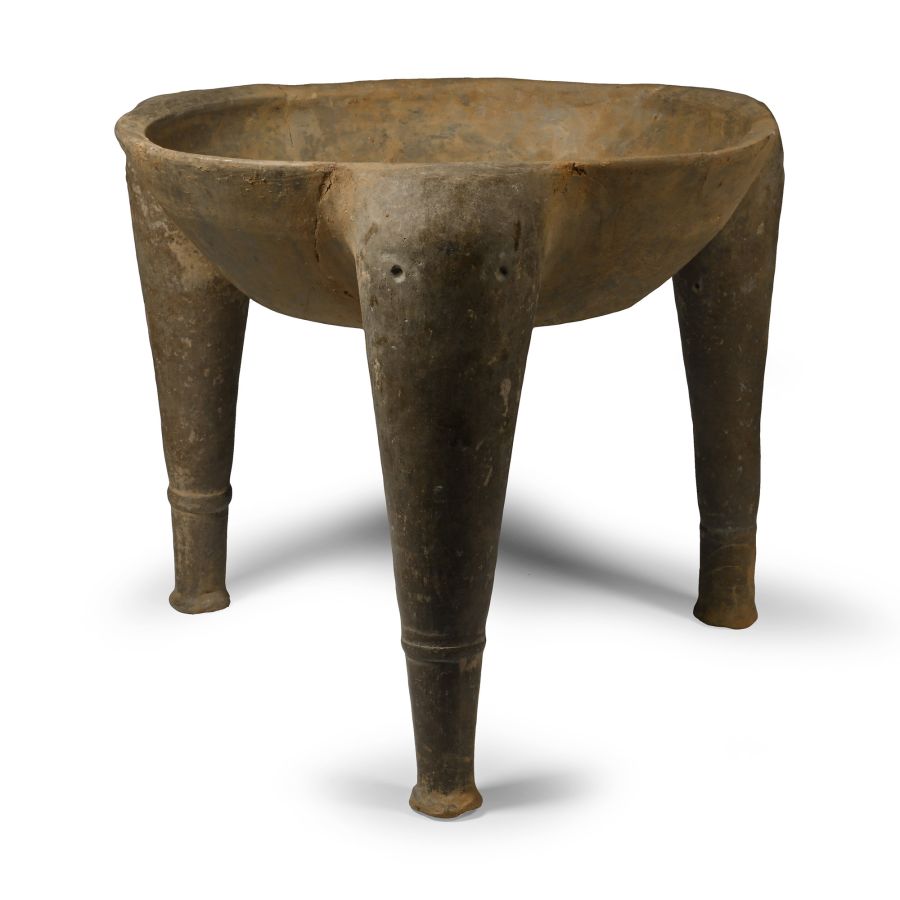
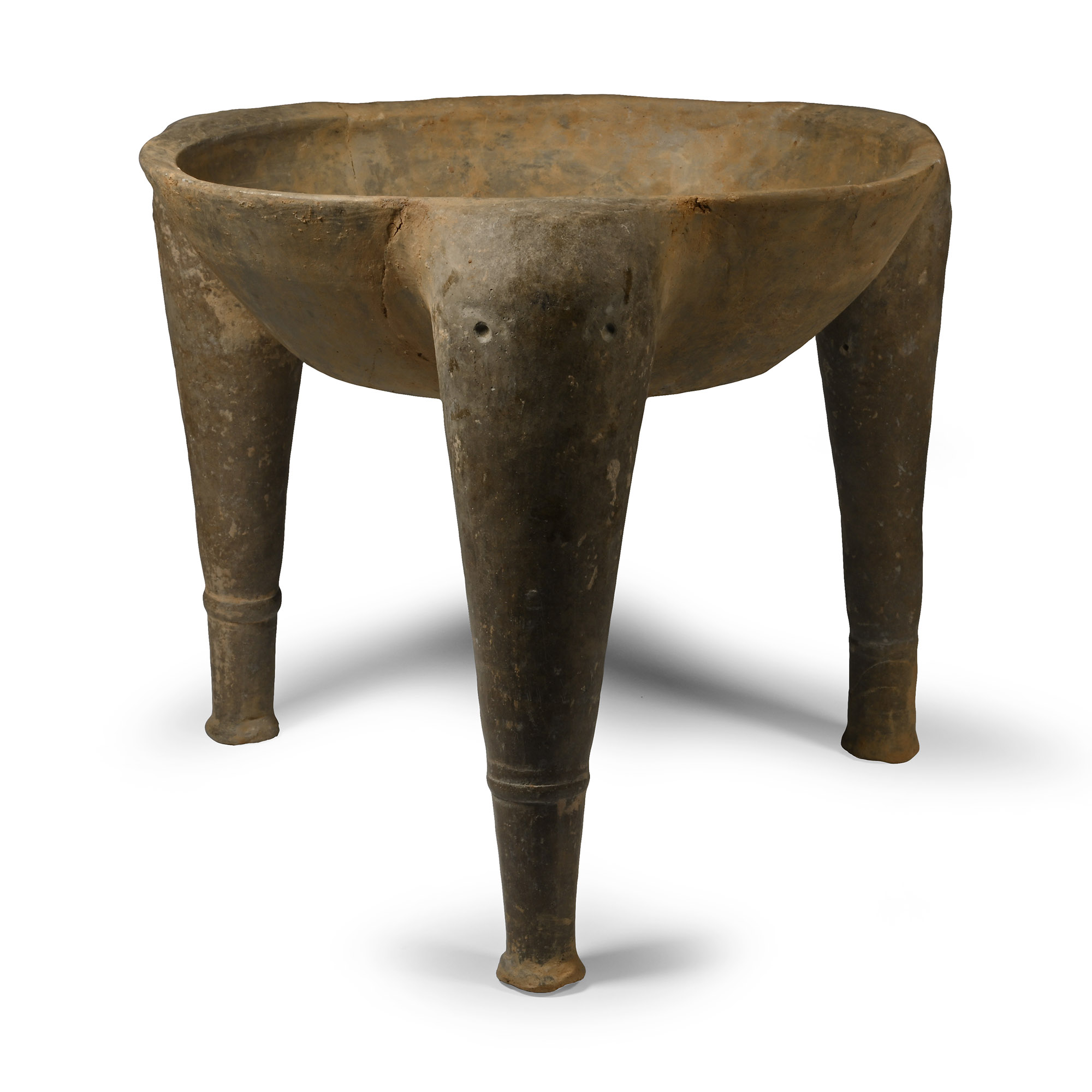
Western Asiatic Terracotta Elephant Tripod Vessel
2ND MILLENNIUM B.C.
13 1/4 in. (2.9 kg, 33.5 cm).
With gently rounded and tapering sidewall to the shallow bowl, three integral tapering legs formed as stylised elephant-heads each with a long trunk and simple facial detailing; the flared ends of the trunks forming and splayed feet; Indus Valley period.
Provenancewith a London, UK gallery 1971-early 2000s.
Accompanied by an original thermoluminescence analysis report no.N123k2 from Oxford Authentication.
This lot has been cleared against the Art Loss Register database, and is accompanied by an illustrated lot declaration signed by the Head of the Antiquities Department, Dr Raffaele D'Amato.
TimeLine Auctions follows a vetting process to ensure the authenticity and legality of all items, reinforcing our commitment to integrity and responsible trading. Each antiquity, antique, and coin lot undergoes thorough examination by a vetting committee of at least ten external specialists, professional trade association members, scientists, and archaeologists: Our Vetting Process
AUCTIONS:
TimeLine is a leading auction house specialising in antiquities, ancient art, collectables, natural history, coins, medals, and books. Our auctions offer museums, collectors, historians, and enthusiasts the opportunity to acquire unique and historically significant pieces.
LOT 1480
Western Asiatic Terracotta Elephant Tripod Vessel
Estimate £800 - 1,000€930 - 1,160 (for guidance only)$1,080 - 1,350 (for guidance only)
-
Jemdet Nasr Type Cylinder Seal with Figures
3rd millennium B.C.Estimate: £400 - 600 (+bp*)
Opening Bid: £200
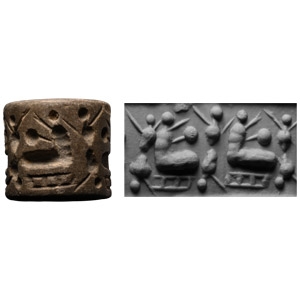
Drum-shaped with drilled frieze of scenes depicting a seated figure on a segmented seat. 27.4 grams, 23 mm
From the 'S' collection, acquired 1970-1990s. The collection was seen and studied by W.G. Lambert, late Professor of Assyriology at the University of Birmingham, 1970-1993. This lot has been cleared against the Art Loss Register database, and is accompanied by an illustrated lot declaration signed by the Head of the Antiquities Department, Dr Raffaele D'Amato. -
.jpg)
Large Indus Valley Terracotta Vessel with Animal Motifs
Circa 2200 B.C.Estimate: £5,000 - 7,000 (‡+bp*)
Opening Bid: £2,500
Pale cream fabric, funicular lower body and broad rounded shoulder, band of painted ornament including ibises, a tiger and hatched panels. 2.28 kg, 29 cm wide
Acquired in the mid 1980s-1990s. Private collection, Switzerland, thence by descent. Private collection, since the late 1990s. Accompanied by an academic report by Dr Raffaele D’Amato. This lot has been checked against the Interpol Database of stolen works of art and is accompanied by search certificate number no.12187-222202. This lot has been cleared against the Art Loss Register database, and is accompanied by an illustrated lot declaration signed by the Head of the Antiquities Department, Dr Raffaele D'Amato. -
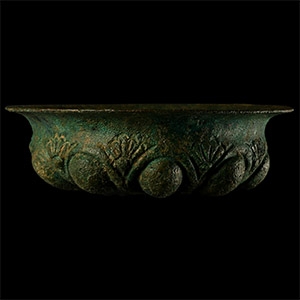
Achaemenid Decorated Bronze Phiale Mesomphalos
5th-4th century B.C.Sold for (Inc. bp): £494
A broad carinated bowl with radiating repoussé lotus-leaf panels, central domed roundel. 157 grams, 11.5 cm
with a London, UK gallery 1971-early 2000s. This lot has been cleared against the Art Loss Register database, and is accompanied by an illustrated lot declaration signed by the Head of the Antiquities Department, Dr Raffaele D'Amato.
