
Loading, please wait...
LOT 1422
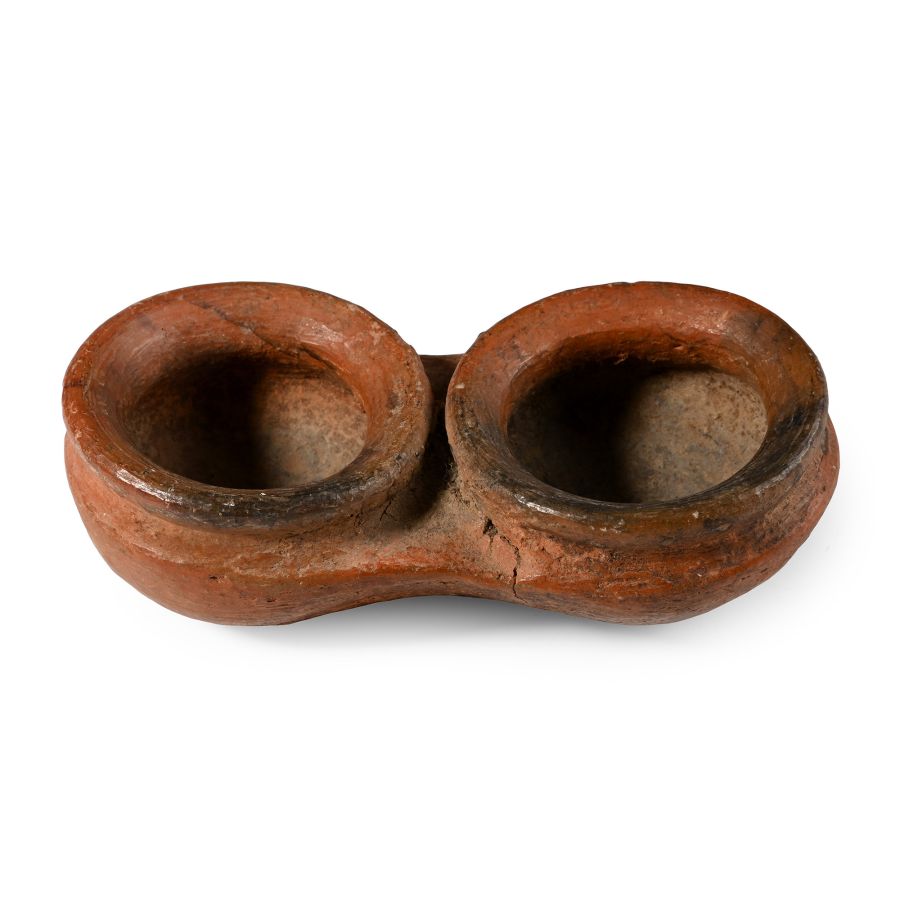
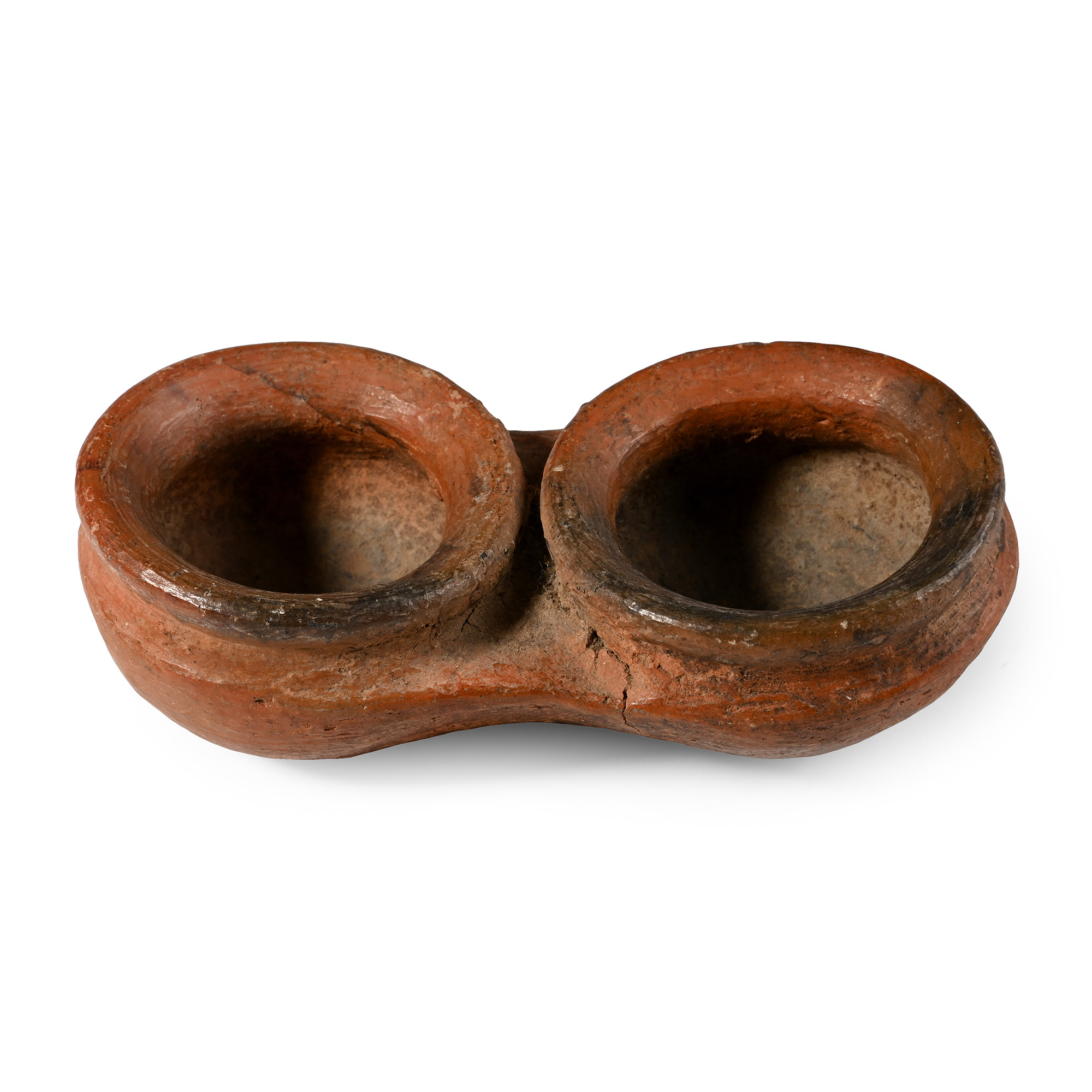
Western Asiatic Terracotta Double-Well Oil Lamp
BRONZE AGE, CIRCA 2ND MILLENNIUM B.C.
5 3/8 in. (213 grams, 13.7 cm).
Comprising two low circular wells with thick everted rims. [No Reserve]
ProvenanceFrom the collection of a Cambridge, UK, gentleman, by direct descent from his father, who acquired the items in London in circa 1960.
CONDITIONTimeLine Auctions follows a vetting process to ensure the authenticity and legality of all items, reinforcing our commitment to integrity and responsible trading. Each antiquity, antique, and coin lot undergoes thorough examination by a vetting committee of at least ten external specialists, professional trade association members, scientists, and archaeologists: Our Vetting Process
AUCTIONS:
TimeLine is a leading auction house specialising in antiquities, ancient art, collectables, natural history, coins, medals, and books. Our auctions offer museums, collectors, historians, and enthusiasts the opportunity to acquire unique and historically significant pieces.
-
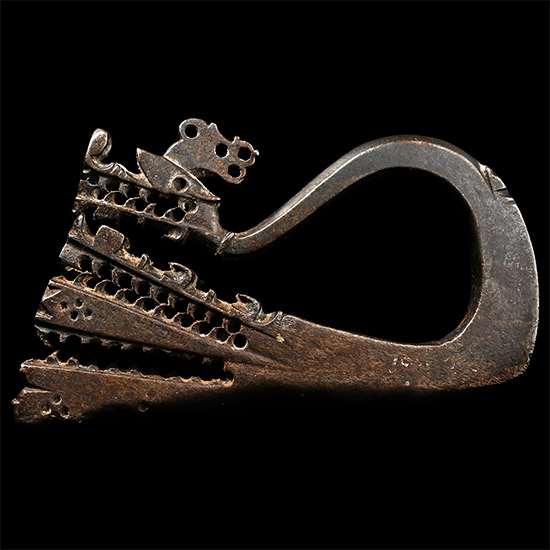
Persian Iron Dragon-Shaped Flint Striker
17th-18th century A.D.Sold for (Inc. bp): £520
With a thick looped body and striking face to the outer edge; handle formed in openwork with stylised serpent-head, open mouth with recurved teeth, trident tail with similar pellet clusters; engraved and drilled detailing. 297 grams, 11.5 cm
Acquired Christie's, The Longridge Collection, London, UK, 2010 (£1,276.00). Personal collection of a Suffolk lady, UK.
Among the objects reflecting the continuation of traditional figural compositions in Indo-Iranian art, there are zoomorphic flint strikers, decorated with serpents, ducks or geese and hawks attacking birds, indicating the persistence of imperial and solar symbols. -
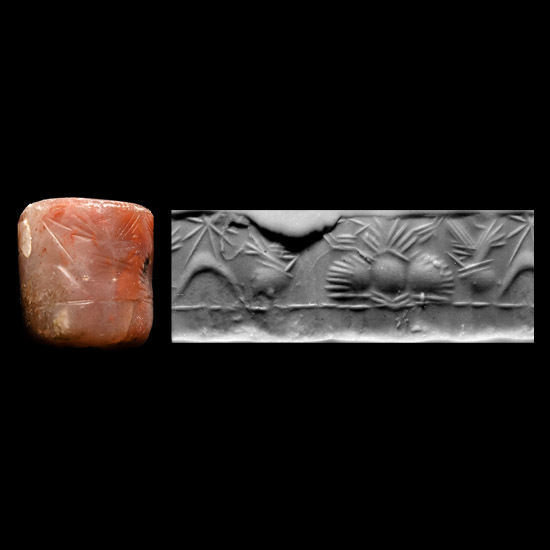
Neo-Assyrian Agate Cylinder Seal with Eagle
Circa 800-700 B.C.Sold for (Inc. bp): £59
A squat seal with a stylised eagle and sun, and a large crescent moon; supplied with a museum-quality impression. 5.07 grams, 15 mm
From the private collection of a European gentleman (1942-2024), formed since the 1970s. Accompanied by a previous typed catalogue slip with collection no.83. -
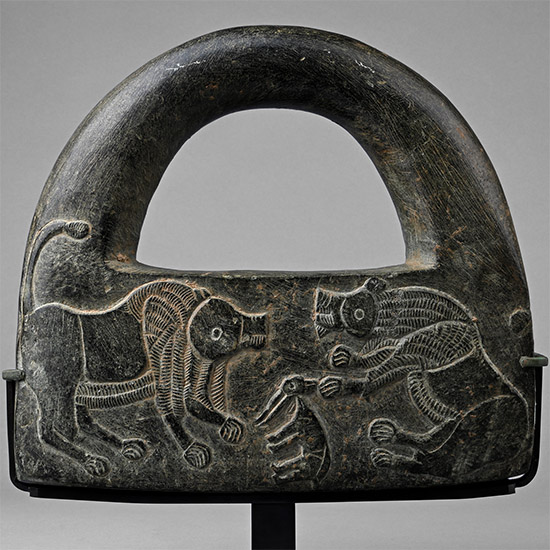
Large Bactrian Black Chlorite 'Hand Bag' Ceremonial Weight
3rd millennium B.C.Sold for (Inc. bp): £13,000
D-shaped in profile with a round-section loop; obverse with a reserved scene of two lions with hatched detailing to the fur advancing towards a small quadruped placed perpendicular to them; reverse with a median eagle with wings extended and feather detailing, flanked by rearing serpents and a scorpion; mounted on a custom-made stand. 6.25 kg total, 28.3 cm high including stand
with Gallery Rosen Ancient Art, Tel Aviv, 10 November 1969. Ex London, UK, gallery, 1971-early 2000s. London, UK, collection. Accompanied by a copy of an original invoice from Gallery Rosen Ancient Art, 10 November 1969. Accompanied by an academic report by Dr Raffaele D’Amato. This lot has been checked against the Interpol Database of stolen works of art and is accompanied by search certificate number no.13246-252973.
Among the most iconic intercultural style objects are the so-called 'lock' or 'handbag' weights. They have been found in a variety of different colourful stones, such as breccia, chlorite, fossiliferous limestone, calcite and onyx. At the beginning, these objects were probably not weights at all, but were likely badges of high office, carried to indicate authority. Similar objects have been found throughout Mesopotamia, the islands of the Persian Gulf, on the Iranian steppe, and in the Indus Valley.
