
Loading, please wait...
LOT 1543
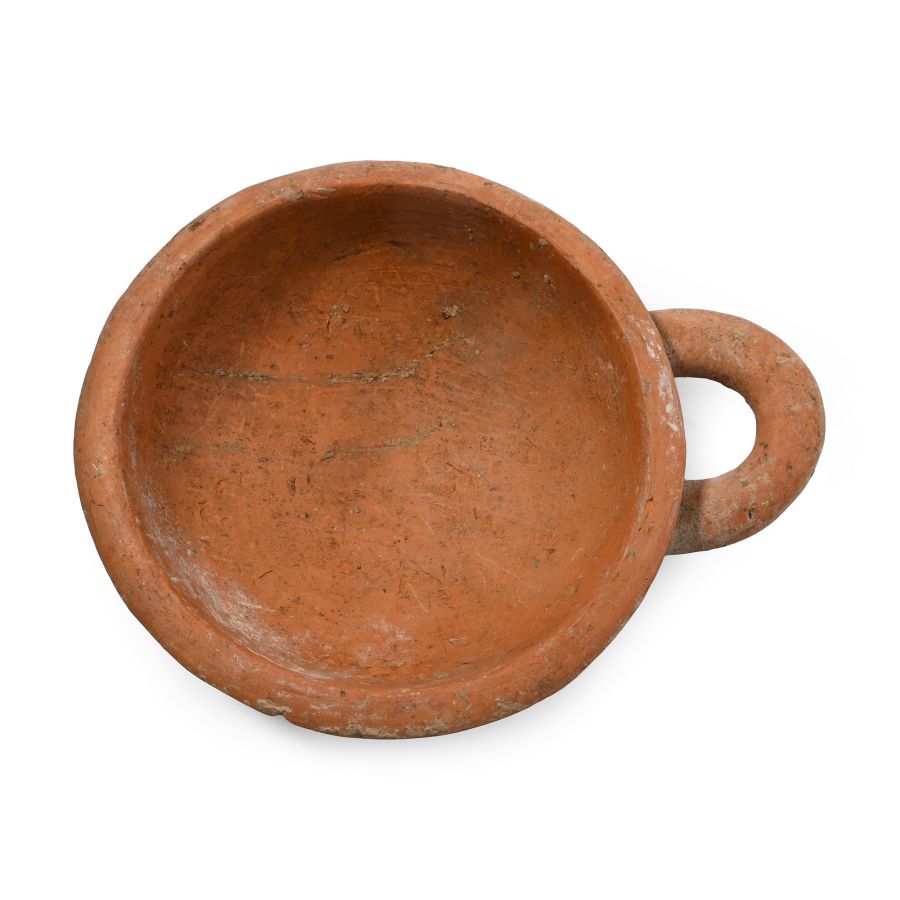
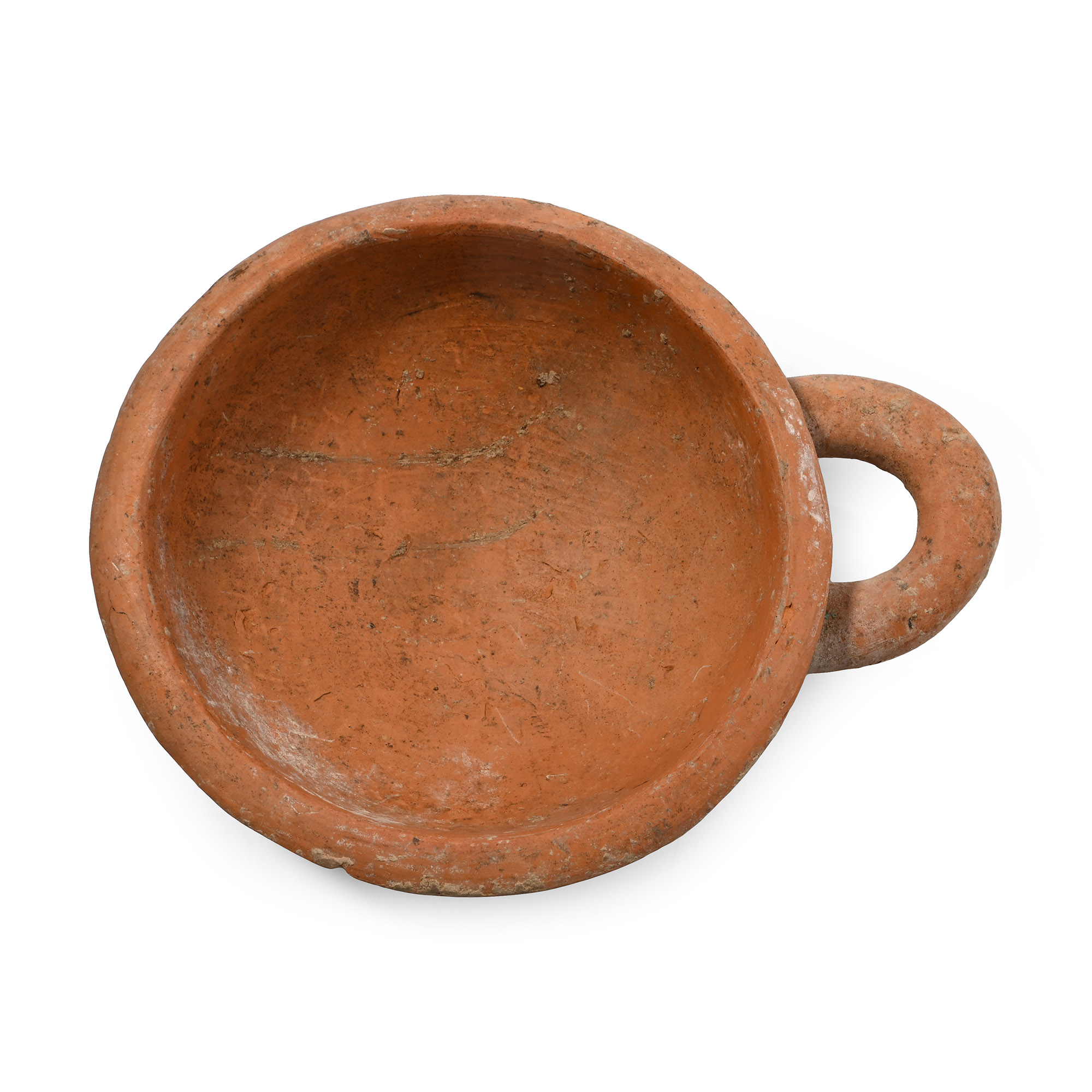
Western Asiatic Terracotta Dipper Cup
1ST MILLENNIUM B.C.
6 1/2 in. (290 grams, 16.5 cm).
Squat in profile with narrow foot, carination below the flared rim, thick loop handle. [No Reserve]
ProvenanceFrom a UK collection formed in the 1980s.
Property of an Essex, UK, gentleman.
TimeLine Auctions follows a vetting process to ensure the authenticity and legality of all items, reinforcing our commitment to integrity and responsible trading. Each antiquity, antique, and coin lot undergoes thorough examination by a vetting committee of at least ten external specialists, professional trade association members, scientists, and archaeologists: Our Vetting Process
AUCTIONS:
TimeLine is a leading auction house specialising in antiquities, ancient art, collectables, natural history, coins, medals, and books. Our auctions offer museums, collectors, historians, and enthusiasts the opportunity to acquire unique and historically significant pieces.
LOT 1543
Western Asiatic Terracotta Dipper Cup
Estimate £60 - 80€70 - 93 (for guidance only)$81 - 108 (for guidance only)
Opening Bid
£5 (EUR 6; USD 7) +BP*
-
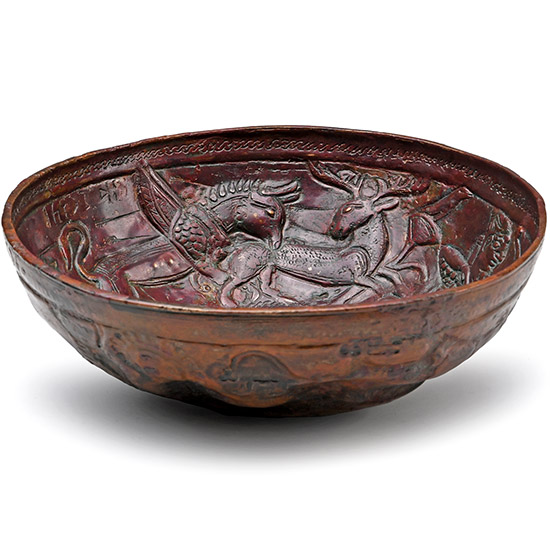
South Arabian Bronze Bowl Featuring a Hunting Scene and Inscription
Southwestern Arabia, Kingdom of Ma’in, circa 3rd century B.C.-2nd century A.D.Estimate: £5,500 - 7,500 (+bp*)
Opening Bid: £2,750
Broad and squat with impressed guilloche below the inner rim, repoussé frieze with fleeing ibex attacked by a gryphon and kneeling archer to the rear; central rosette; seven incised characters to inner face and four to outer face. 277 grams, 15.5 cm
Saleh family collection, Germany, formed prior to 1972. Private collection, UK. This lot has been checked against the Interpol Database of stolen works of art and is accompanied by search certificate no.12809-241324.
The presence of decorated bronze bowls during the later Pre-Islamic period, mainly in the territories of the modern Emirates, is well documented. Many decorated bowls and bowl fragments were discovered at Mleiha; one or more possible fragments were found at ed-Dur, and a single bowl comes from a Pre-Islamic period C tomb in Dibba. They are also similar to the so-called Phoenician - or, more correctly, Levantine - bowls produced in the 9th-early 7th century B.C. They combine local Levantine elements with imagery borrowed from Mesopotamia and Egypt, and local Arabian themes, such as camel and horse riding, often composed in radial zones. -
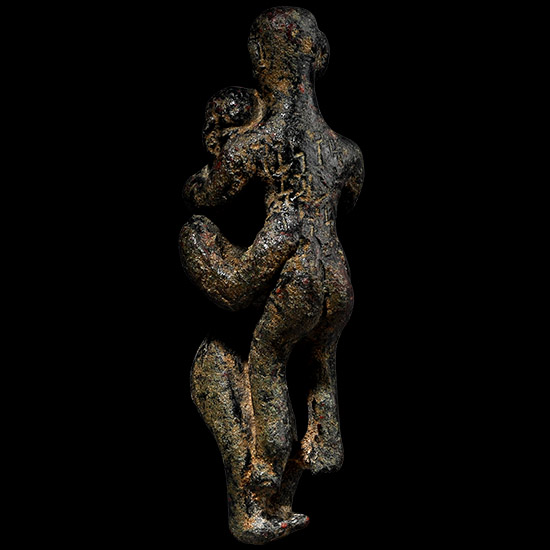
South Arabian Carving of a Nude Couple in Erotic Embrace with Inscription
1st century B.C.-1st century A.D.Estimate: £3,500 - 4,500 (‡+bp*)
Opening Bid: £1,944
Modelled in the round as two figures embracing, the upper figure with a pseudo inscription to the back; mounted on a custom-made stand. 380 grams total, 13.3 cm including stand
Formerly in the collection of Mr K. Ex collection of Mr H., acquired in Switzerland in the early 2000s. Private collection, Switzerland, acquired in 2010. This lot has been checked against the Interpol Database of stolen works of art and is accompanied by a search certificate number no.12875-241696.
Through trade the religion of Pre-Islamic Arabian Peninsula was subject to a certain measure of foreign influence, which is demonstrated by the discovery of some outstanding bronze statuettes of obvious mythical or religious character in various localities, for example at Qaryat al-Fau. The most important statuettes include a representation of Harpocrates, son of the Goddess Isis (goddess of fertility), Minerva (goddess of wisdom), and a statuette of a dolphin which is known to have been regarded in Graeco-Roman and Nabataean mythology as a symbol of protection. -
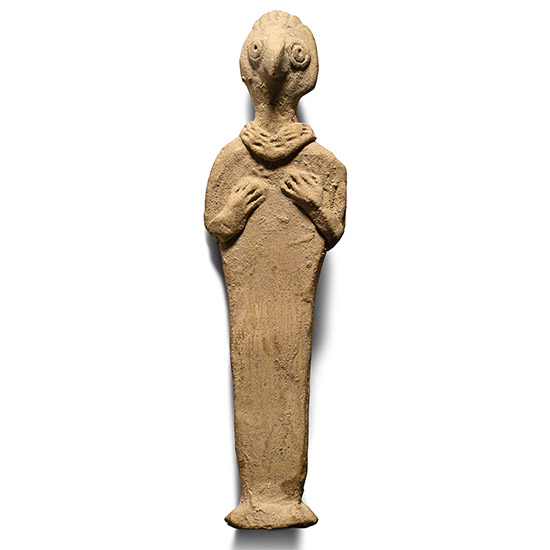
Syro-Hittite Terracotta Figure
2nd millennium B.C.Estimate: £100 - 140 (+bp*)
Bids: 1 | Current Bid: £5
Standing figure with applied eyes and beaked nose, hatched collar, arms bent with hands flat on the chest; heavily restored. 62.7 grams, 15.5 cm
From a private St. Albans, UK, collection, formed 1960s-1990s.
