
Loading, please wait...
LOT 1216
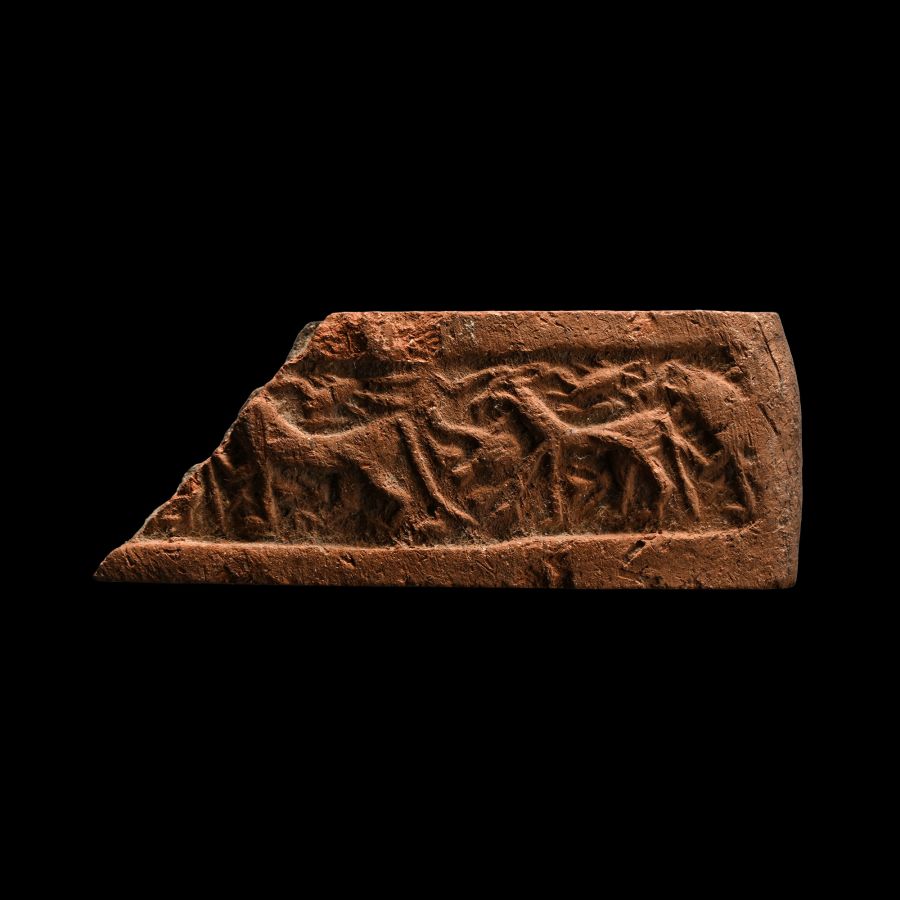
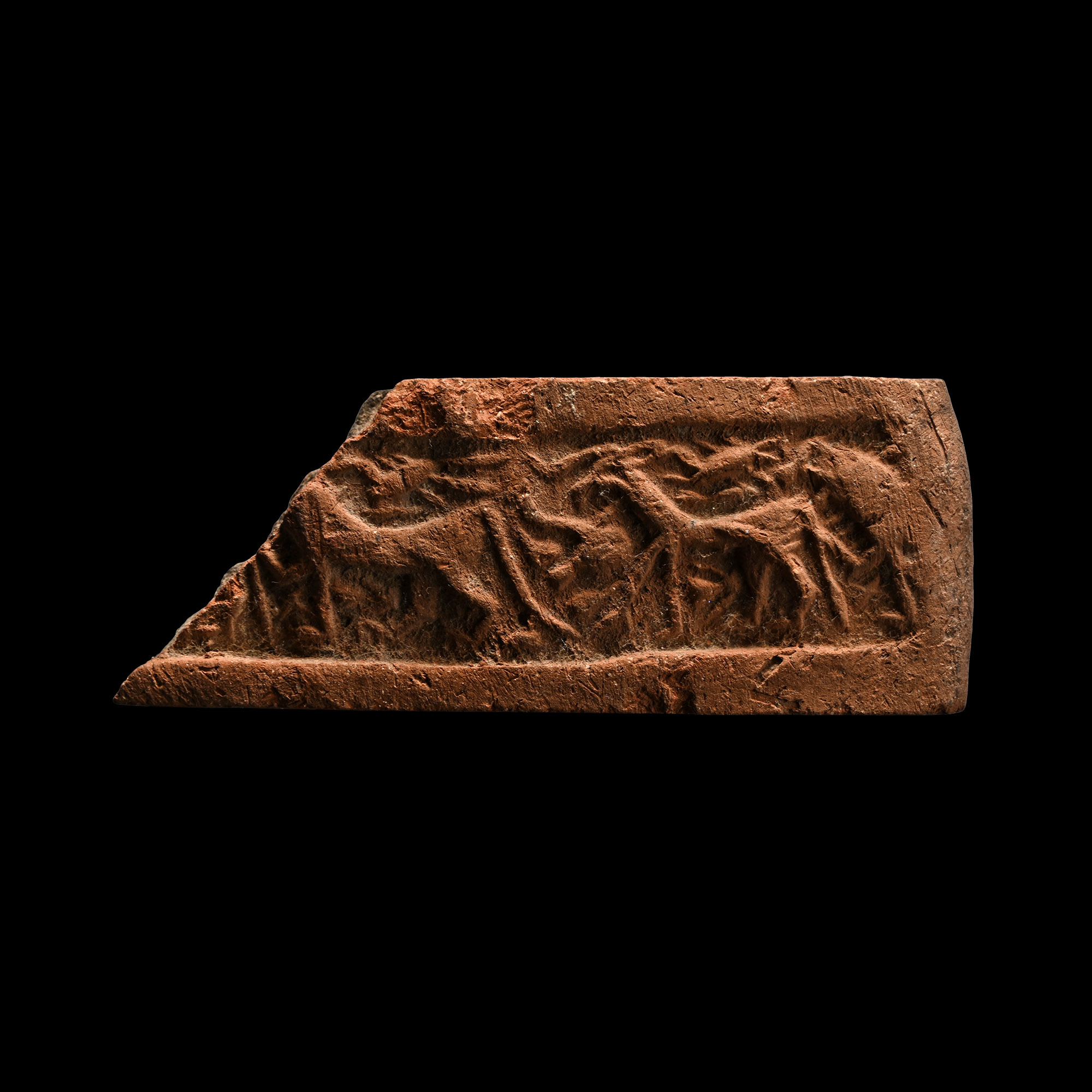
Western Asiatic Terracotta Cylinder Seal Impression with Animals
1ST MILLENNIUM B.C.
3 1/4 in. (58.4 grams, 83 mm).
Thick section with a band of impressed advancing animals. [No Reserve]
ProvenanceFrom the private collection of a European gentleman (1942-2024), formed since the 1970s.
LiteratureCf. a similar seal in Wilson, J.A., Allen, T.G., Ancient Oriental Cylinder and Other Seals, with a description of the collection of Mrs. William H.Moore, Chicago, 1940, fig.116.
CONDITIONTimeLine Auctions follows a vetting process to ensure the authenticity and legality of all items, reinforcing our commitment to integrity and responsible trading. Each antiquity, antique, and coin lot undergoes thorough examination by a vetting committee of at least ten external specialists, professional trade association members, scientists, and archaeologists: Our Vetting Process
AUCTIONS:
TimeLine is a leading auction house specialising in antiquities, ancient art, collectables, natural history, coins, medals, and books. Our auctions offer museums, collectors, historians, and enthusiasts the opportunity to acquire unique and historically significant pieces.
LOT 1216
Western Asiatic Terracotta Cylinder Seal Impression with Animals
Sold for (Inc. bp): £59
-
.jpg)
Western Asiatic Silver Ring with Calligraphic Inscription
Circa 8th-10th century A.D.Sold for (Inc. bp): £221
Comprising a D-section hoop expanding towards the shoulders, a raised oval bezel with a two-line cursive Kufic inscription. 8.28 grams, 22.88 mm overall, 17.46 mm internal diameter (approximate size British K 1/2, USA 5 1/2, Europe 10.58, Japan 10)
From the private collection of a European gentleman (1942-2024), formed since the 1970s. -
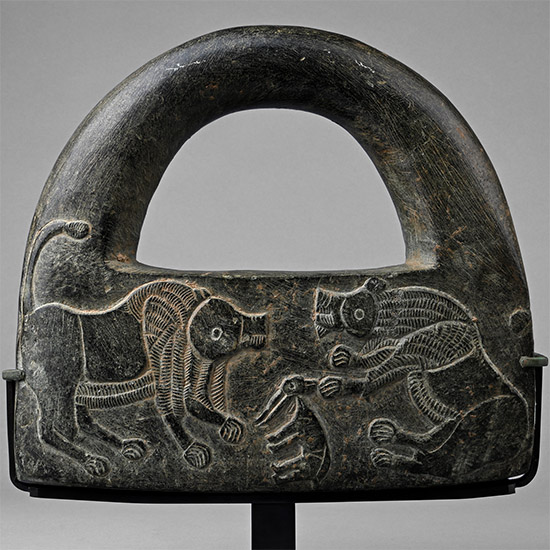
Large Bactrian Black Chlorite 'Hand Bag' Ceremonial Weight
3rd millennium B.C.Sold for (Inc. bp): £13,000
D-shaped in profile with a round-section loop; obverse with a reserved scene of two lions with hatched detailing to the fur advancing towards a small quadruped placed perpendicular to them; reverse with a median eagle with wings extended and feather detailing, flanked by rearing serpents and a scorpion; mounted on a custom-made stand. 6.25 kg total, 28.3 cm high including stand
with Gallery Rosen Ancient Art, Tel Aviv, 10 November 1969. Ex London, UK, gallery, 1971-early 2000s. London, UK, collection. Accompanied by a copy of an original invoice from Gallery Rosen Ancient Art, 10 November 1969. Accompanied by an academic report by Dr Raffaele D’Amato. This lot has been checked against the Interpol Database of stolen works of art and is accompanied by search certificate number no.13246-252973.
Among the most iconic intercultural style objects are the so-called 'lock' or 'handbag' weights. They have been found in a variety of different colourful stones, such as breccia, chlorite, fossiliferous limestone, calcite and onyx. At the beginning, these objects were probably not weights at all, but were likely badges of high office, carried to indicate authority. Similar objects have been found throughout Mesopotamia, the islands of the Persian Gulf, on the Iranian steppe, and in the Indus Valley. -
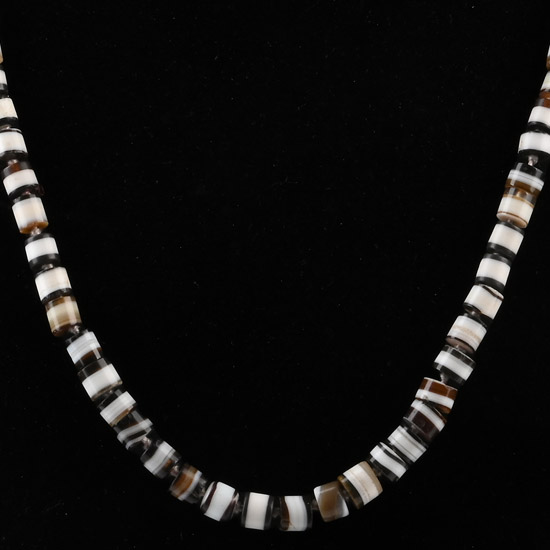
Bactrian Banded Agate Bead Necklace
1st millennium B.C.Sold for (Inc. bp): £416
Composed of cylindrical beads showing contrasting banding, restrung with a modern clasp. 52.4 grams, 73 cm
London, UK gallery, 1971-early 2000s. Private collection, London, UK.
