Loading, please wait...

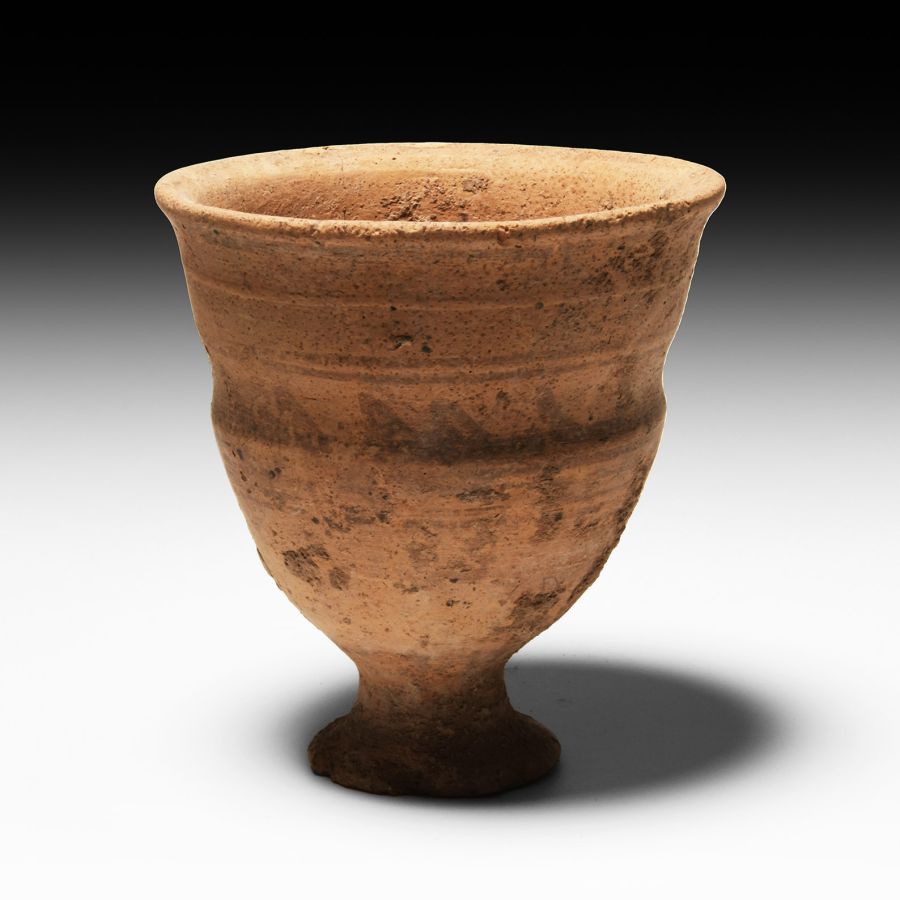
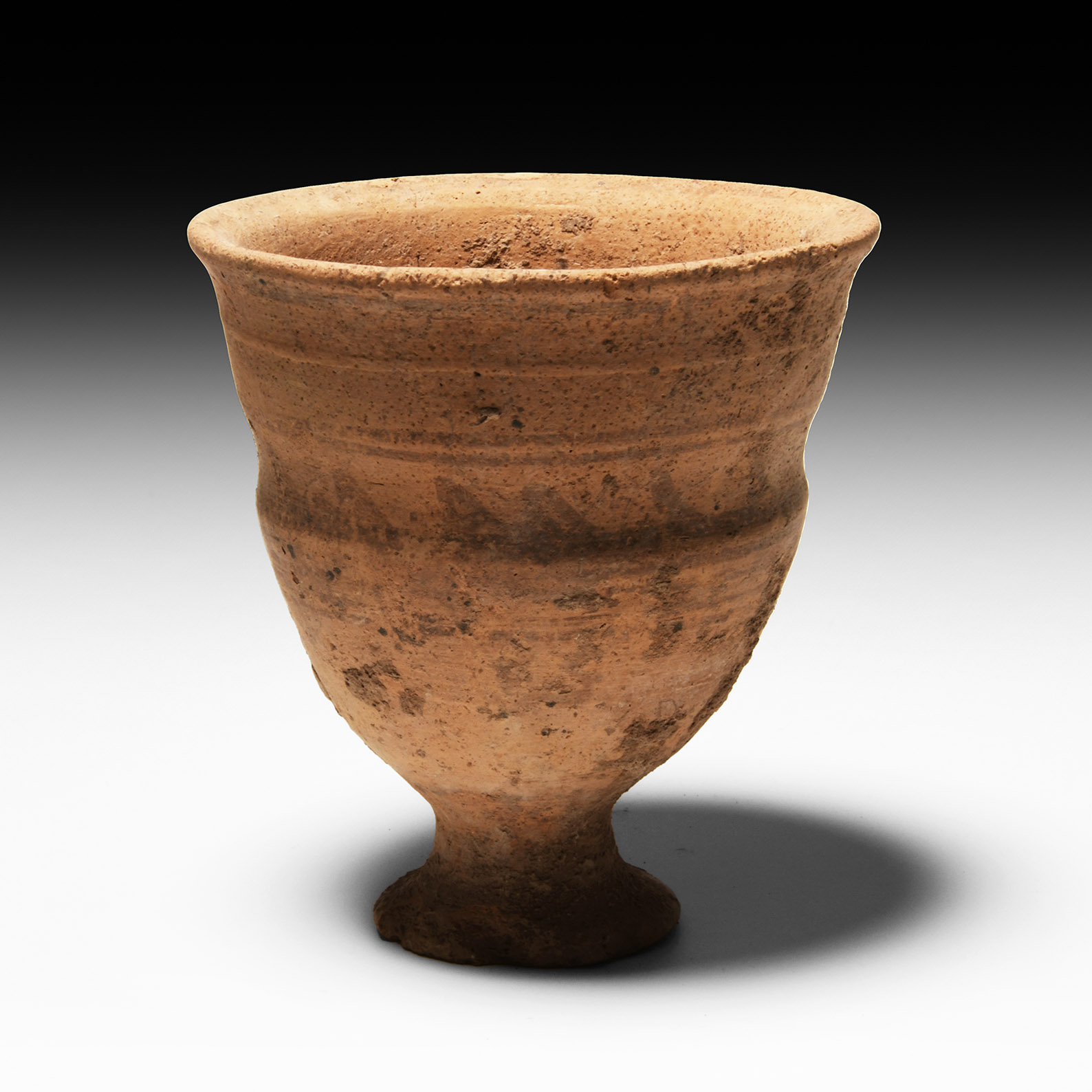
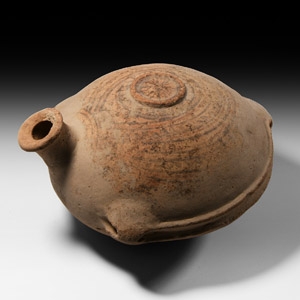
Western Asiatic Terracotta Chalice Western Asiatic Terracotta Chalice Western Asiatic Terracotta Chalice
Use mousewheel to zoom in and out, click to enlarge
Details

LOT 0930

Western Asiatic Terracotta Chalice

1ST MILLENNIUM B.C.

3 1/2 in. (126 grams, 90 mm high).

A terracotta unglazed footed cup with flared base, short stem, carinated shoulder and everted rim. [No Reserve]

Provenance

Acquired 1980-2015.
Ex Abelita family collection.

CONDITION
VETTING:

TimeLine Auctions follows a vetting process to ensure the authenticity and legality of all items, reinforcing our commitment to integrity and responsible trading. Each antiquity, antique, and coin lot undergoes thorough examination by a vetting committee of at least ten external specialists, professional trade association members, scientists, and archaeologists: Our Vetting Process


AUCTIONS:

TimeLine is a leading auction house specialising in antiquities, ancient art, collectables, natural history, coins, medals, and books. Our auctions offer museums, collectors, historians, and enthusiasts the opportunity to acquire unique and historically significant pieces.

LOT 0930

Western Asiatic Terracotta Chalice

Sold for (Inc. bp): £46

Print page

RELATED LOTS
  • Nabataean Painted Dish
    Nabataean Painted Dish
    4th century B.C.-1st century A.D.

    Sold for (Inc. bp): £702

    A shallow terracotta dish with raised rim, painted design of fronds and triangles. 117 grams, 16.5 cm wide


    From an important collection of Holy Land pottery formed pre 1988, thence by descent.

    Lot Details

  • Western Asiatic Cuneiform Tablet, A Letter from Karariya to Taridum a Servant of King Iluni
    Western Asiatic Cuneiform Tablet, A Letter from Karariya to Taridum a Servant of King Iluni
    2nd millennium B.C.

    Sold for (Inc. bp): £520

    A roughly rectangular clay tablet bearing dense rows of cuneiform text to both principal faces and to each of the four side edges; a letter from Karariya to Ṭaridum, probably a servant of Iluni, Karariya serves a foreign ruler (as indicated by the mention of the deity Hitti) who has just ascended the throne; he is of the same rank as Taridum, who considers him his brother: 'May Šamaš and Hitti preserve my brother alive forever!'; they deal with matters they have in common, a lawsuit to be tried by Karariya, and exchanges of goods between their two houses: 'There are no more wicks (?) for the lamps in my house (...). The wine from my stock is spent and we could not load the donkeys (with wine) for you'; repaired. 110 grams, 82 mm


    Specialised collection of cuneiform texts, the property of a London gentleman and housed in London before 1992. Thence by descent to family members. Examined by Professor Wilfrid George Lambert FBA (1926-2011), historian, archaeologist, and specialist in Assyriology and Near Eastern archaeology, in the late 1980s and early 1990s. This small collection is exceptional for the variety of types, including some very rare and well preserved examples.

    Lot Details

  • Western Asiatic Bronze Zoomorphic Cauldron
    Western Asiatic Bronze Zoomorphic Cauldron
    Hasanlu IV, circa 10th-8th century B.C.

    Estimate: £5,000 - 7,000 (+bp*)

    Opening Bid: £2,500

    A bronze calotte-shaped cauldron or basin with collared rectangular handles featuring scalloped grips along the upper edges, a pair of stylised bird of prey protomes beneath each, talons drawn up to their chests, bulging eyes, prominent hooked beaks, wings spread and fan-shaped tails. 679 grams, 23.5 cm wide


    Ex Maurice Braham, 1970s. London collection, 1990s. Accompanied by previous typed and illustrated catalogue pages. This lot has been checked against the Interpol Database of stolen works of art and is accompanied by search certificate no.11640-199105.

    A rare object. The limited number of parallels feature birds of a more schematic style. Only four published parallel cauldrons with bird protomes are known to exist. Given the quality of the ornament, such basis may have been used by members of the elite in Iron Age Iranian society, although their exact functions remains unclear. One 'orientalised' Etruscan bronze cauldron was found used as a cremation vessel, placed in a tumulus and associated with a localised 'heroic' burial context. Other feasible uses include high status drinking vessels or symbols of rank.

    Lot Details

Stay up-to-date with the latest from TimeLine Auctions by joining our mailing list