Loading, please wait...
Details
LOT 0282
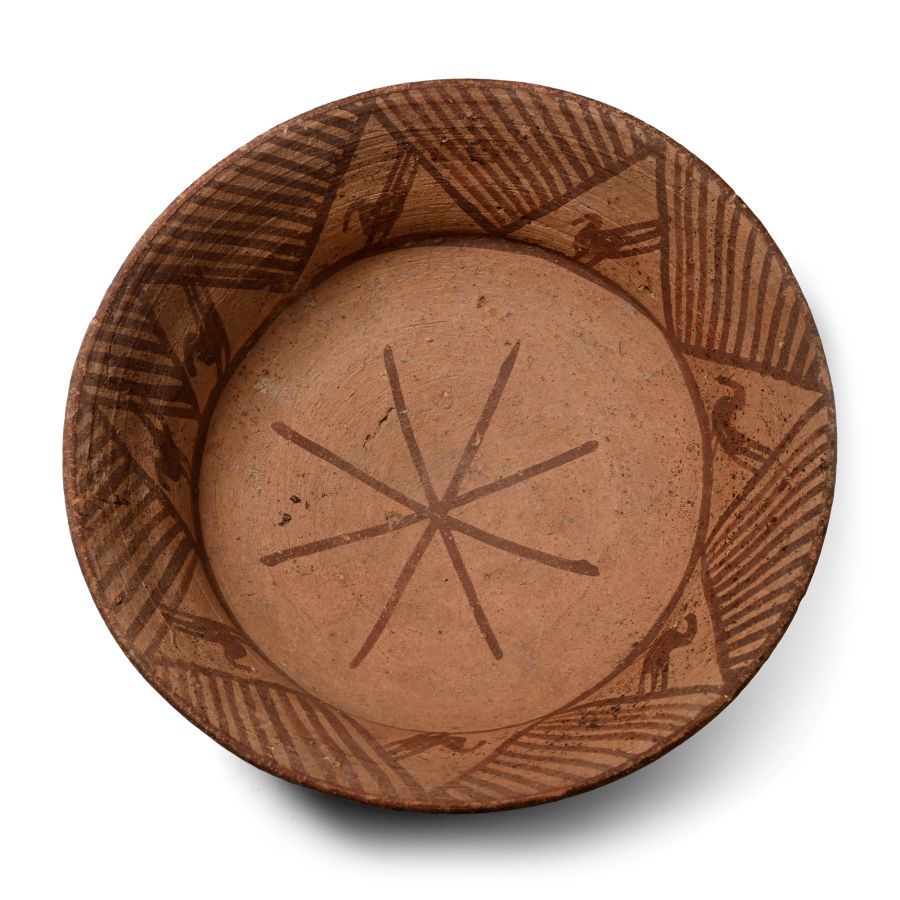
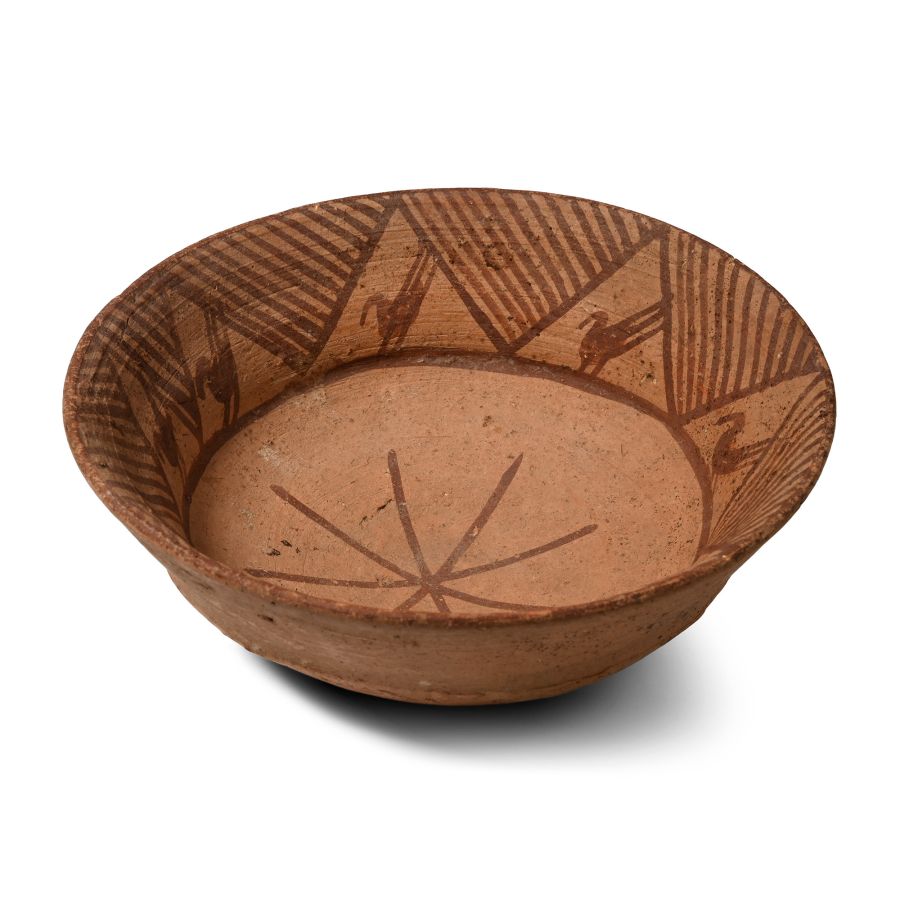
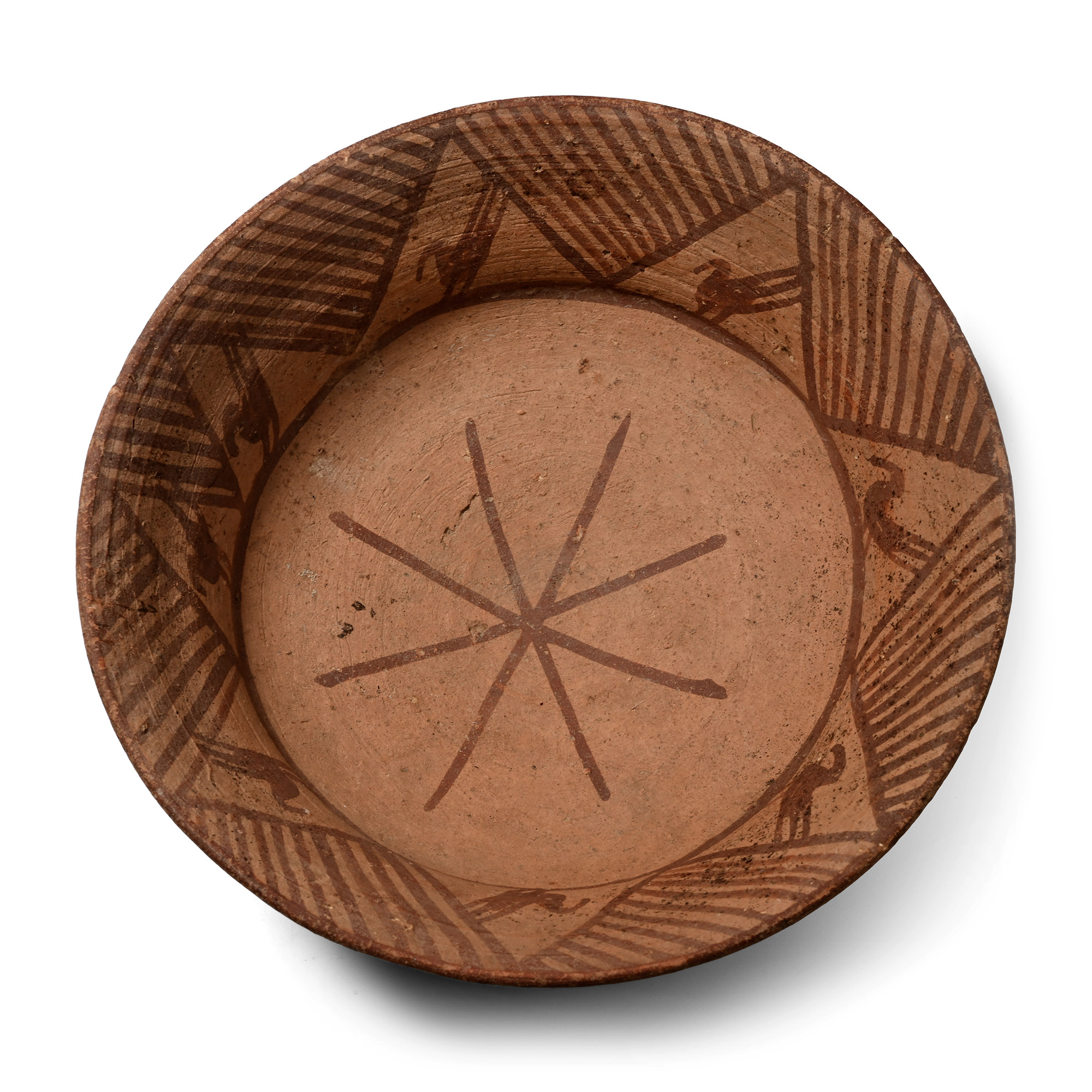
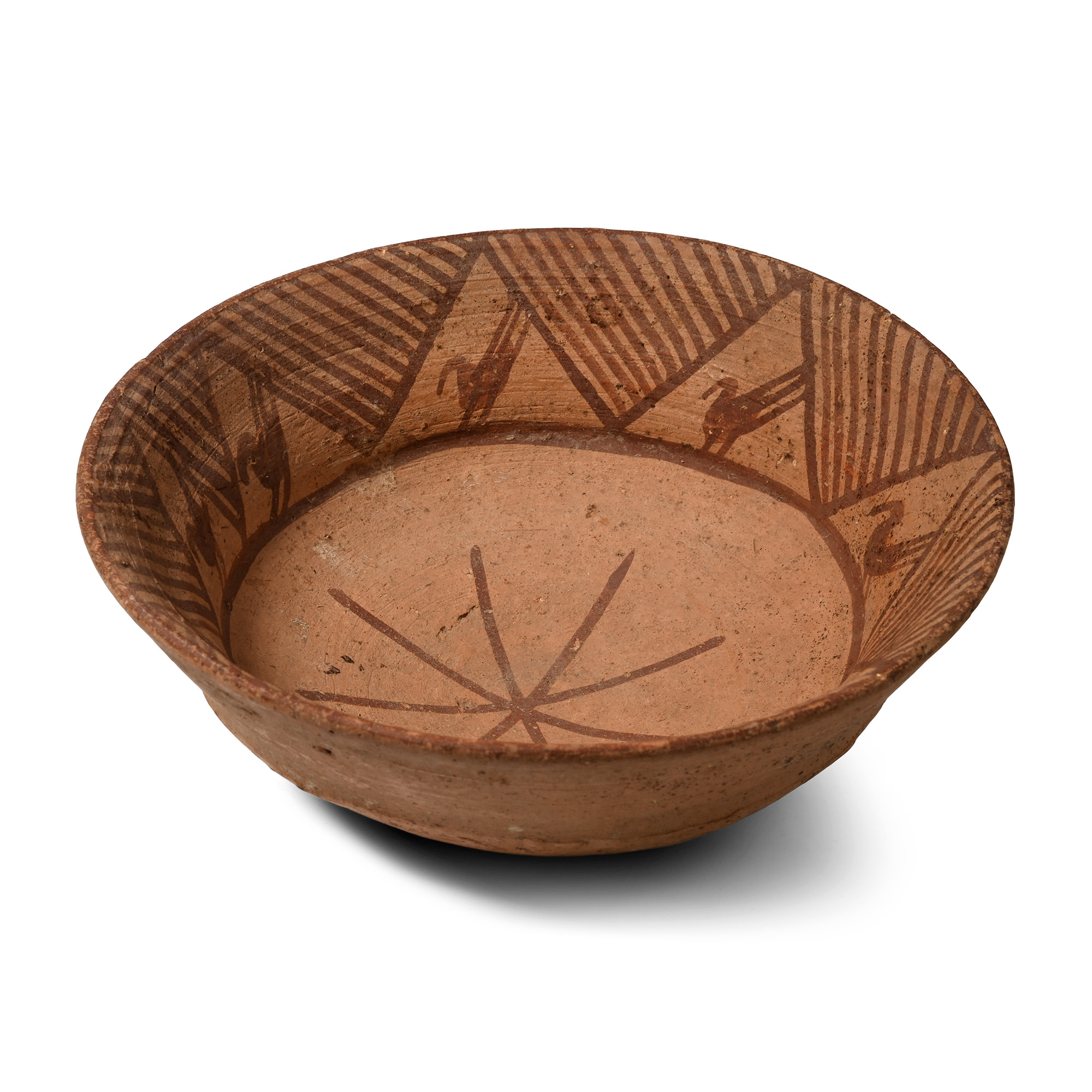
Western Asiatic Terracotta Bowl with Painted Birds
4TH-3RD MILLENNIUM B.C.
6 1/4 in. (298 grams, 16 cm wide).
With a rounded underside and flared rim; painted asterisk to centre, hatched chevrons to mouth with profile birds in the voids; early Iranian workmanship.
Provenance
Ex London, UK, gallery, 1971-early 2000s.
London, UK, collection.
VETTING:
TimeLine Auctions follows a vetting process to ensure the authenticity and legality of all items, reinforcing our commitment to integrity and responsible trading. Each antiquity, antique, and coin lot undergoes thorough examination by a vetting committee of at least ten external specialists, professional trade association members, scientists, and archaeologists: Our Vetting Process
AUCTIONS:
TimeLine is a leading auction house specialising in antiquities, ancient art, collectables, natural history, coins, medals, and books. Our auctions offer museums, collectors, historians, and enthusiasts the opportunity to acquire unique and historically significant pieces.
LOT 0282
Western Asiatic Terracotta Bowl with Painted Birds
Estimate £800 - 1,000€930 - 1,160 (for guidance only)$1,080 - 1,350 (for guidance only)
RELATED LOTS
-
Sasanian Agate Stamp Seal with Man Holding Staves
Circa 3rd-7th century A.D.Sold for (Inc. bp): £52
Annular in profile with incised figure of a man holding two staves. 8.07 grams, 21.03 mm
From the private collection of a European gentleman (1942-2024), formed since the 1970s. -
Middle Assyrian Brick-Shaped Tablet with Funerary Inscription for Adad-Shumu-lesir’s Tomb
1363-912 B.C.Sold for (Inc. bp): £5,200
A rectangular brick-shaped tablet, inscribed in cuneiform script across three vertical faces, with a single column to the fourth and a continuation of text across the top surface; the inscription a funerary curse relating to the tomb of Adad-šumu-lešir, warning against interference with the burial, reading in part: 'As for a stranger, or somebody who would approach that tomb, or would bring up a corpse out of it and bury his own within, or would touch the silver inside - Adad, Šamaš, or Nergal will fill his house and field with shortage, collapse, and murder. He will repay the property of that tomb sevenfold, dedicating it to Šuriha. For the offspring of Adad-šumu-lešir he shall be undone for taking out and bringing down objects in the tomb, and for burying another body within it. Month Kalmartu, third day, eponymy of Aššur-mušezib.' 333 grams, 14.3 cm
Acquired in 1996. Private collection, Switzerland, thence by descent. Private collection, since the late 1990s. This lot has been checked against the Interpol Database of stolen works of art and is accompanied by a search certificate number no.12872-241667.
This Middle Assyrian brick-shaped tablet bears a funerary inscription for the tomb of Adad-shumu-lesir, a name that reflects devotion to the storm god Adad, an important deity in the Assyrian pantheon. Tablets of this kind were often placed within or near tombs as a lasting record of the individual and to mark ownership or dedication of the burial space. The brick-like form reflects the architectural traditions of Mesopotamia, where inscribed bricks were commonly used in both building and commemorative contexts. Such inscriptions not only honoured the deceased but also served to preserve their name and memory, which was believed to be essential for the afterlife. Objects like this provide valuable insight into Assyrian funerary practices and the importance placed on remembrance and identity beyond death. -
Late Hittite Shoe-Shaped Vessel
2nd millennium B.C.Estimate: £3,000 - 4,000 (‡+bp*)
Opening Bid: £1,500
Hollow-formed shoe-shaped jug with rolled rim to the ankle, tab with hole for thong and stopper; welt-line to upper face and around sole. 585 grams, 23 cm
Private collection, acquired on the German art market in 1993; thence by descent. This lot has been checked against the Interpol Database of stolen works of art and is accompanied by a search certificate number no.13226-249313.
These upturned shoes are characteristic of the whole Hittite era. They are attested until the Late Hittite age. This kind of footwear appears later in the Aegean area, probably due to the influence of Anatolian fashion on Bronze Age Greek culture. It may have been the case that the Akkiyawa (Achaeans) living on the western coast of Anatolia adopted such items (as many others) from the Anatolian Indo-Europeans and exported them to the Greek lands, with the first examples attested in Greece only around the 14th century BC.