
Loading, please wait...
LOT 1282
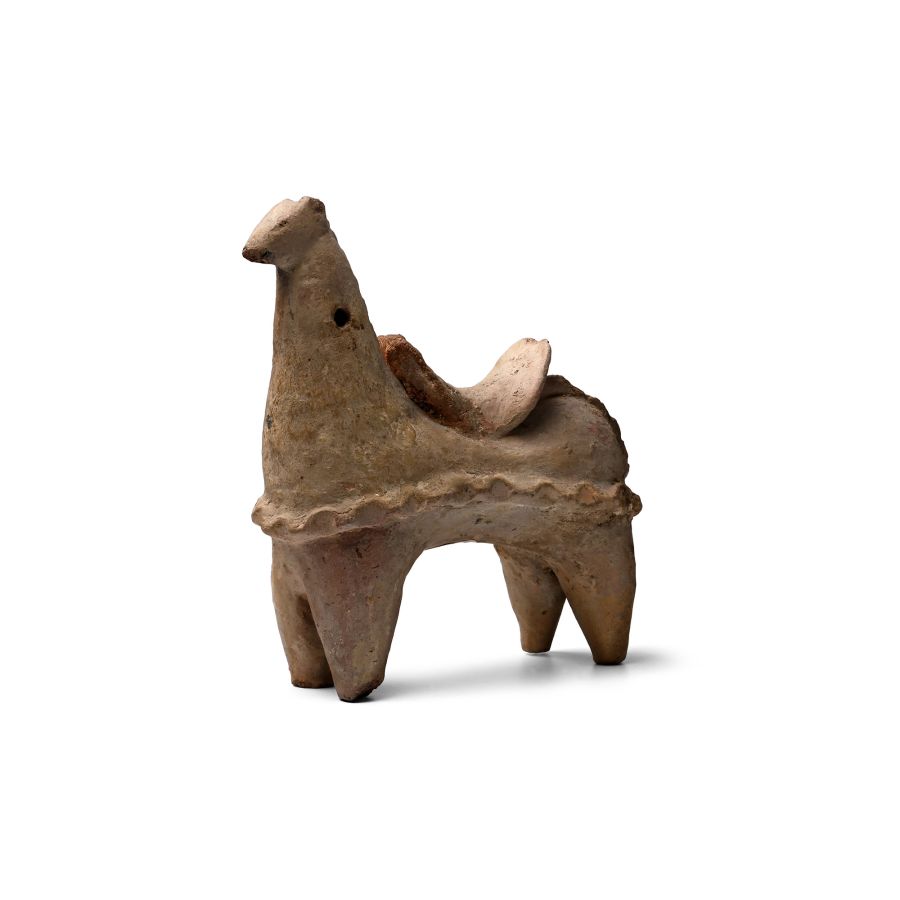
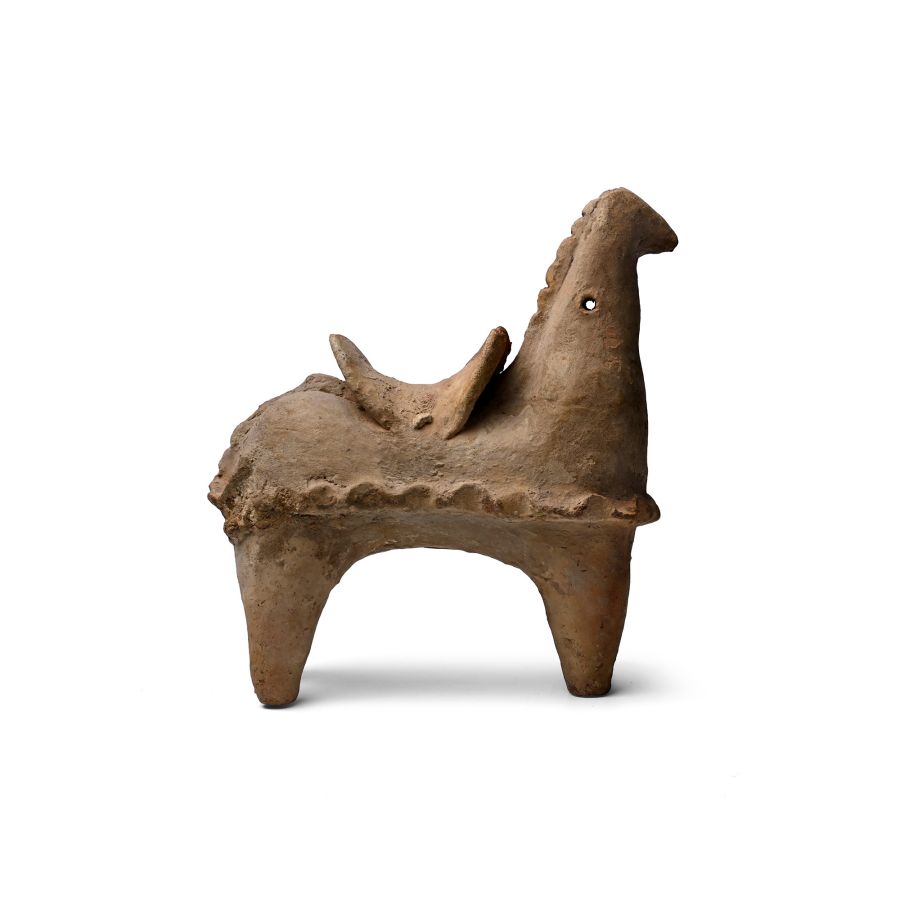
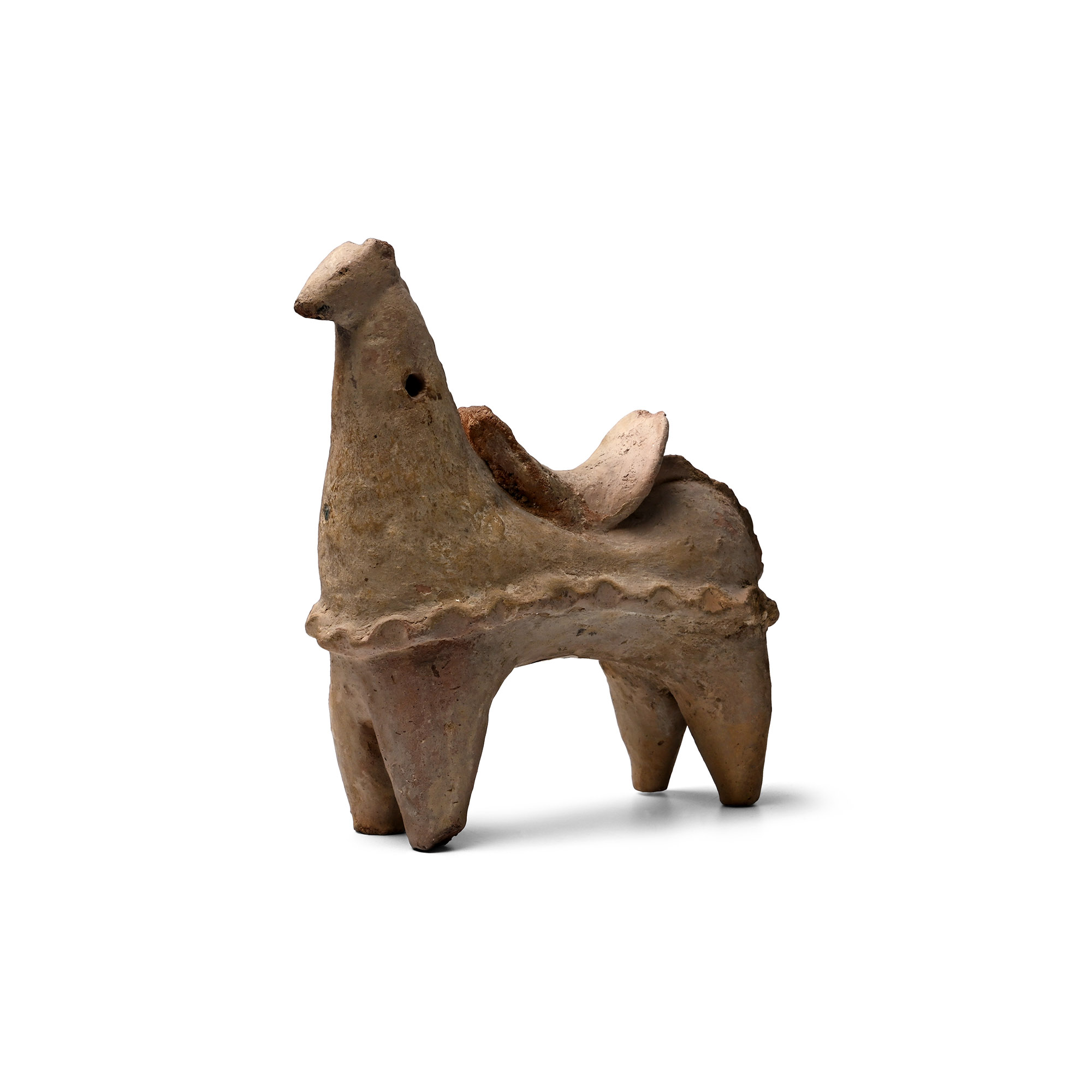
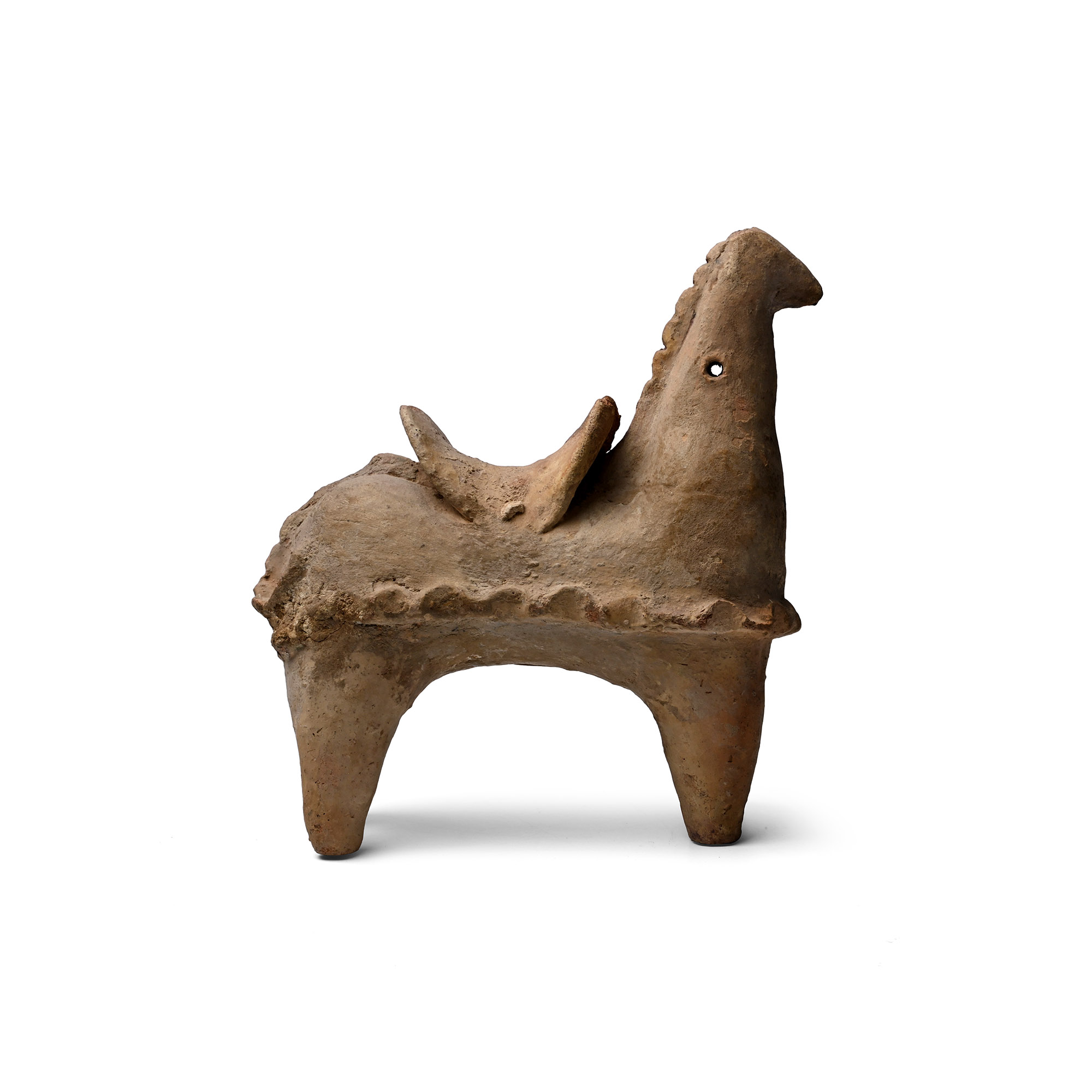
Western Asiatic Terracotta Animal with Saddle
1ST MILLENNIUM B.C.
7 in. (770 grams, 18 cm high).
Modelled in the round with crimped band to the flanks, scooped saddle, applied mane detailing; pierced at the neck to accept reins, with old label to the underside: 'YAZDANI 242C LONDON'.
ProvenanceUK collection, 1990s.
Acquired on the UK art market, before 2000.
Private collection, Mr M.V., a London-based businessman.
This lot has been cleared against the Art Loss Register database, and is accompanied by an illustrated lot declaration signed by the Head of the Antiquities Department, Dr Raffaele D'Amato.
TimeLine Auctions follows a vetting process to ensure the authenticity and legality of all items, reinforcing our commitment to integrity and responsible trading. Each antiquity, antique, and coin lot undergoes thorough examination by a vetting committee of at least ten external specialists, professional trade association members, scientists, and archaeologists: Our Vetting Process
AUCTIONS:
TimeLine is a leading auction house specialising in antiquities, ancient art, collectables, natural history, coins, medals, and books. Our auctions offer museums, collectors, historians, and enthusiasts the opportunity to acquire unique and historically significant pieces.
LOT 1282
Western Asiatic Terracotta Animal with Saddle
Estimate £500 - 700€580 - 810 (for guidance only)$680 - 950 (for guidance only)
-
Large Western Asiatic Terracotta Bichrome Vessel with Handle
8th-9th century A.D.Estimate: £600 - 800 (+bp*)
Opening Bid: £300
With trumpet-shaped base, flared bulbous body, tapering spout with crested bar and strap handle connected to the waisted filler; dense painted scroll and floral designs with reserved scrolls and bands. 1.14 kg, 23 cm high
UK collection, 1990s. Acquired on the UK art market, before 2000. Private collection, Mr M.V., a London-based businessman. This lot has been cleared against the Art Loss Register database, and is accompanied by an illustrated lot declaration signed by the Head of the Antiquities Department, Dr Raffaele D'Amato. -
Sumerian Lapis Lazuli Cylinder Seal with Gods and Attendant
Early Dynastic III, 2600-2340 B.C.Sold for (Inc. bp): £1,105
With two sections, upper section with two seated figures and two attendants, lower section with standing figure among animals; supplied with a museum-quality impression. 12.4 grams, 33 mm
From the collection of the late S, London, UK, 1970-2000. Examined by Professor Wilfrid George Lambert FBA (1926-2011), historian, archaeologist, and specialist in Assyriology and Near Eastern archaeology, in the 1990s. This lot has been cleared against the Art Loss Register database, and is accompanied by an illustrated lot declaration signed by the Head of the Antiquities Department, Dr Raffaele D'Amato. -
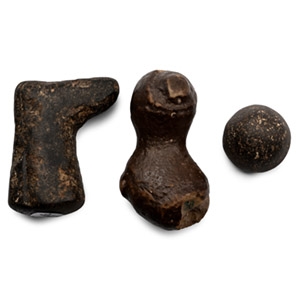
Western Asiatic Grinding Stone Group
2nd-1st millennium B.C.Estimate: £100 - 140 (+bp*)
Opening Bid: £50
Comprising: plano-convex type with old label to underside; 'thumb' type with label to grinding surface; waisted type with inked collector's number. 502 grams total, 40-91 mm
Acquired on the European art market in the early 2000s. with Galerie Rhéa, Zurich, Switzerland. This lot has been cleared against the Art Loss Register database, and is accompanied by an illustrated lot declaration signed by the Head of the Antiquities Department, Dr Raffaele D'Amato.
