
Loading, please wait...
LOT 1541
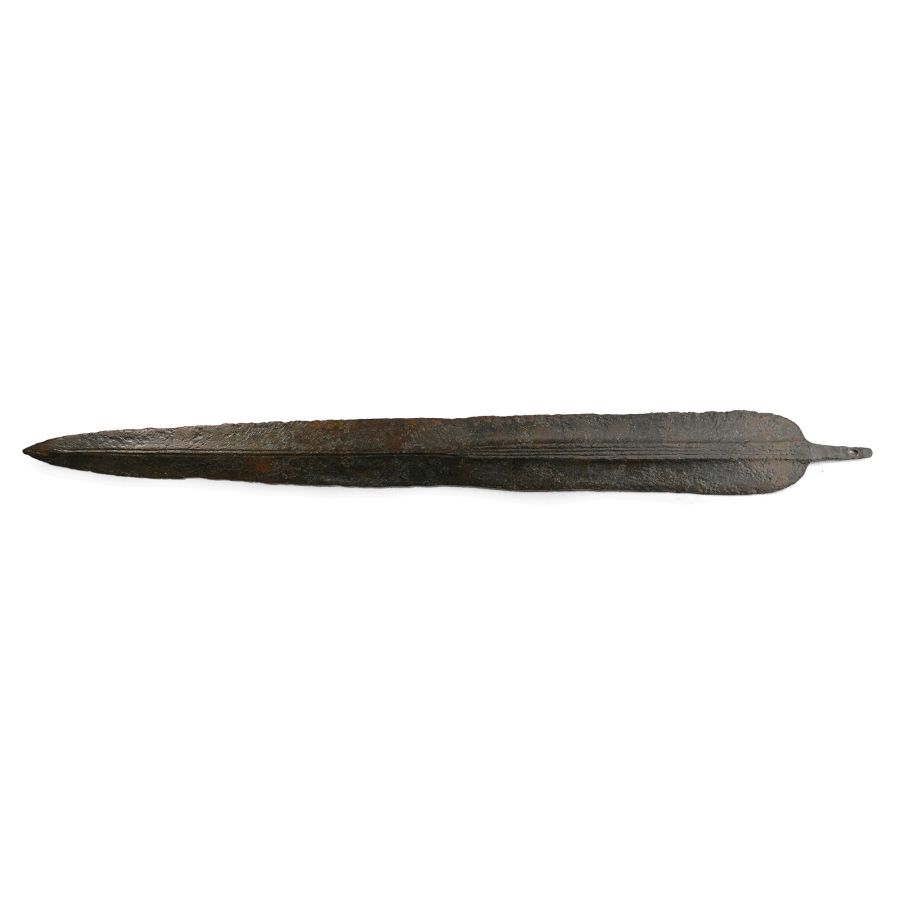
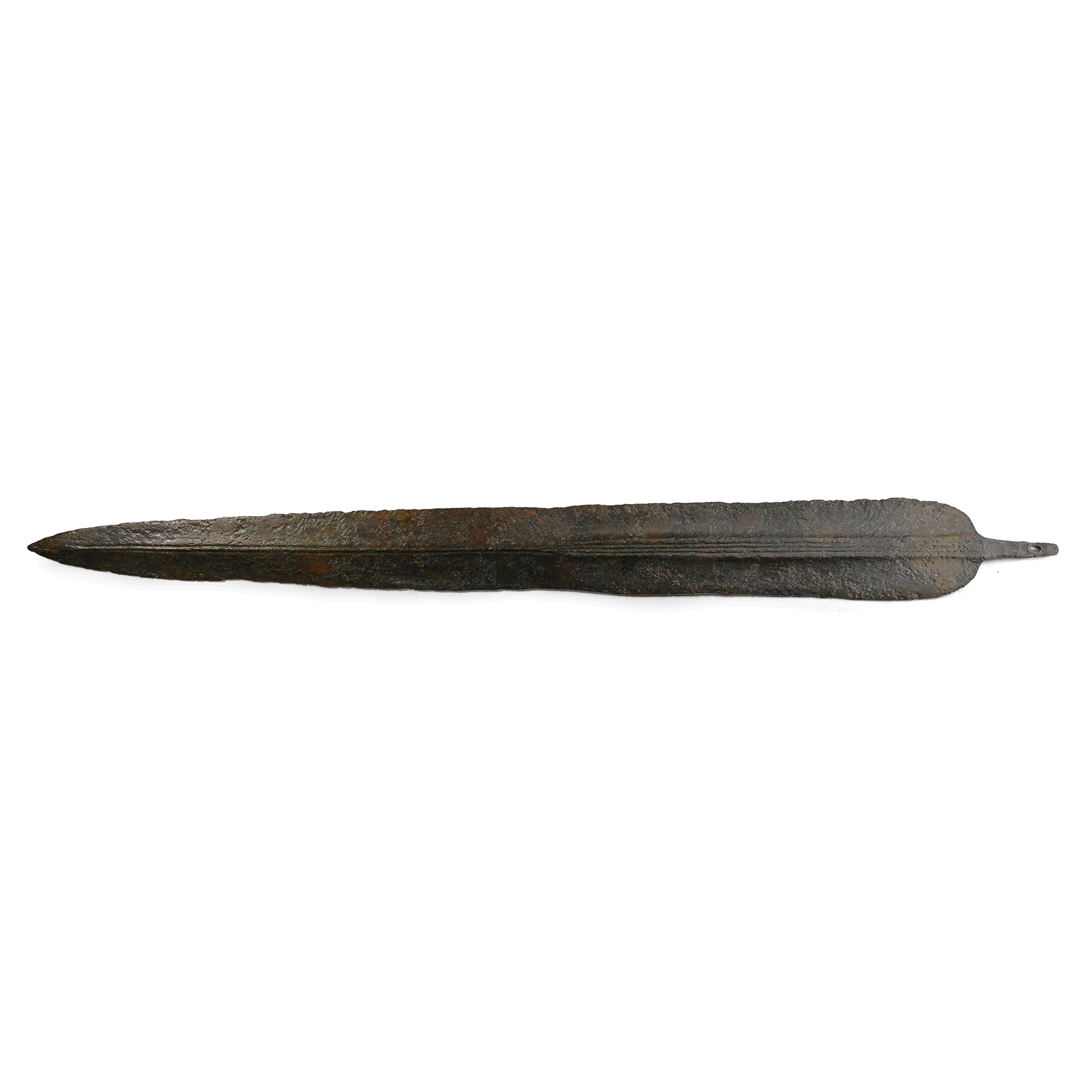
Western Asiatic Sword Blade with Blood Channels
2ND-1ST MILLENNIUM B.C.
18 3/4 in. (345 grams, 47.5 cm).
With corrugated raised midrib extending to a short tang, fullers with curved ends extending to the shoulders.
ProvenanceEx Abelita family collection, 1990s.
LiteratureCf. for a similar blade Christie's, The Axel Guttmann Collection of Ancient Arms and Armour, part 1, London, 2002, p.34, no.31.
CONDITIONTimeLine Auctions follows a vetting process to ensure the authenticity and legality of all items, reinforcing our commitment to integrity and responsible trading. Each antiquity, antique, and coin lot undergoes thorough examination by a vetting committee of at least ten external specialists, professional trade association members, scientists, and archaeologists: Our Vetting Process
AUCTIONS:
TimeLine is a leading auction house specialising in antiquities, ancient art, collectables, natural history, coins, medals, and books. Our auctions offer museums, collectors, historians, and enthusiasts the opportunity to acquire unique and historically significant pieces.
-
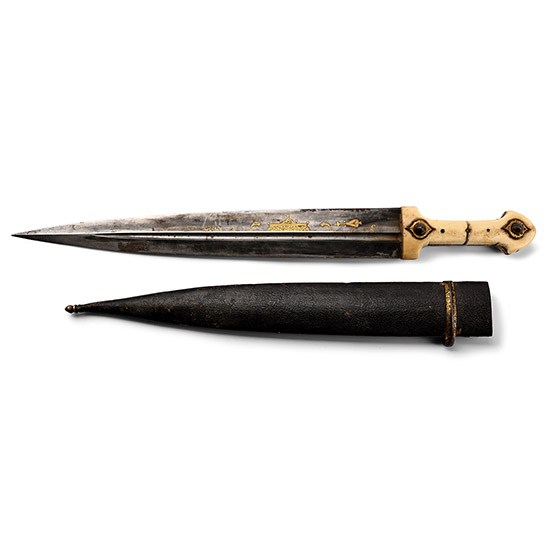
Ottoman Iron Dagger with Bone Hilt
19th century A.D.Sold for (Inc. bp): £572
Broad iron blade with reinforcing corrugations, inlaid brass ornament; bone scales to the hilt with fixing studs; scabbard with wooden core, leather sleeve, bronze frog and chape; fastened with wire stitching; narrow pocket to reverse to accept a smaller companion knife. 683 grams, 58 cm
Private collection, UK. -

Greek Slingshot with Snake
4th-1st century B.C.Estimate: £250 - 350 (‡+bp*)
Opening Bid: £125
Lentoid in form with raised figure of a coiled snake to one face, possible legend to reverse. 31.2 grams, 31 mm
Private collection, Austria. Private collection, Europe. -
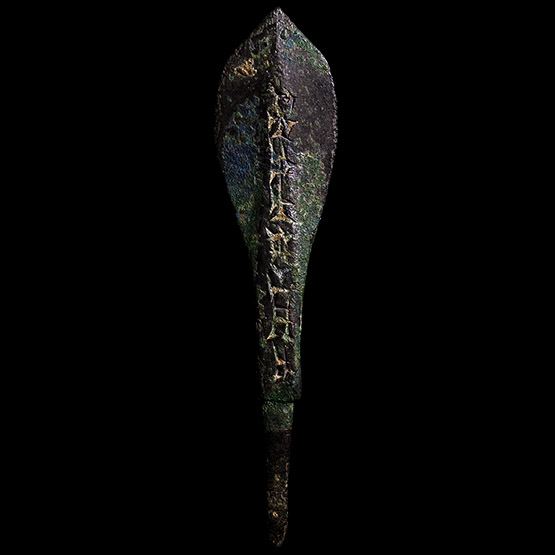
Babylonian Bronze Arrow Owned by Eulmas-sakin-sumi, King of Babylon
Late Middle Babylonian Period, 1004-988 B.C.Sold for (Inc. bp): £9,100
A two-edged leaf-shaped blade and square-section tapering tang, on one side inscribed in Akkadian cuneiform text: 'Eulmaš-šākin-šumi'; and the other side inscribed in Akkadian cuneiform text: 'É-ul-maš-GAR-MU'; reading (property) 'Of Eulmash-shakin-shumi, king of the world'; there are now seventeen known examples compared to fourteen known in 1968. 9.37 grams, 66 mm
UK private collection before 2000. Acquired on the UK art market. Private collection, London, UK. This lot has been checked against the Interpol Database of stolen works of art and is accompanied by search certificate number no.13145-248307.
King Eulmash-shakin-shumi was the founder of the 6th Dynasty of Babylon, named the Bῑt-Bazi Dynasty after the Kassite tribal group from which its leaders were drawn. They were possibly situated near the juncture of the Diyala River and the Tigris River. There are discrepancies in the information surviving about his reign; whilst the Dynastic Chronicle states that he ruled for fourteen years, the King List A suggests a rule of seventeen years. The events leading to the king's rise to power unfolded in the context of the chaotic close of the Second Sealand Dynasty, and in the midst of the turmoil inflicted by the famine-induced Aramean migrations. During this period, Eulmaš-šākin-šumi appears to have seized the throne and possibly moved his capital to Kar-Marduk, a hitherto unknown location, and easily defensible. Upon his death, King Eulmash-shakin-shumi was buried in the Palace of Kar-Marduk, the dynastic capital. A 9th century stele relating to temple endowments at Sippar relates that the king restored food offerings to Shamash, and entrusted a garden plot in a part of Babylon known as the 'New City' to the then high priest there. The weapons unearthed with inscriptions such as the one offered here were likely votive, as opposed to military pieces.
