
Loading, please wait...
LOT 2162
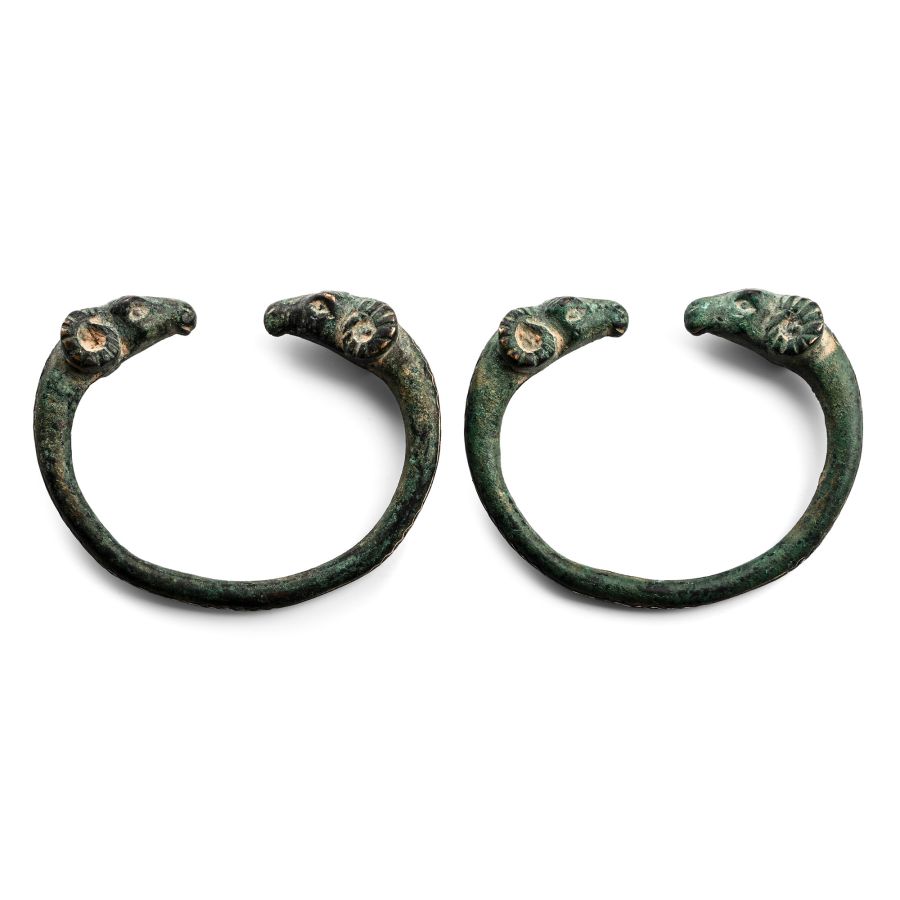
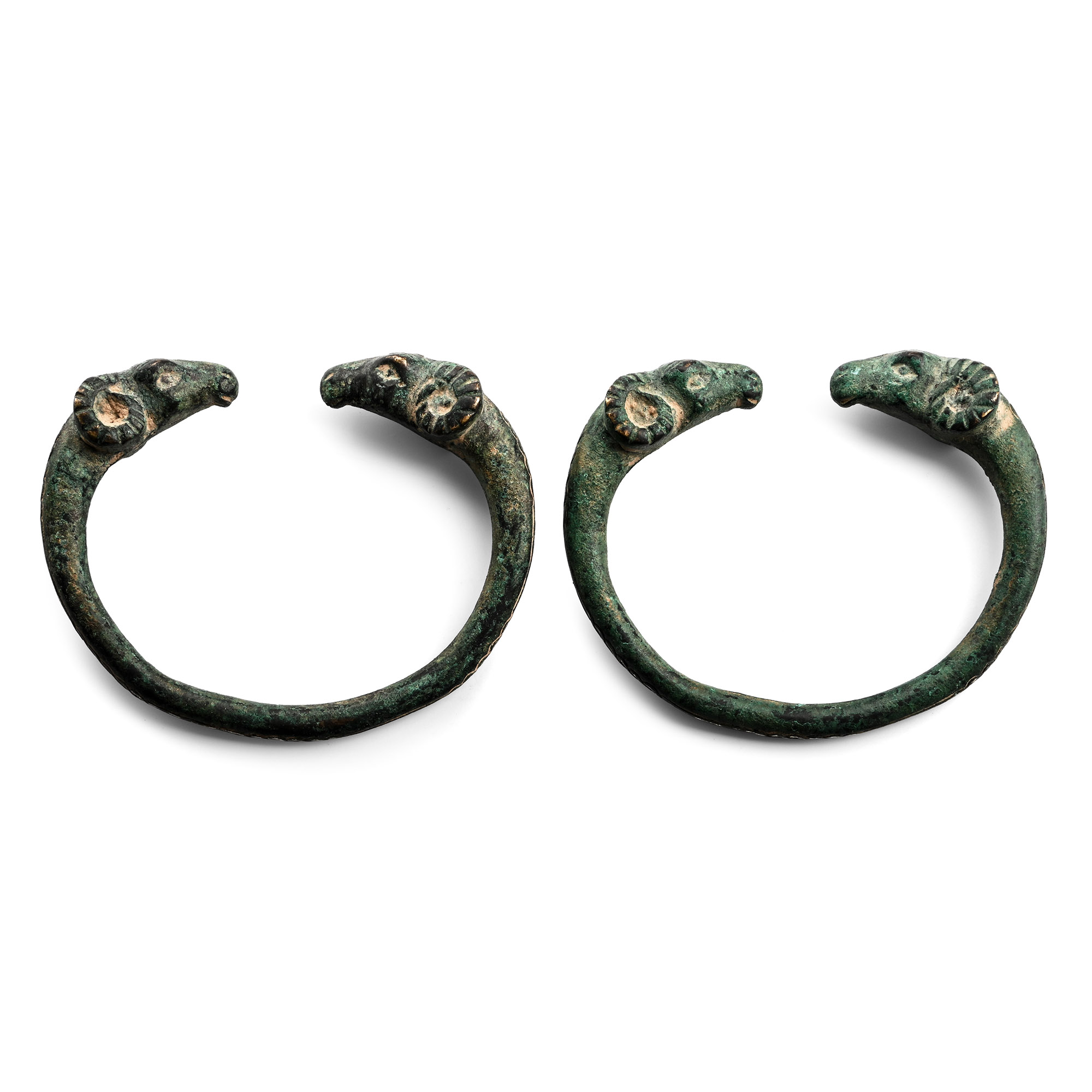
Western Asiatic Style Silver Inlaid Bronze Bracelet Pair
20TH CENTURY A.D.
3 3/4 - 3 7/8 in. (328 grams total, 96-99 mm).
Each a round-section shank with ram's head finials. [2, No Reserve]
ProvenancePrivate collection, UK.
CONDITIONTimeLine Auctions follows a vetting process to ensure the authenticity and legality of all items, reinforcing our commitment to integrity and responsible trading. Each antiquity, antique, and coin lot undergoes thorough examination by a vetting committee of at least ten external specialists, professional trade association members, scientists, and archaeologists: Our Vetting Process
AUCTIONS:
TimeLine is a leading auction house specialising in antiquities, ancient art, collectables, natural history, coins, medals, and books. Our auctions offer museums, collectors, historians, and enthusiasts the opportunity to acquire unique and historically significant pieces.
LOT 2162
Western Asiatic Style Silver Inlaid Bronze Bracelet Pair
Sold for (Inc. bp): £52
-
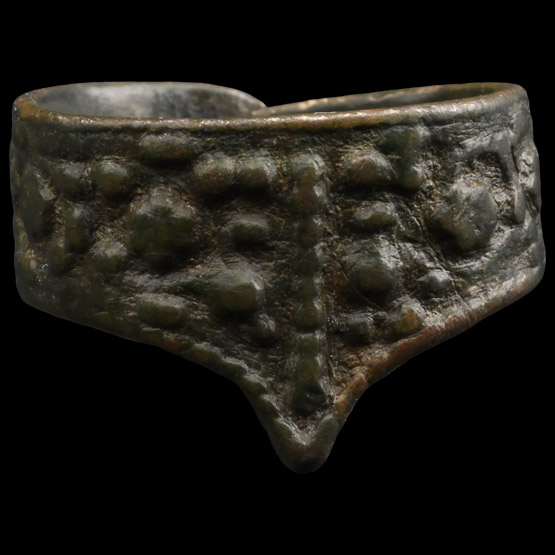
Post Medieval Bronze Archer's Thumb Ring
16th-17th century A.D.Sold for (Inc. bp): £46
With broad triangular flange, low-relief raised pellets and bands. 7.66 grams, 25.12 mm overall, 21.8 mm internal diameter (approximate size British V, USA 10 1/2, Europe 23.77, Japan 22)
From an old English collection, 1980s. -
.jpg)
Post Byzantine Adoration of the Magi Shell Plaque
17th-18th century A.D.Estimate: £150 - 200 (‡+bp*)
Opening Bid: £75
Octagonal in plan with carved scene of the Adoration of the Magi with star above; stepped border, pierced for attachment. 30.2 grams, 68 mm
Acquired in the mid 1980s-1990s. Private collection, Switzerland, thence by descent. Private collection, since the late 1990s.
The flat relief and the stylistic refinement of the images place the execution of the plaque towards the end of the 17th century, with some artistic parallels with the Romanian silversmiths of Chiprovatzi. -
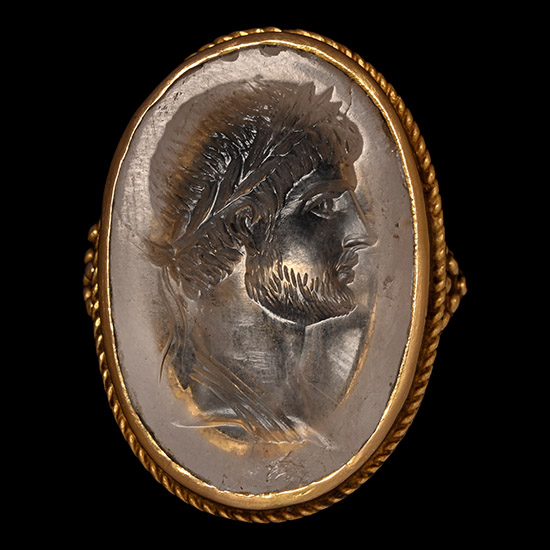
Post-Classical Rock Crystal Gemstone with Bust of the Emperor Hadrian
17th century A.D. or laterEstimate: £2,500 - 3,500 (+bp*)
Opening Bid: £1,250
Ellipsoid in plan with incuse profile bust of Emperor Hadrian, bearded and wearing a laurel wreath on his brow; in an antique mount open to the underside; supplied with a museum-quality impression. 12.68 grams, 31.18 mm overall, 20.40 mm internal diameter (approximate size British R, USA 8 1/2, Europe 18 3/4, Japan 18)
Acquired on the French art market. Private collection, England. This lot has been checked against the Interpol Database of stolen works of art and is accompanied by search certificate number no.13148-249494.
