
Loading, please wait...
LOT 2329
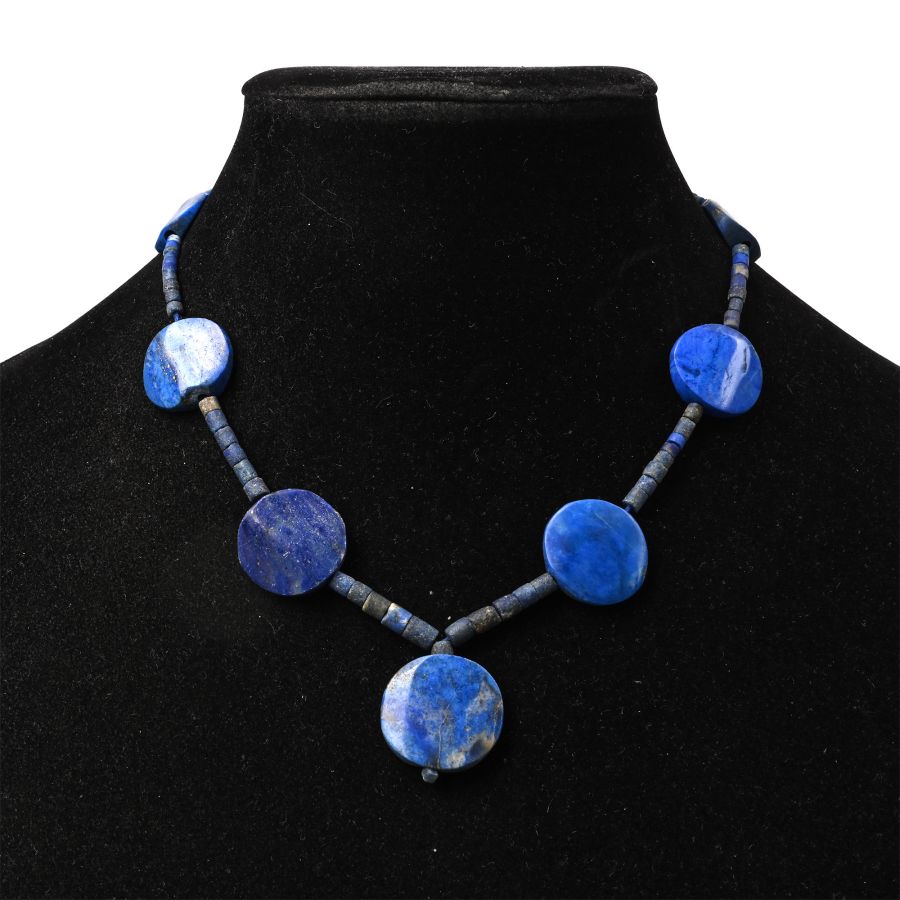
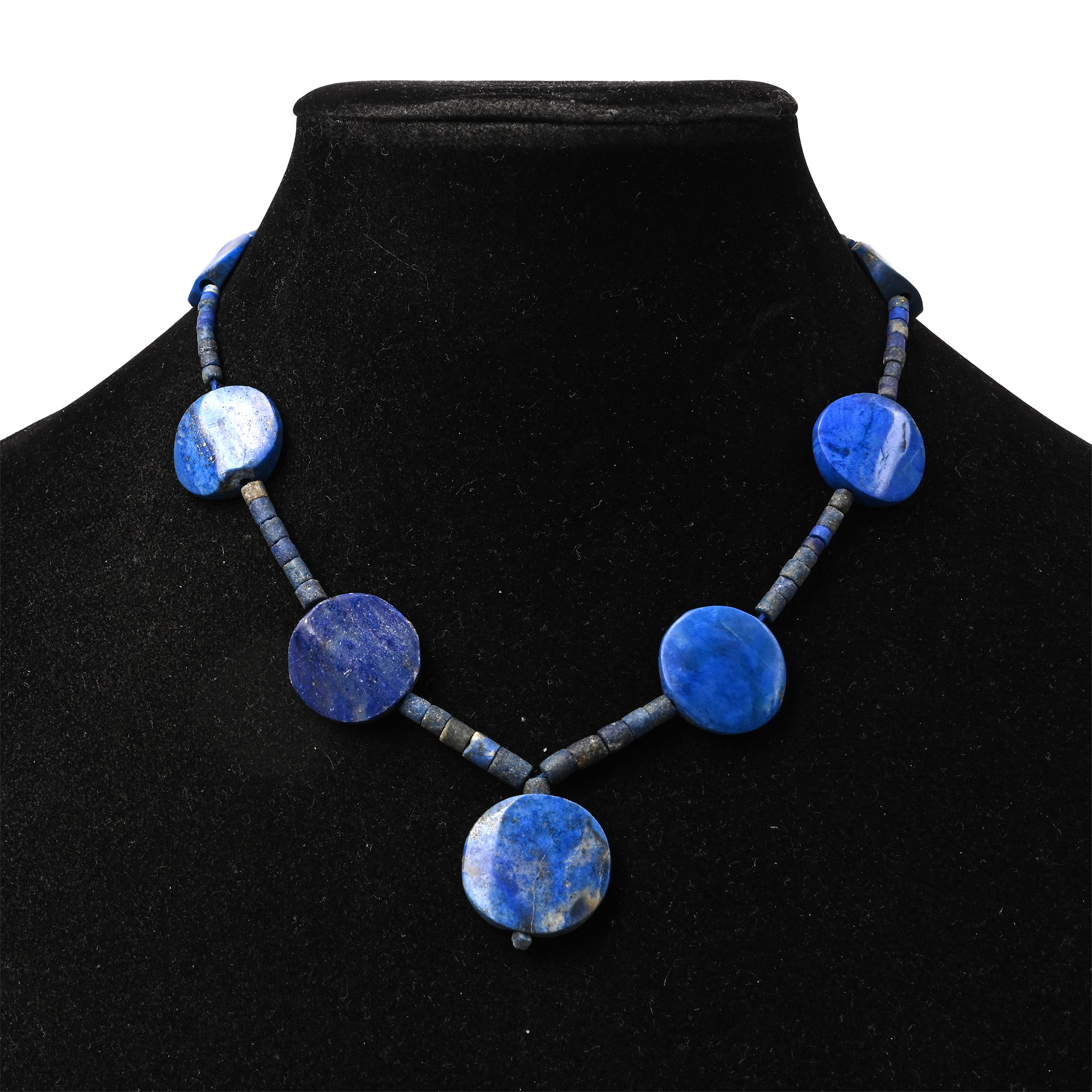
Western Asiatic Style Lapis Lazuli Bead Necklace String
20TH CENTURY A.D.
13 in. (37 grams, 33 cm).
Composed of large coin-shaped feature beads interspersed with cylindrical beads; restrung. [No Reserve]
ProvenanceEx London, UK, art market 1990s.
CONDITIONTimeLine Auctions follows a vetting process to ensure the authenticity and legality of all items, reinforcing our commitment to integrity and responsible trading. Each antiquity, antique, and coin lot undergoes thorough examination by a vetting committee of at least ten external specialists, professional trade association members, scientists, and archaeologists: Our Vetting Process
AUCTIONS:
TimeLine is a leading auction house specialising in antiquities, ancient art, collectables, natural history, coins, medals, and books. Our auctions offer museums, collectors, historians, and enthusiasts the opportunity to acquire unique and historically significant pieces.
-
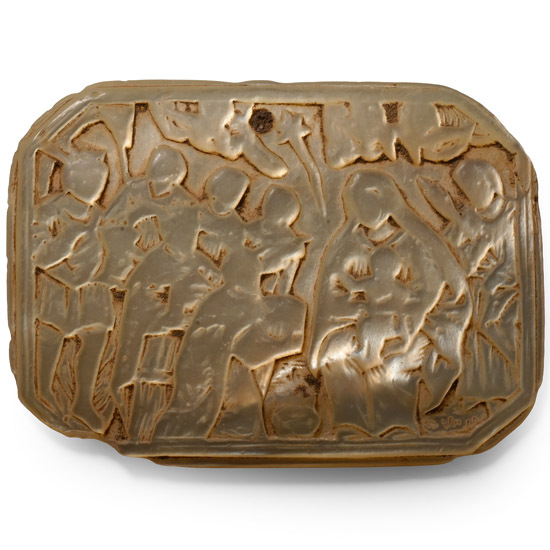
Post Byzantine Adoration of the Magi Shell Plaque
17th-18th century A.D.Estimate: £120 - 170 (‡+bp*)
Opening Bid: £60
Octagonal in plan with carved scene of the Adoration of the Magi with star above; stepped border, pierced for attachment. 30.2 grams, 68 mm
Acquired in the mid 1980s-1990s. Private collection, Switzerland, thence by descent. Private collection, since the late 1990s.
The flat relief and the stylistic refinement of the images place the execution of the plaque towards the end of the 17th century, with some artistic parallels with the Romanian silversmiths of Chiprovatzi. -
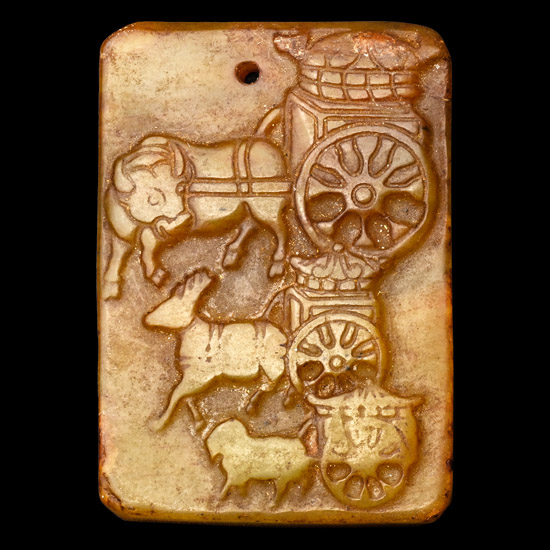
Chinese Amuletic Glass Pendant
20th century A.D.Sold for (Inc. bp): £7
A rectangular bifacial plaque pierced through the upper edge for suspension, one side with four vertical columns of writing, the other side with three animal-drawn carriages. 35.1 grams, 53 mm
Ex Paris gallery, France, 1990s. Property of a West Northamptonshire, UK, gentleman. -
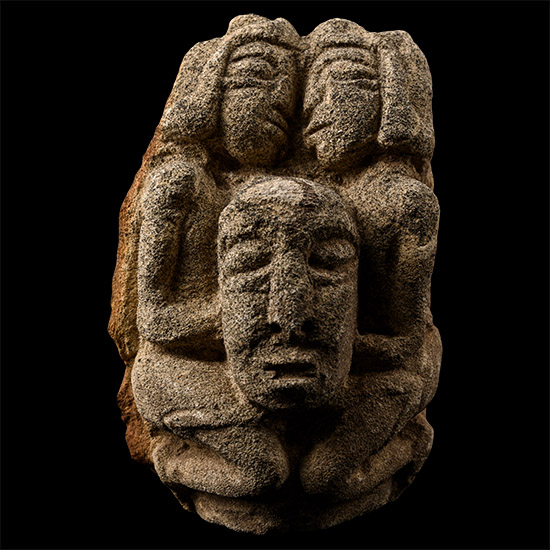
Stone Figural Carving
20th century A.D.Sold for (Inc. bp): £105
A high-relief carving of two kneeling figures dressed in loincloth, holding a large bald head; each with wide almond-shaped eyes, wide mouth and flat nose. 923 grams, 15.2 cm
From a collection acquired on the UK art market from various auction houses and collections mostly before 2000. From an important Cambridgeshire estate; thence by descent. Private collection, London, UK.
