
Loading, please wait...
LOT 2392
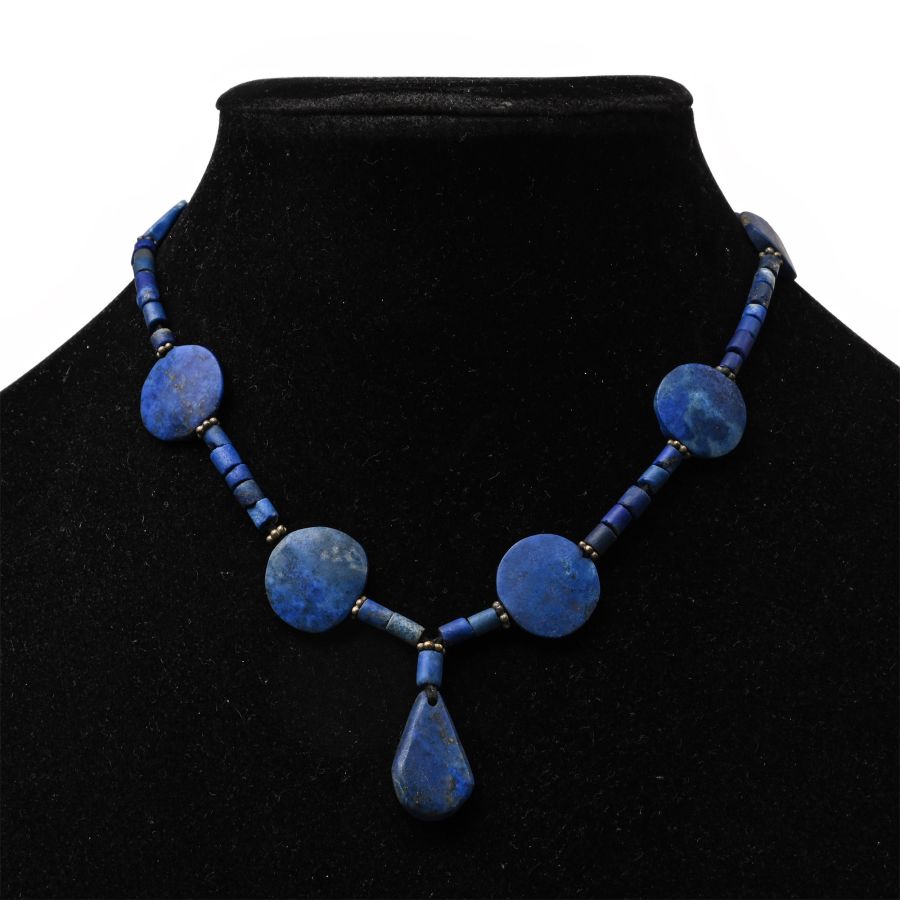
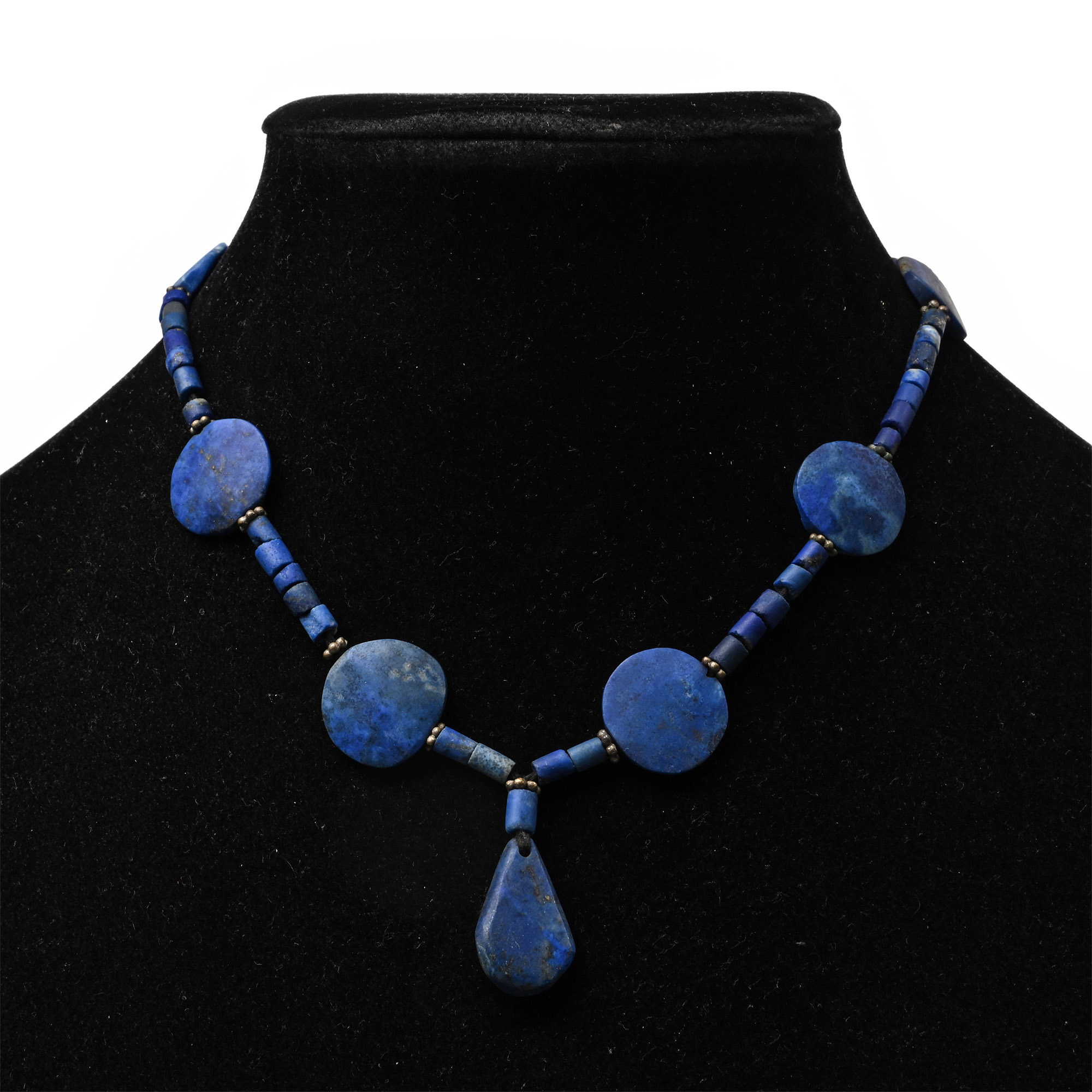
Western Asiatic Style Lapis Lazuli Bead Necklace String
20TH CENTURY A.D.
12 3/4 in. (25 grams, 32.5 cm).
Composed of large coin-shaped feature beads interspersed with cylindrical beads and granulated metal collars,a large drop-shaped pendant at the centre; restrung. [No Reserve]
ProvenanceEx London, UK, art market 1990s.
CONDITIONTimeLine Auctions follows a vetting process to ensure the authenticity and legality of all items, reinforcing our commitment to integrity and responsible trading. Each antiquity, antique, and coin lot undergoes thorough examination by a vetting committee of at least ten external specialists, professional trade association members, scientists, and archaeologists: Our Vetting Process
AUCTIONS:
TimeLine is a leading auction house specialising in antiquities, ancient art, collectables, natural history, coins, medals, and books. Our auctions offer museums, collectors, historians, and enthusiasts the opportunity to acquire unique and historically significant pieces.
-
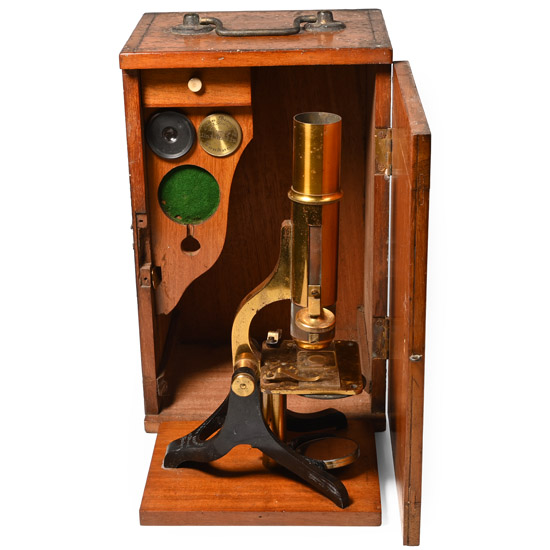
Victorian Cased Brass Microscope by John Browning
Circa 1880 A.D.Sold for (Inc. bp): £312
A monocular microscope with a mechanical stage, a box containing glass slides, and other accessories, housed in a mahogany case with a handle. 2.41 kg total, 28 x 17.5 x 14.3 cm
From the vendor's grandfather, thence by descent. -
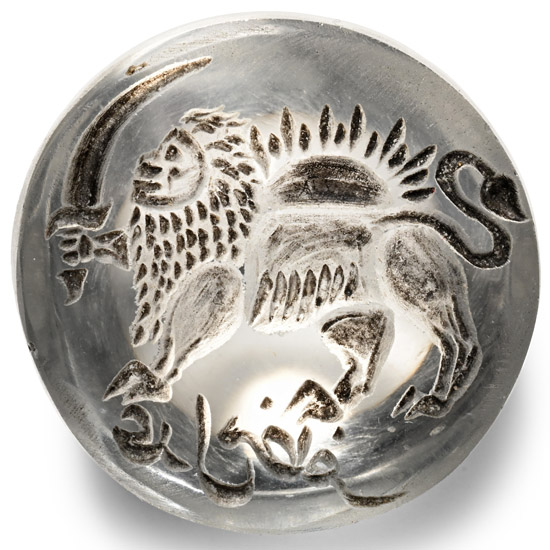
Qajar Rock Crystal Seal with Lion and Sun Motif and Almosassa Calligraphic Inscription
19th-20th century A.D.Sold for (Inc. bp): £59
Domed body carved from transparent quartz, underside engraved with a standing lion holding a curved sword in its raised paw with a rising sun behind and an inscription below. 32.15 grams, 31 mm
Private collection, UK. -
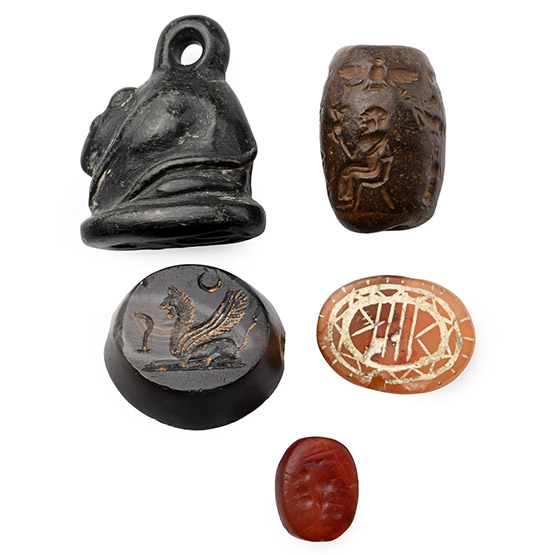
Group of Seals and Scaraboids
20th century A.D.Sold for (Inc. bp): £104
Including fusiform, plano-convex and other types; after the antique. 46 grams total, 14-31 mm
From the late S M collection, London, UK, 1969-1999.
