
Loading, please wait...
LOT 2237
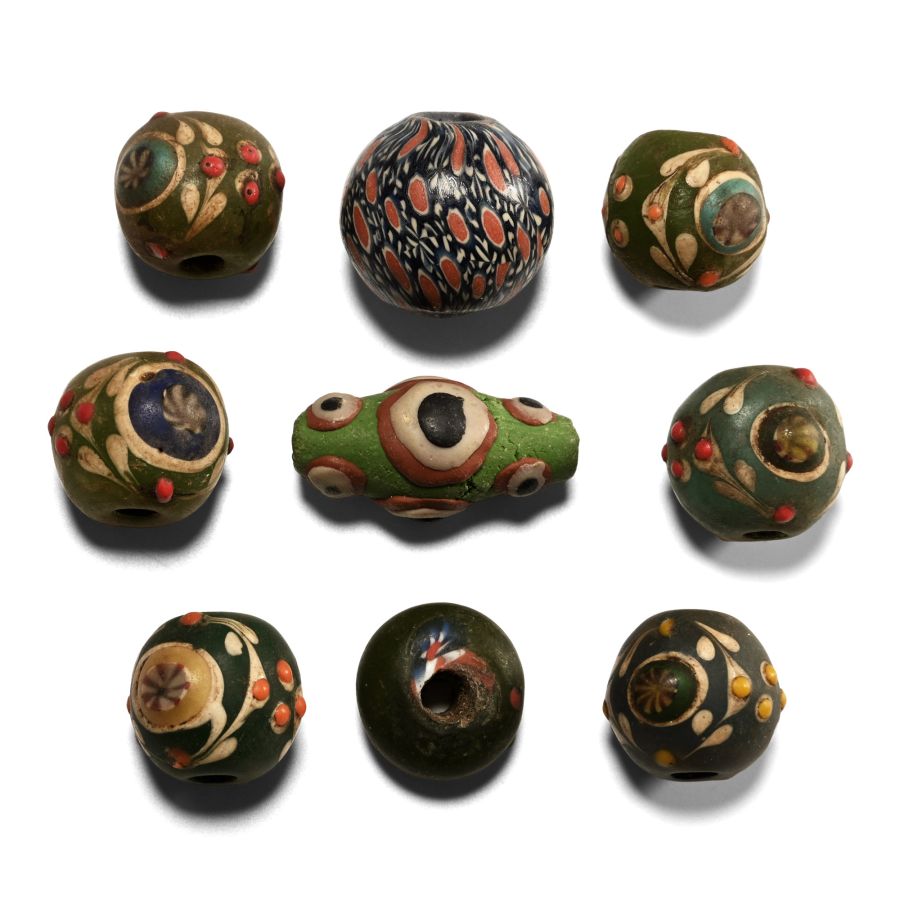
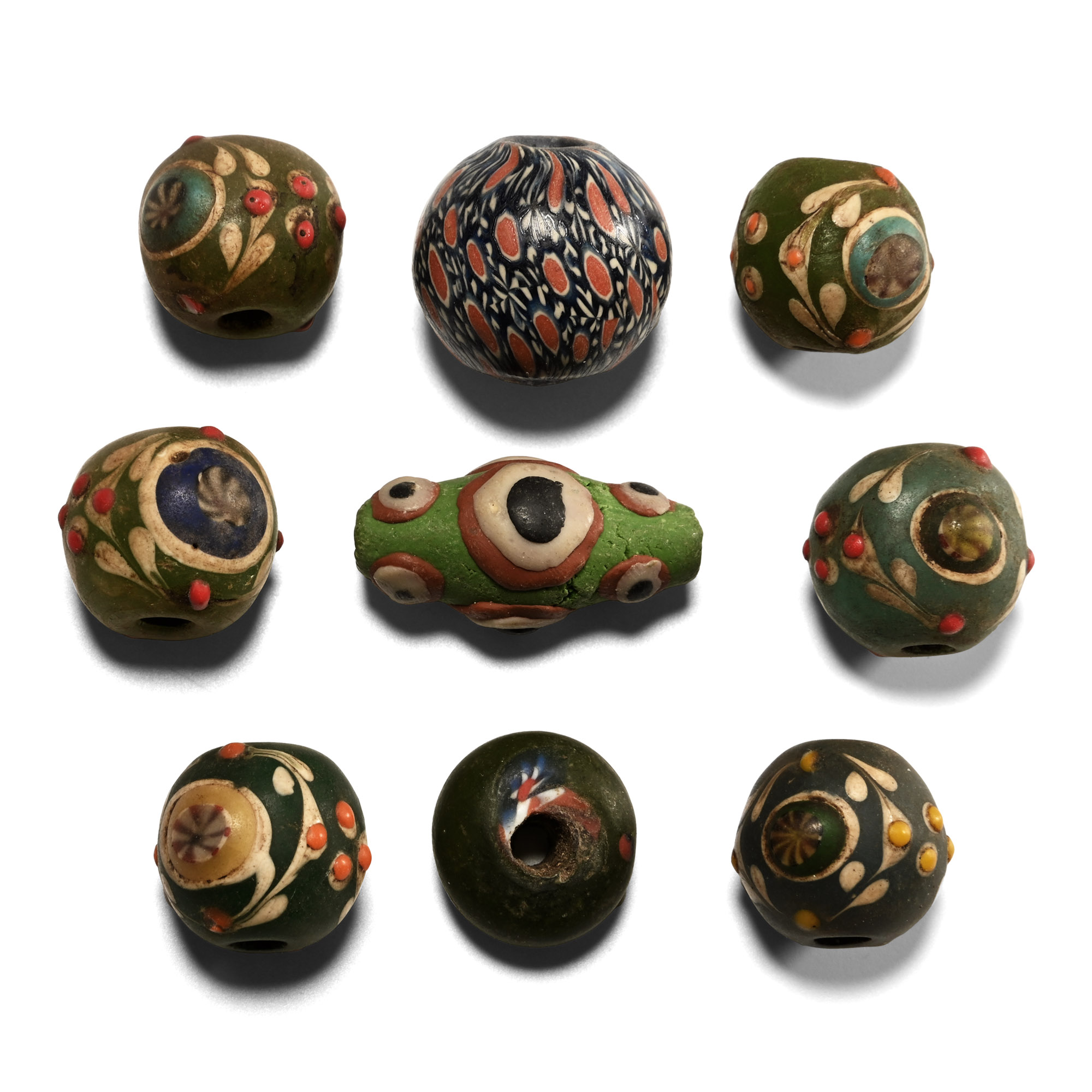
Western Asiatic Style Group of Glass Beads
20TH CENTURY A.D.
5/8 - 1 1/8 in. (69 grams total, 17-29 mm).
Mainly spherical types in 10th-14th century style with mosaic and millefiori detailing, applied knops. [9, No Reserve]
ProvenanceFrom the collection of Mr S.M., London, UK, formed from 1969-1999.
This lot is accompanied by an illustrated lot declaration signed by the Head of the Antiquities Department, Dr Raffaele D’Amato.
TimeLine Auctions follows a vetting process to ensure the authenticity and legality of all items, reinforcing our commitment to integrity and responsible trading. Each antiquity, antique, and coin lot undergoes thorough examination by a vetting committee of at least ten external specialists, professional trade association members, scientists, and archaeologists: Our Vetting Process
AUCTIONS:
TimeLine is a leading auction house specialising in antiquities, ancient art, collectables, natural history, coins, medals, and books. Our auctions offer museums, collectors, historians, and enthusiasts the opportunity to acquire unique and historically significant pieces.
-
.jpg)
Animal Thimble Group
20th century A.D.Sold for (Inc. bp): £52
Group of five silver-coloured metal thimbles, each with a domed top surmounted by an animal's head (elephant, horse, goat) and one with a model elephant. 71 grams total, 30-41 mm
Property of a South West London gentleman. This lot is accompanied by an illustrated lot declaration signed by the Head of the Antiquities Department, Dr Raffaele D’Amato. -
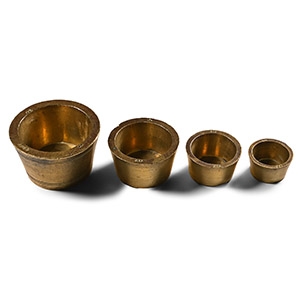
Georgian Brass Cup Weight Group
Dated 1826 A.D.Sold for (Inc. bp): £59
A group of nesting weights, stamped in descending order with '8 TROY OZ' to the rim and two stamps with 1826 above a portcullis to the inside base, '4 OZ' and similar stamps to the inside base, '2 OZ' and similar stamps to the inside base, '1 OZ' with two portcullis stamps to inside base, no date above. 468 grams, 57 mm
Ex private collection, 1970s. Property of a Nottinghamshire gentleman. This lot is accompanied by an illustrated lot declaration signed by the Head of the Antiquities Department, Dr Raffaele D’Amato. -
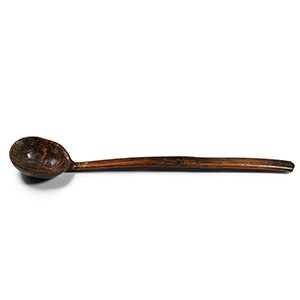
Tudor Apotropaic 'Anti Witchcraft' Wooden Ladle
16th-17th century A.D.Sold for (Inc. bp): £715
With tapering flat-section handle, used as a device for warding off harmful magic; identified by Marie-Louise Kerr, curator of the West Berkshire Museum. 96 grams, 44.5 cm
Found wrapped in cloth along with fur, bones, and feathers, in the eves of a thatched cottage in Berkshire, UK, in 1978. This lot is accompanied by an illustrated lot declaration signed by the Head of the Antiquities Department, Dr Raffaele D’Amato.
