
Loading, please wait...
LOT 0854
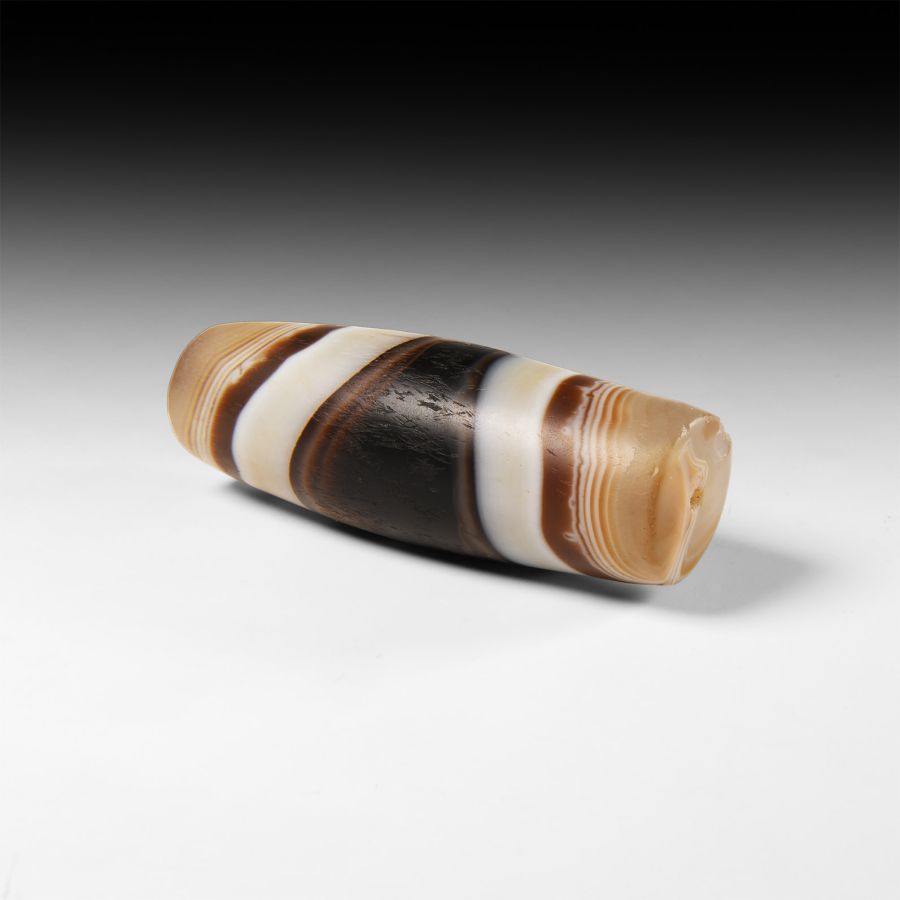
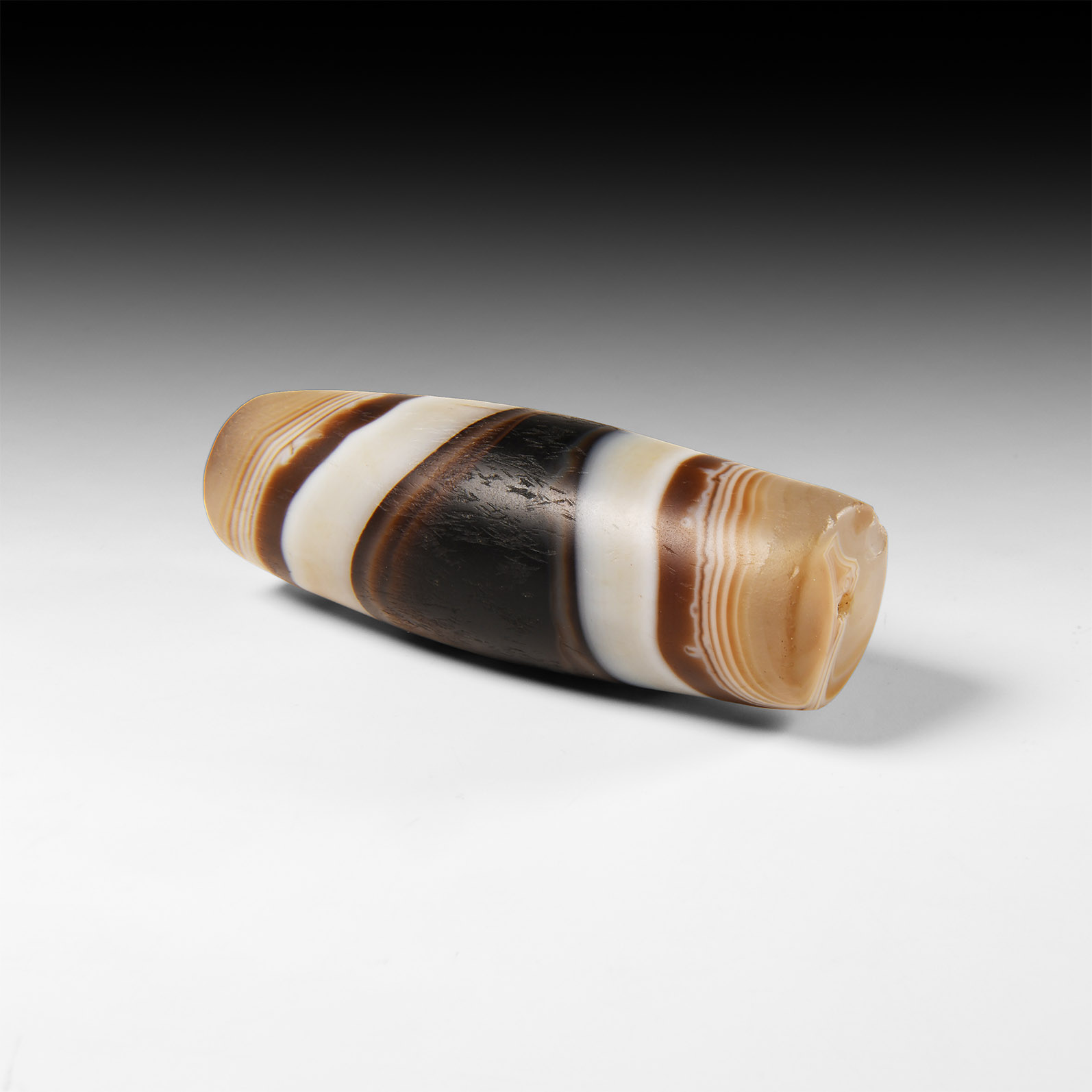
Western Asiatic Style Giant Agate Bead
20TH CENTURY A.D. OR EARLIER
3 1/2 in. (149 grams, 90 mm).
A very large banded agate bead in the style of ancient Western Asiatic examples with symmetrical banding; drilled for suspension. [No Reserve]
ProvenanceAcquired 1969-1999.
London collection of the late Mr S.M., thence by descent.
TimeLine Auctions follows a vetting process to ensure the authenticity and legality of all items, reinforcing our commitment to integrity and responsible trading. Each antiquity, antique, and coin lot undergoes thorough examination by a vetting committee of at least ten external specialists, professional trade association members, scientists, and archaeologists: Our Vetting Process
AUCTIONS:
TimeLine is a leading auction house specialising in antiquities, ancient art, collectables, natural history, coins, medals, and books. Our auctions offer museums, collectors, historians, and enthusiasts the opportunity to acquire unique and historically significant pieces.
-
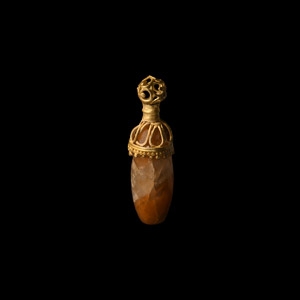
Western Asiatic Gold Pendant with Carnelian
1st-2nd century A.D.Estimate: £100 - 140 (+bp*)
Opening Bid: £56
A gold pendant with openwork domed filigree cell set with a capsule-shaped banded carnelian stone bead, ribbed collar and openwork bulb above for suspension. 1.42 grams, 23 mm
Fine condition.
Acquired 1970-2010. Collection of a late Japanese gentleman. -
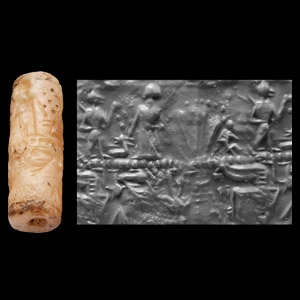
Western Asiatic Rock Crystal Cylinder Seal with Figural Scene
2nd-1st millennium B.C.Estimate: £500 - 700 (+bp*)
Opening Bid: £250
A rock crystal cylinder seal with incuse design divided horizontally by a line of crescents; an advancing figure with smaller figures at his feet, a large tree, animals and other objects in the field. 16.8 grams, 43 mm
From an important family collection. Examined by Professor Wilfrid George Lambert FBA (1926-2011), historian, archaeologist, and specialist in Assyriology and Near Eastern archaeology, in the late 1980s and early 1990s. -
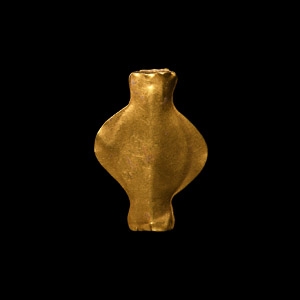
Western Asiatic Gold Butterfly Bead
2nd-1st millennium B.C.Estimate: £400 - 600 (+bp*)
Opening Bid: £222
A sheet-gold 'butterfly' bead of hollow construction. 5.16 grams, 35 mm
Fine condition.
Acquired 1970-2010. Collection of a late Japanese gentleman.
