
Loading, please wait...
LOT 0955
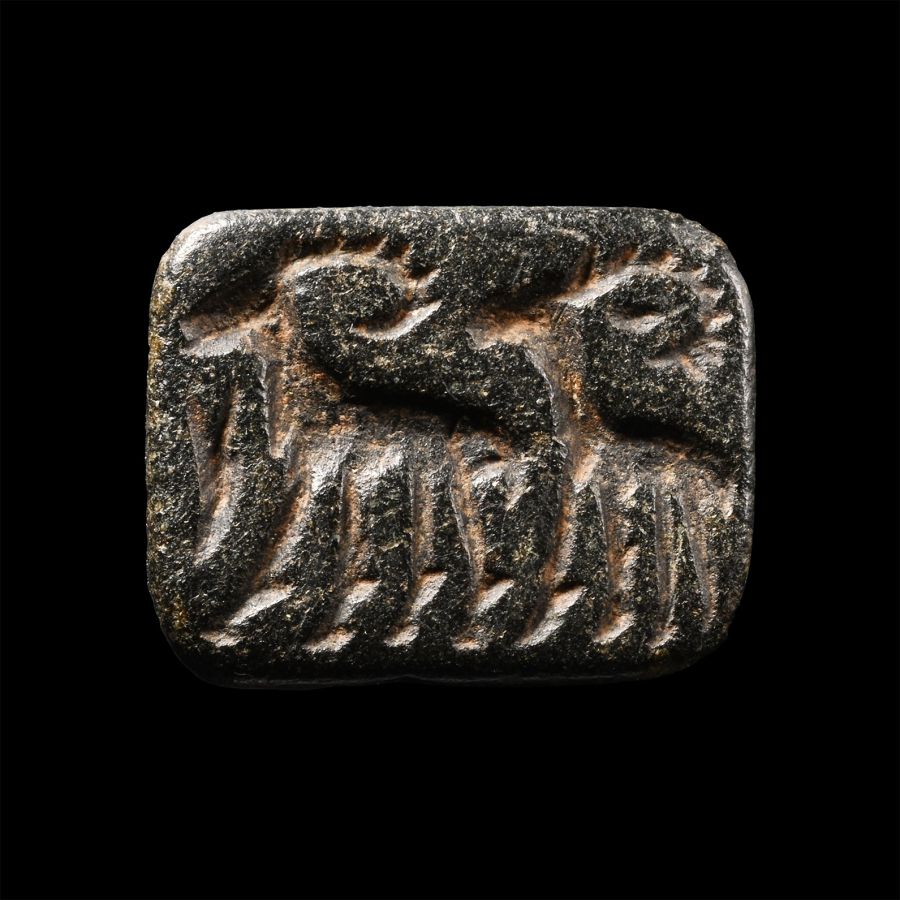
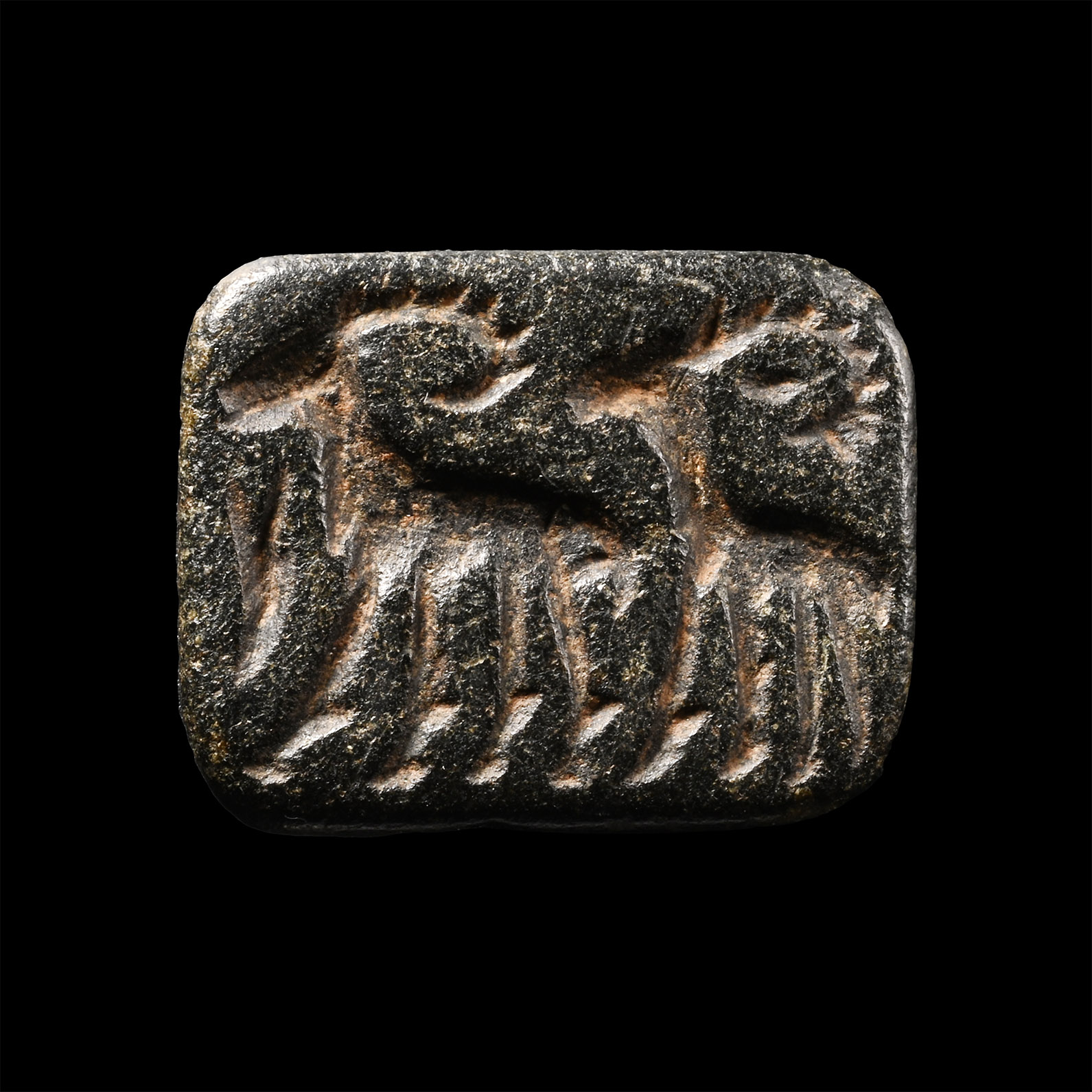
Western Asiatic Stone Stamp Seal with Goats
NORTH SYRIA OR ANATOLIA, 4TH MILLENNIUM B.C.
1 3/8 in. (17.8 grams, 36 mm).
Chlorite stamp seal, rectangular in plan with angled reverse faces, incuse frieze of two goats in procession.
ProvenanceEx Paris collection.
French gallery, Paris, 1990-2000s.
Cf. similar in the Schøyen Collection under accession no.2409/01.
CONDITIONTimeLine Auctions follows a vetting process to ensure the authenticity and legality of all items, reinforcing our commitment to integrity and responsible trading. Each antiquity, antique, and coin lot undergoes thorough examination by a vetting committee of at least ten external specialists, professional trade association members, scientists, and archaeologists: Our Vetting Process
AUCTIONS:
TimeLine is a leading auction house specialising in antiquities, ancient art, collectables, natural history, coins, medals, and books. Our auctions offer museums, collectors, historians, and enthusiasts the opportunity to acquire unique and historically significant pieces.
-
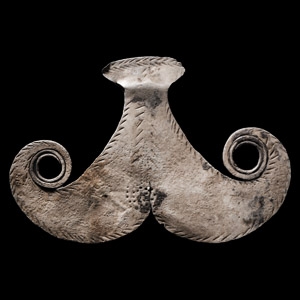
Elamite Silver Female Idol Pendant
3rd-2nd millennium B.C.Sold for (Inc. bp): £650
Composed of bifurcated body with each arm tapering to a coiled terminal, splayed head with suspension loop, decorative diagonal grooves around the perimeter and to the centre. 48 grams, 12.7 cm
Fine condition.
London collection since the 1980s. Property of a Canadian family. -
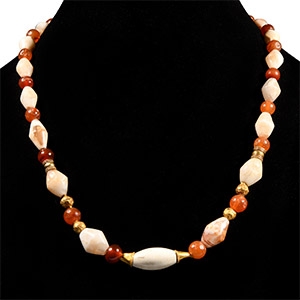
Western Asiatic Carnelian and Agate Gold Bead Necklace
1st millennium B.C. and laterSold for (Inc. bp): £650
Restrung designer necklace composed of graduated bicone spherical agate beads interspersed with carnelian beads; two collared and four spherical gold beads; the central feature a large bead with a conical gold bead to each end; modern hook-and-loop clasp. 50.7 grams, 46 cm long
Collected from 1969-1999. From the collection of the late Mr S.M., London, UK. -
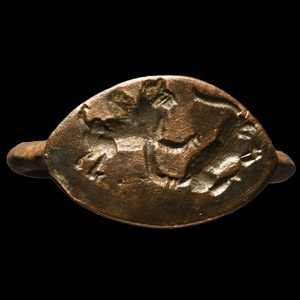
Parthian Bronze Ring with Attacking Gryphon
Late 1st millennium B.C.Sold for (Inc. bp): £169
Round-section hoop supporting a scaphoid plaque with chamfered underside, incuse image of a winged gryphon seizing an ibex. 6.32 grams, 25.71 mm overall, 20.14 mm internal diameter (approximate size British R 1/2, USA 8 3/4, Europe 19.38, Japan 18)
Ex old English collection. London art market, pre 2000. Property of a London, UK, gentleman.
