
Loading, please wait...
_900x900.jpg "Western Asiatic Stone Stamp Seal with Engraved Design")
_200x200.jpg "Western Asiatic Stone Stamp Seal with Engraved Design")
.jpg "Western Asiatic Stone Stamp Seal with Engraved Design")
LOT 0289
Western Asiatic Stone Stamp Seal with Engraved Design
1ST MILLENNIUM B.C.
1 in. (6.89 grams, 26 mm).
Bell-shaped with scooped sidewall and pierced lug; engraved with addorsed bull and lion beneath a crescent; accompanied by a museum-quality impression.
ProvenanceAcquired before 1983.
Ex London gallery, 1990s.
Private collection, London, UK.
TimeLine Auctions follows a vetting process to ensure the authenticity and legality of all items, reinforcing our commitment to integrity and responsible trading. Each antiquity, antique, and coin lot undergoes thorough examination by a vetting committee of at least ten external specialists, professional trade association members, scientists, and archaeologists: Our Vetting Process
AUCTIONS:
TimeLine is a leading auction house specialising in antiquities, ancient art, collectables, natural history, coins, medals, and books. Our auctions offer museums, collectors, historians, and enthusiasts the opportunity to acquire unique and historically significant pieces.
LOT 0289
Western Asiatic Stone Stamp Seal with Engraved Design
Estimate £400 - 600€460 - 700 (for guidance only)$540 - 810 (for guidance only)
-
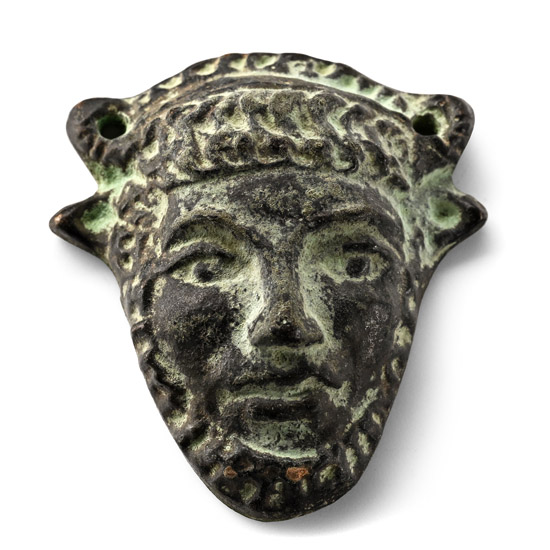
Western Asiatic Bronze Head Appliqué
Late 1st millennium B.C.Estimate: £300 - 400 (+bp*)
Opening Bid: £150
D-shaped in plan and domed in section with hollow reverse, thick curls to the brow and beard; pierced headband above the brow. 44 grams, 41 mm
From the collection of a gentleman, acquired on the London art market in the 1990s. -
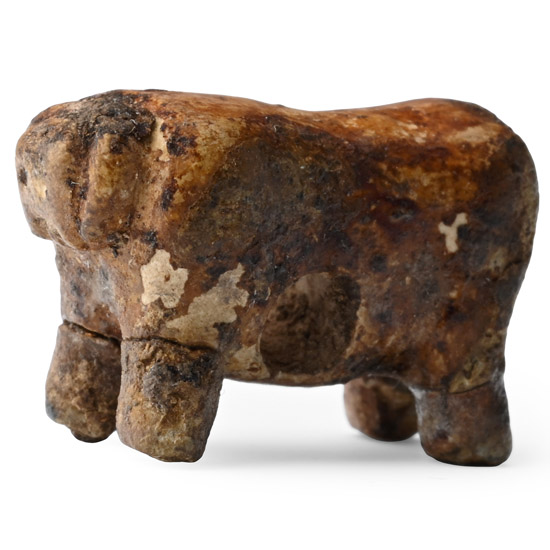
Western Asiatic Bone Animal Amulet
1st millennium B.C.Sold for (Inc. bp): £26
A stylised figure of a stocky animal with a small head, pierced through the body. 3.27 grams, 22.7 mm
From the private collection of a European gentleman (1942-2024), formed since the 1970s. -
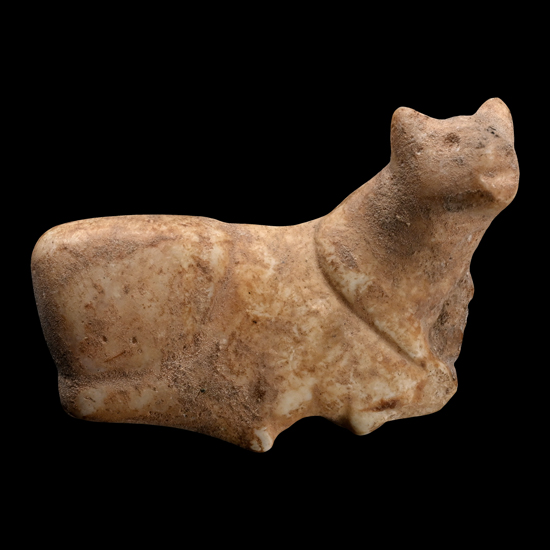
Western Asiatic Stone Bovine Amulet
3rd-2nd millennium B.C.Sold for (Inc. bp): £72
Modelled in the round, resting and with its head turned to the side, pierced through the body. 15 grams, 40.3 mm
From the private collection of a European gentleman (1942-2024), formed since the 1970s.
