
Loading, please wait...
LOT 0258
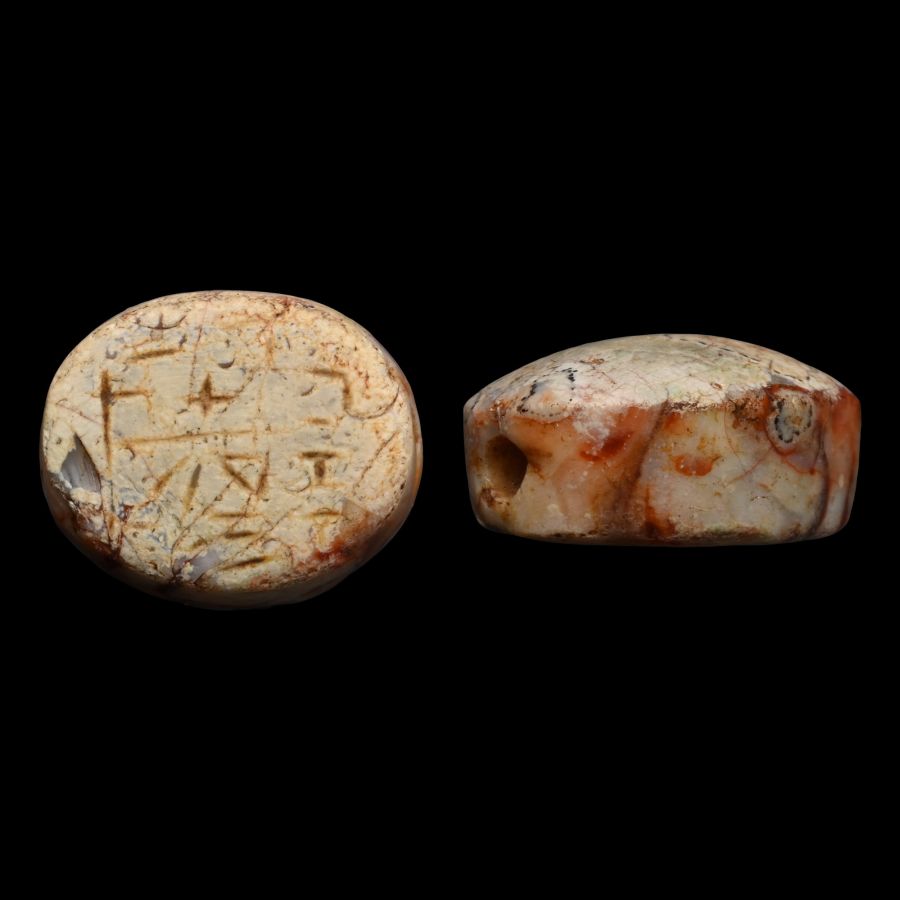
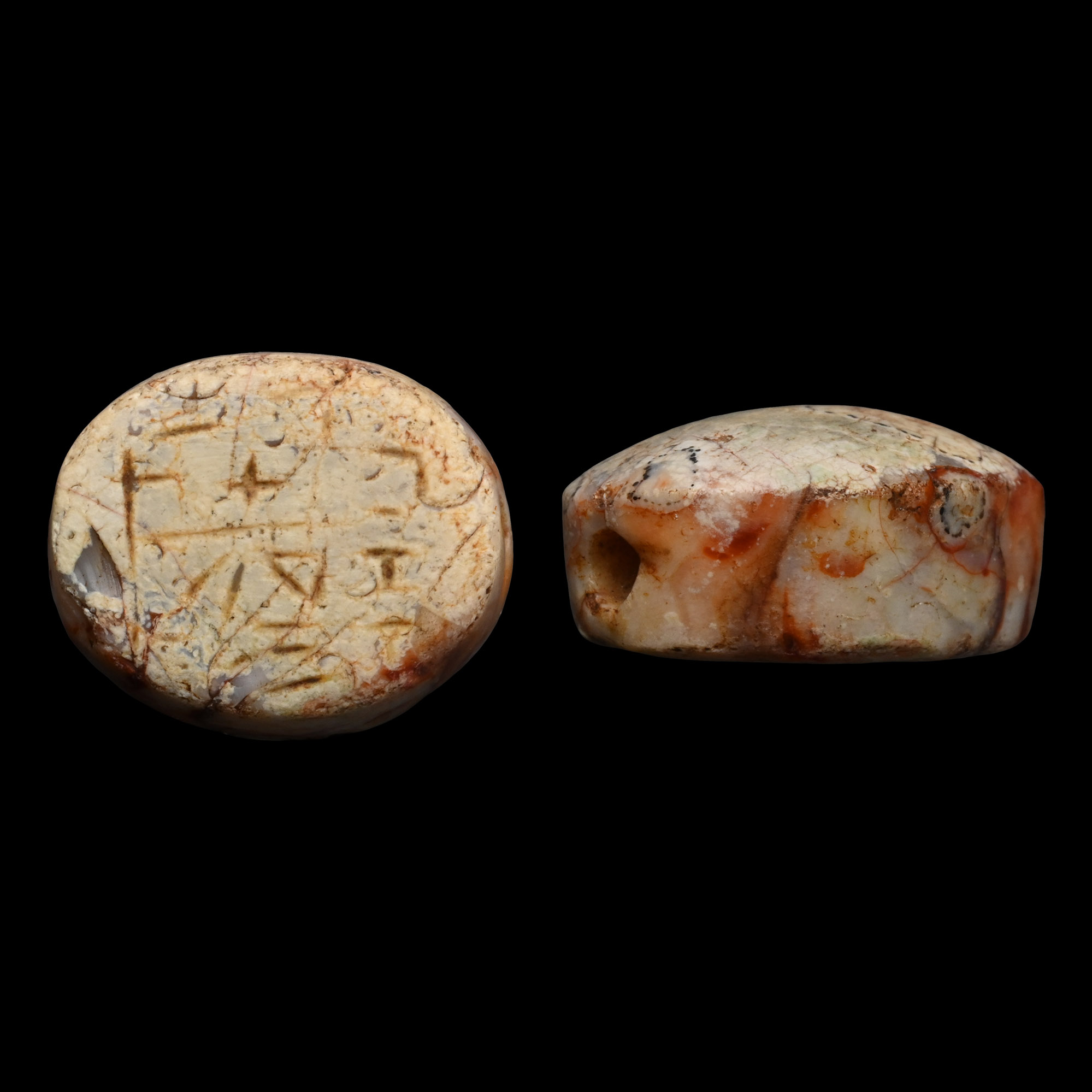
Western Asiatic Stone Scaraboid with Aramaic Inscription
LATE 1ST MILLENNIUM B.C.
5/8 in. (3.42 grams, 17 mm).
With deep sidewall, underside with three lines of lightly incised text; supplied with a museum-quality inscription.
ProvenanceFrom the collection of a gentleman, acquired on the London art market in the 1990s.
This lot has been cleared against the Art Loss Register database, and is accompanied by an illustrated lot declaration signed by the Head of the Antiquities Department, Dr Raffaele D'Amato.
TimeLine Auctions follows a vetting process to ensure the authenticity and legality of all items, reinforcing our commitment to integrity and responsible trading. Each antiquity, antique, and coin lot undergoes thorough examination by a vetting committee of at least ten external specialists, professional trade association members, scientists, and archaeologists: Our Vetting Process
AUCTIONS:
TimeLine is a leading auction house specialising in antiquities, ancient art, collectables, natural history, coins, medals, and books. Our auctions offer museums, collectors, historians, and enthusiasts the opportunity to acquire unique and historically significant pieces.
LOT 0258
Western Asiatic Stone Scaraboid with Aramaic Inscription
Sold for (Inc. bp): £572
-
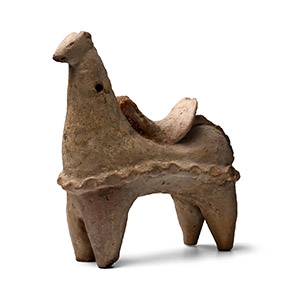
Western Asiatic Terracotta Animal with Saddle
1st millennium B.C.Estimate: £500 - 700 (+bp*)
Opening Bid: £250
Modelled in the round with crimped band to the flanks, scooped saddle, applied mane detailing; pierced at the neck to accept reins, with old label to the underside: 'YAZDANI 242C LONDON'. 770 grams, 18 cm high
UK collection, 1990s. Acquired on the UK art market, before 2000. Private collection, Mr M.V., a London-based businessman. This lot has been cleared against the Art Loss Register database, and is accompanied by an illustrated lot declaration signed by the Head of the Antiquities Department, Dr Raffaele D'Amato. -
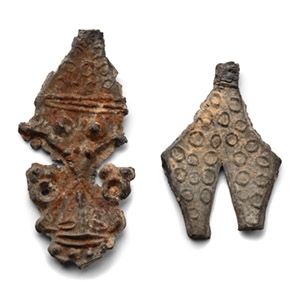
Western Asiatic Lead Female Idol
3rd millennium B.C.Sold for (Inc. bp): £52
Modelled as a stylised female figure, in two parts with hourglass waist, angular hips, pellet breasts, slender arms held across the chest, wearing a headdress and large hoop earrings with dangles, series of annulets over the body, geometric forms to the reverse composed of raised lines with pellet terminals. 5.89 grams, 61 mm
Fair condition. Rare.
Ex SM collection, London, UK; 1970-1999. From the private collection of John Meredith, acquired since the 1990s; thence by descent. This lot has been cleared against the Art Loss Register database, and is accompanied by an illustrated lot declaration signed by the Head of the Antiquities Department, Dr Raffaele D'Amato. -
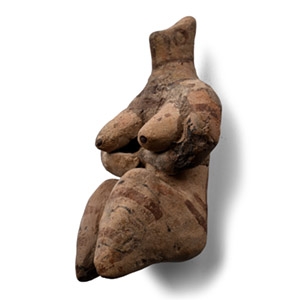
Tell Halaf Terracotta Fertility Figure
6th-5th millennium B.C.Sold for (Inc. bp): £650
With pinched facial features, applied breasts, horizontal bands of pigment; restored from old and new pieces. 119 grams, 94 mm
Acquired 1980-1990s. From the private collection of H.N., Milton Keynes, Bedfordshire, UK. From the private collection of John Meredith, acquired since the 1990s; thence by descent. This lot has been cleared against the Art Loss Register database, and is accompanied by an illustrated lot declaration signed by the Head of the Antiquities Department, Dr Raffaele D'Amato.
