
Loading, please wait...
LOT 1428
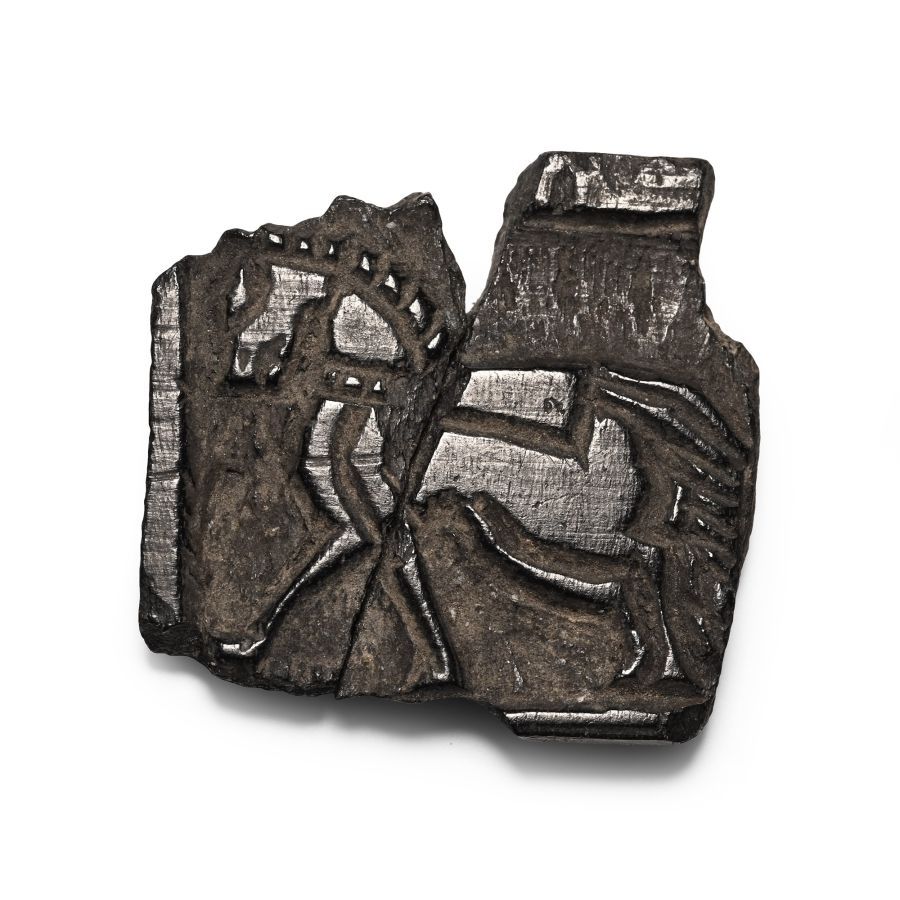
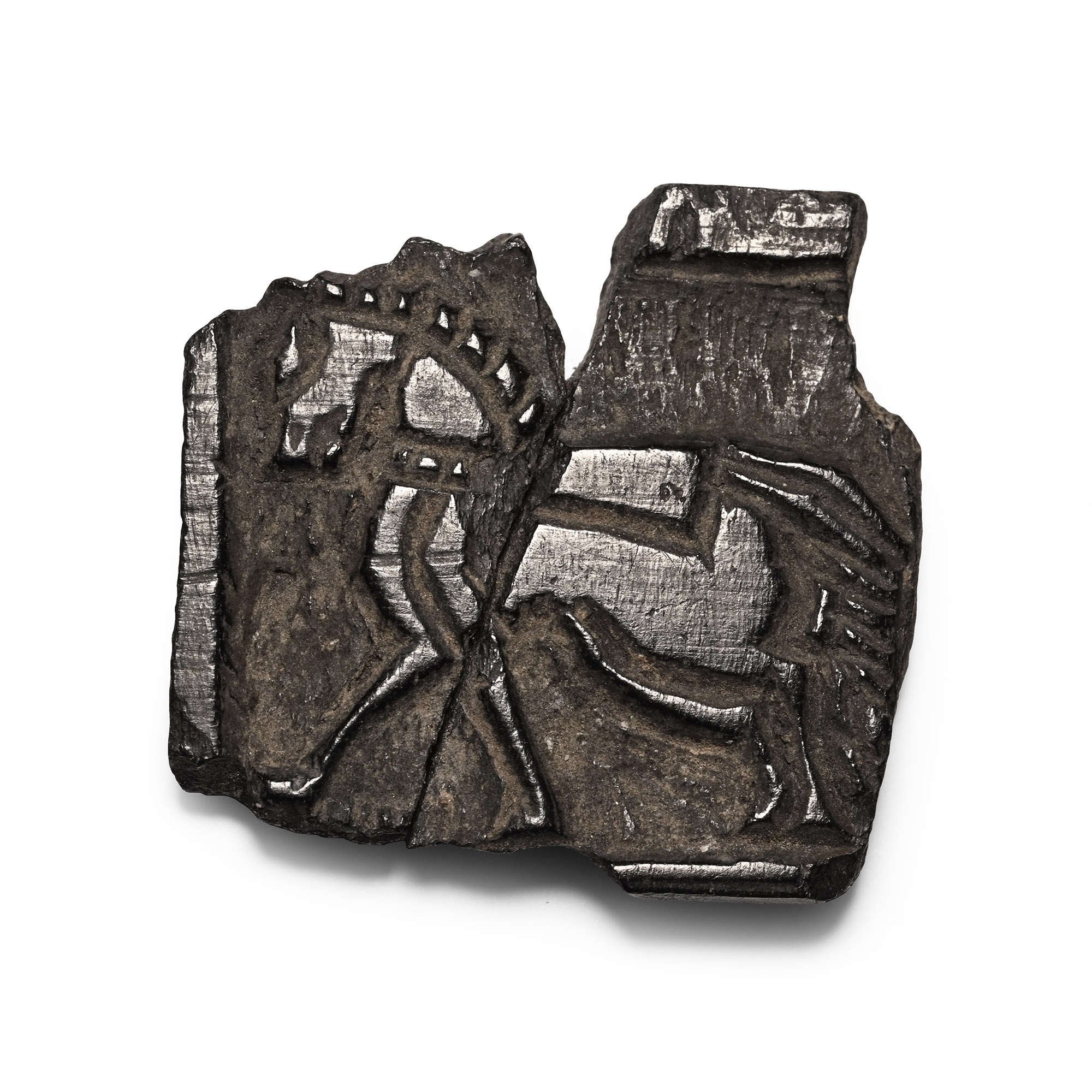
Western Asiatic Stone Panel Fragment with Horse
1ST MILLENNIUM B.C.
1 in. (2.44 grams, 23 mm).
Carved rectangular plaque with reserved border and advancing horse with bridle and saddlecloth; possibly the leading edge of a wagon or chariot behind.
ProvenanceAcquired 1979-1999.
London collection of the late Mr S.M., thence by descent.
This lot has been cleared against the Art Loss Register database, and is accompanied by an illustrated lot declaration signed by the Head of the Antiquities Department, Dr Raffaele D'Amato.
TimeLine Auctions follows a vetting process to ensure the authenticity and legality of all items, reinforcing our commitment to integrity and responsible trading. Each antiquity, antique, and coin lot undergoes thorough examination by a vetting committee of at least ten external specialists, professional trade association members, scientists, and archaeologists: Our Vetting Process
AUCTIONS:
TimeLine is a leading auction house specialising in antiquities, ancient art, collectables, natural history, coins, medals, and books. Our auctions offer museums, collectors, historians, and enthusiasts the opportunity to acquire unique and historically significant pieces.
-
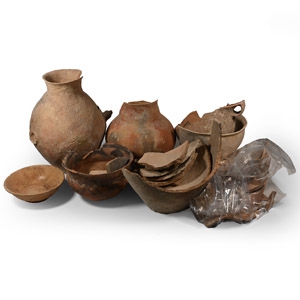
Holy Land and Other Terracotta Pottery Group
3rd-1st millennium B.C. and laterSold for (Inc. bp): £124
Including globular jars, bowls, vases, a polychrome glazed base and other items. 11.45 kg total, 4-29.5 cm
Ex London, UK, gallery, 1980-1990s. This lot has been cleared against the Art Loss Register database, and is accompanied by an illustrated lot declaration signed by the Head of the Antiquities Department, Dr Raffaele D'Amato.
In Early Bronze Age II Period, the pottery tradition of the previous period, in Holy Land, continues, though with a number of significant changes. The jars can be divided into those with and without necks. Thin walled jars were often done of fine, well-levigated ware. -
.jpg)
Sasanian Banded Agate Stamp Seal
3rd-7th century A.D.Sold for (Inc. bp): £169
Comprising a domed body carved from banded agate and having a natural crystal-lined cavity to one side, drilled through the base, underside with engraved linear motif, possibly an altar. 14.3 grams, 23 mm
UK private collection before 2000. Acquired on the UK art market. Property of a London gentleman. This lot has been cleared against the Art Loss Register database, and is accompanied by an illustrated lot declaration signed by the Head of the Antiquities Department, Dr Raffaele D'Amato. -
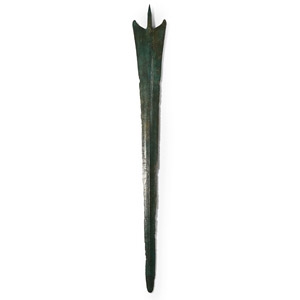
Western Asiatic Bronze Blade
2nd-1st millennium B.C.Sold for (Inc. bp): £312
With a short tang and long blade with swept shoulders, raised midrib. 454 grams, 52.2 cm
Acquired 1980-2015. Ex Abelita family collection. This lot has been cleared against the Art Loss Register database, and is accompanied by an illustrated lot declaration signed by the Head of the Antiquities Department, Dr Raffaele D'Amato.
In the last ninety years, many such tanged blades have been considered coming from production centres of North-West Iran, like Amlash and Marlik, where similar specimens were found. Without context an accurate dating is impossible, but the shape recalls the rapiers of Bronze Age or Early Iron Age.
