
Loading, please wait...
LOT 1240
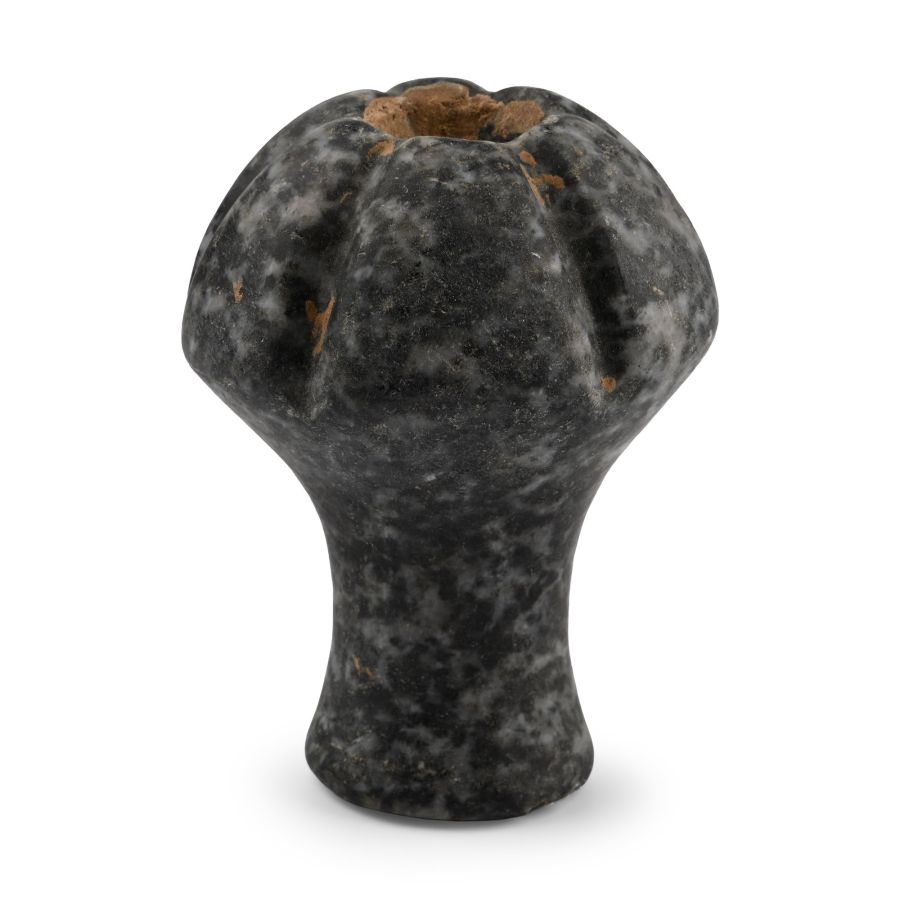
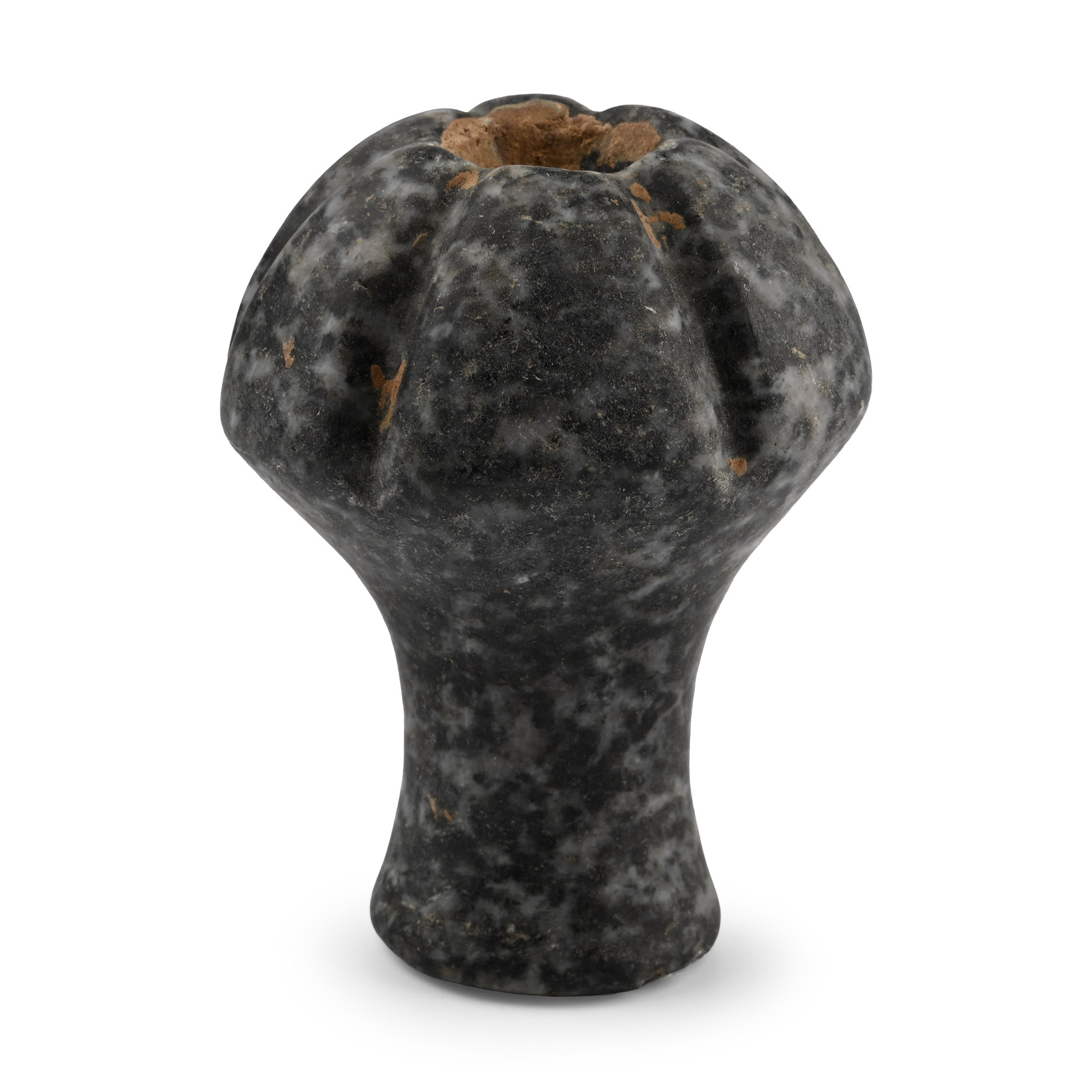
Western Asiatic Stone Macehead
3RD MILLENNIUM B.C.
3 5/8 in. (448 grams, 92 mm).
Piriform in profile with flared tubular socket, flat rim, carination to the bulb and segmented upper face.
ProvenanceFrom a London, UK, collection, 2000s.
This lot has been cleared against the Art Loss Register database, and is accompanied by an illustrated lot declaration signed by the Head of the Antiquities Department, Dr Raffaele D'Amato.
TimeLine Auctions follows a vetting process to ensure the authenticity and legality of all items, reinforcing our commitment to integrity and responsible trading. Each antiquity, antique, and coin lot undergoes thorough examination by a vetting committee of at least ten external specialists, professional trade association members, scientists, and archaeologists: Our Vetting Process
AUCTIONS:
TimeLine is a leading auction house specialising in antiquities, ancient art, collectables, natural history, coins, medals, and books. Our auctions offer museums, collectors, historians, and enthusiasts the opportunity to acquire unique and historically significant pieces.
-
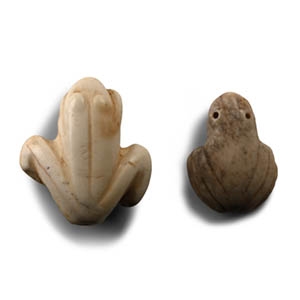
Mesopotamian White Stone Frog Amulets
2nd-1st millennium B.C.Estimate: £400 - 600 (+bp*)
Opening Bid: £200
Each a frog with legs splayed carved in the round, one pierced laterally and the other longitudinally. 21 grams total, 28-34 mm
From the private collection of Mr K.A., acquired in the 1990s-early 2000s. This lot has been cleared against the Art Loss Register database, and is accompanied by an illustrated lot declaration signed by the Head of the Antiquities Department, Dr Raffaele D'Amato. -
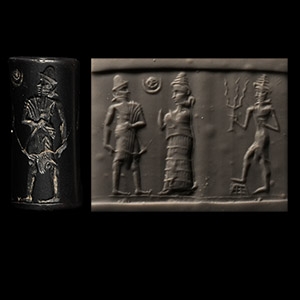
Old Babylonian Haematite Cylinder Seal
2000-1800 B.C.Sold for (Inc. bp): £3,120
Columnar in form with frieze depicting a standing Lamma goddess in flounced robe facing towards a god wearing a pleated garment and holding a mace at his hip; disc-and-crescent motif above; behind, the storm-god Adad with one foot on a mound, wielding a lightning bolt in his raised hand. 11 grams, 25 mm
Private collection, Europe. with Bonhams, London, 22 April 1999, no.538. Acquired by the present owner from the above. Accompanied by copies of the relevant Bonhams catalogue pages. This lot has been checked against the Interpol Database of stolen works of art and is accompanied by a search certificate number no.12538-232100. This lot has been cleared against the Art Loss Register database, and is accompanied by an illustrated lot declaration signed by the Head of the Antiquities Department, Dr Raffaele D'Amato. -
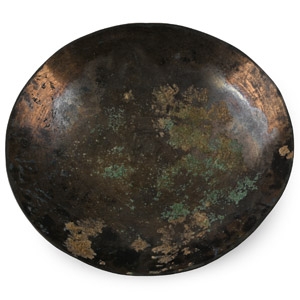
Graeco-Persian Bronze Vessel
2nd century B.C.-1st century A.D.Sold for (Inc. bp): £156
Shallow with slight flange to the rim. 80 grams, 13.3 cm wide
Ex London, UK, collection, 1990-2000. This lot has been cleared against the Art Loss Register database, and is accompanied by an illustrated lot declaration signed by the Head of the Antiquities Department, Dr Raffaele D'Amato.
