
Loading, please wait...
LOT 1213
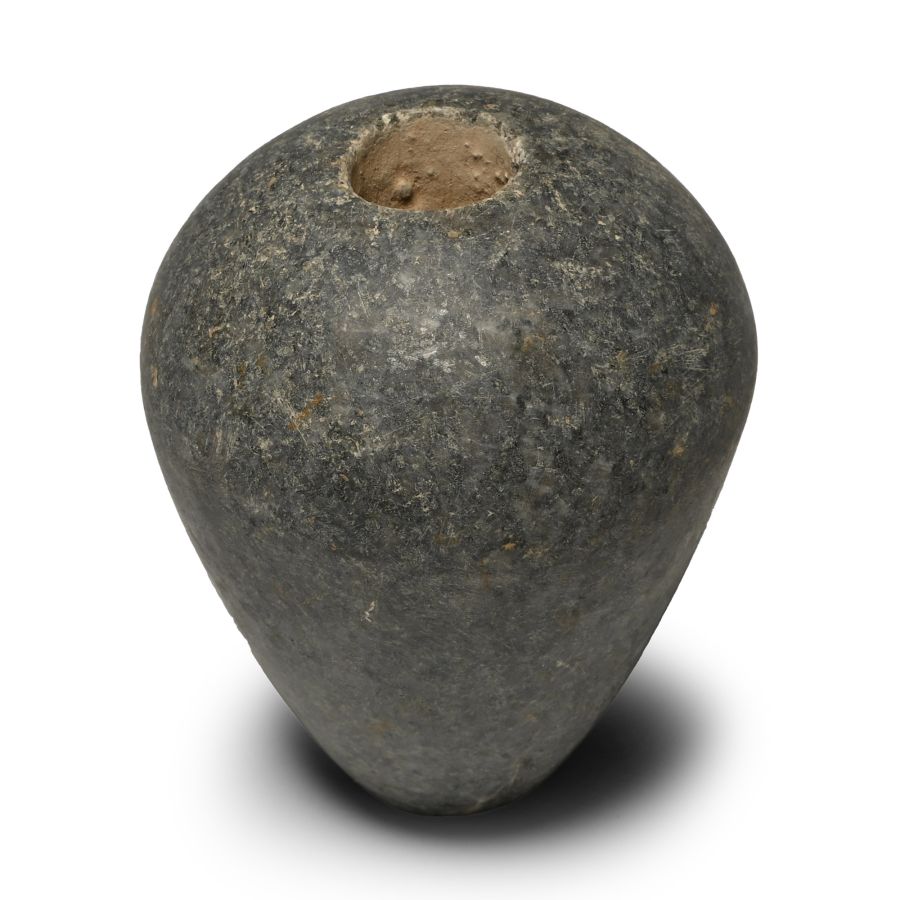
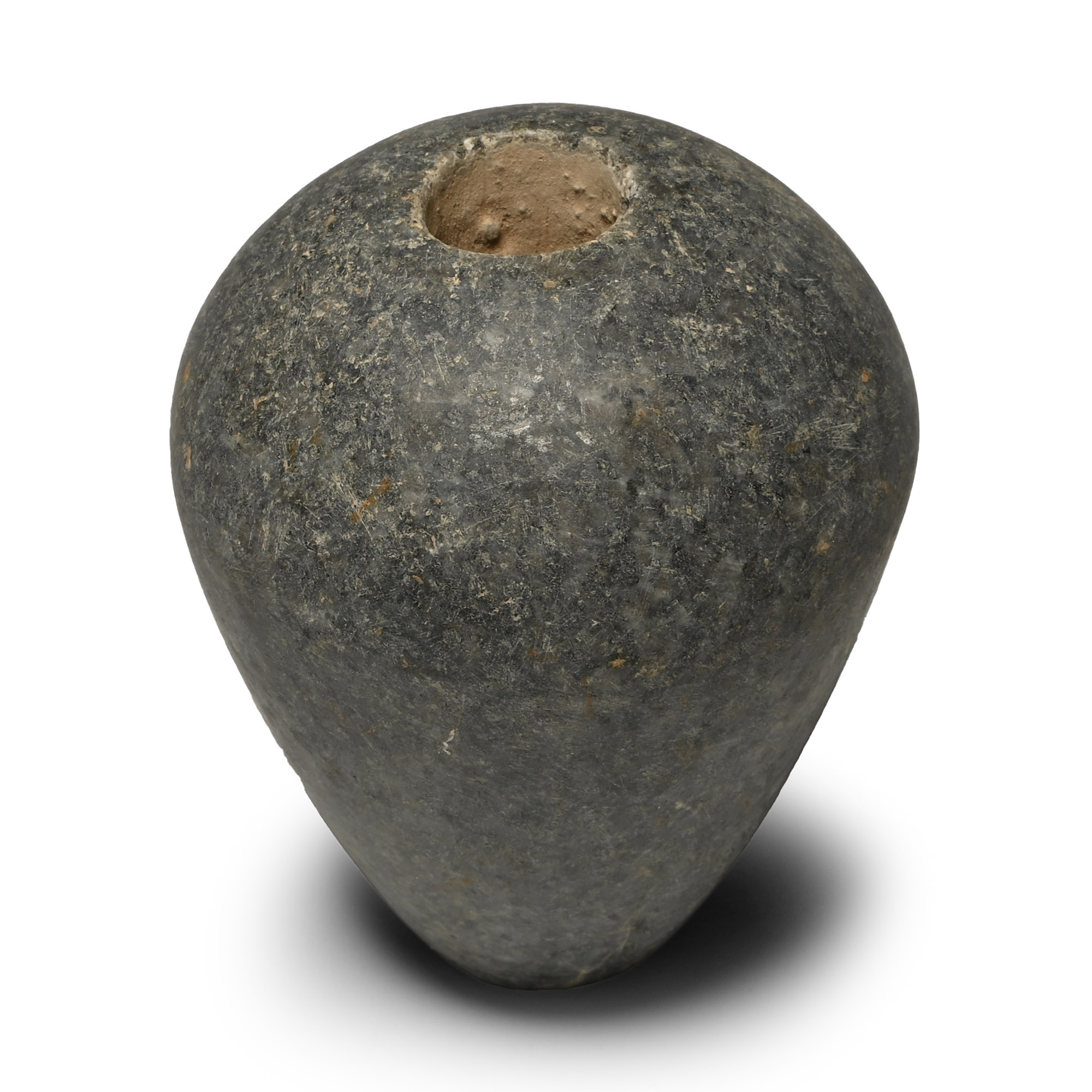
Western Asiatic Stone Macehead
3RD-2ND MILLENNIUM B.C.
2 7/8 in. (303 grams, 72 mm).
Piriform with vertical socket expanding towards the narrower end.
ProvenanceFrom the collection of a London, UK, gentleman, 1990s.
This lot has been cleared against the Art Loss Register database, and is accompanied by an illustrated lot declaration signed by the Head of the Antiquities Department, Dr Raffaele D'Amato.
Cf. Gorelik, M., Weapons of Ancient East, IV millennium BC-IV century BC, Saint Petersburg, 2003, in Russian, see pl.XXX, no.89, from Megiddo, for similar.
CONDITIONTimeLine Auctions follows a vetting process to ensure the authenticity and legality of all items, reinforcing our commitment to integrity and responsible trading. Each antiquity, antique, and coin lot undergoes thorough examination by a vetting committee of at least ten external specialists, professional trade association members, scientists, and archaeologists: Our Vetting Process
AUCTIONS:
TimeLine is a leading auction house specialising in antiquities, ancient art, collectables, natural history, coins, medals, and books. Our auctions offer museums, collectors, historians, and enthusiasts the opportunity to acquire unique and historically significant pieces.
-
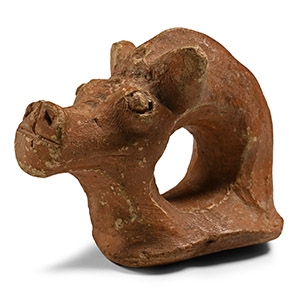
Western Asiatic Terracotta Boar Figure
3rd-2nd millennium B.C.Estimate: £120 - 170 (+bp*)
Opening Bid: £60
Modelled in the round, boar on a rectangular base with exaggerated crest and pellet eyes. 66 grams, 72 mm
Ex London, UK, gallery, 1971-early 2000s. London, UK, collection. This lot has been cleared against the Art Loss Register database, and is accompanied by an illustrated lot declaration signed by the Head of the Antiquities Department, Dr Raffaele D'Amato. -
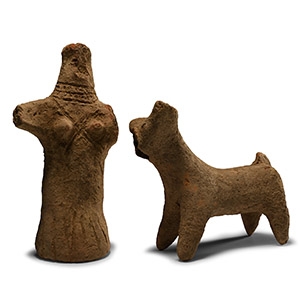
Chalcolithic Terracotta Figure Group
3rd millennium B.C.Sold for (Inc. bp): £117
Comprising: a standing female with collar and fringed robe; standing quadruped. 260 grams total, 9-12.2 cm
From the collection of a London, UK, gentleman, 1979-1999. This lot has been cleared against the Art Loss Register database, and is accompanied by an illustrated lot declaration signed by the Head of the Antiquities Department, Dr Raffaele D'Amato. -
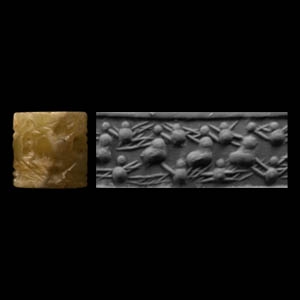
Sumerian Green Stone Cylinder Seal
Uruk, 3rd millennium B.C.Estimate: £550 - 750 (+bp*)
Opening Bid: £300
With incuse frieze of three horizontal lines of stylised seated figures, pierced for suspension. 17.5 grams, 21 mm
Ex 'S' collection, London, UK. Examined by Professor Wilfrid George Lambert FBA (1926-2011), historian, archaeologist, and specialist in Assyriology and Near Eastern archaeology, in the late 1980s and early 1990s. This lot has been cleared against the Art Loss Register database, and is accompanied by an illustrated lot declaration signed by the Head of the Antiquities Department, Dr Raffaele D'Amato.
