
Loading, please wait...
LOT 1577
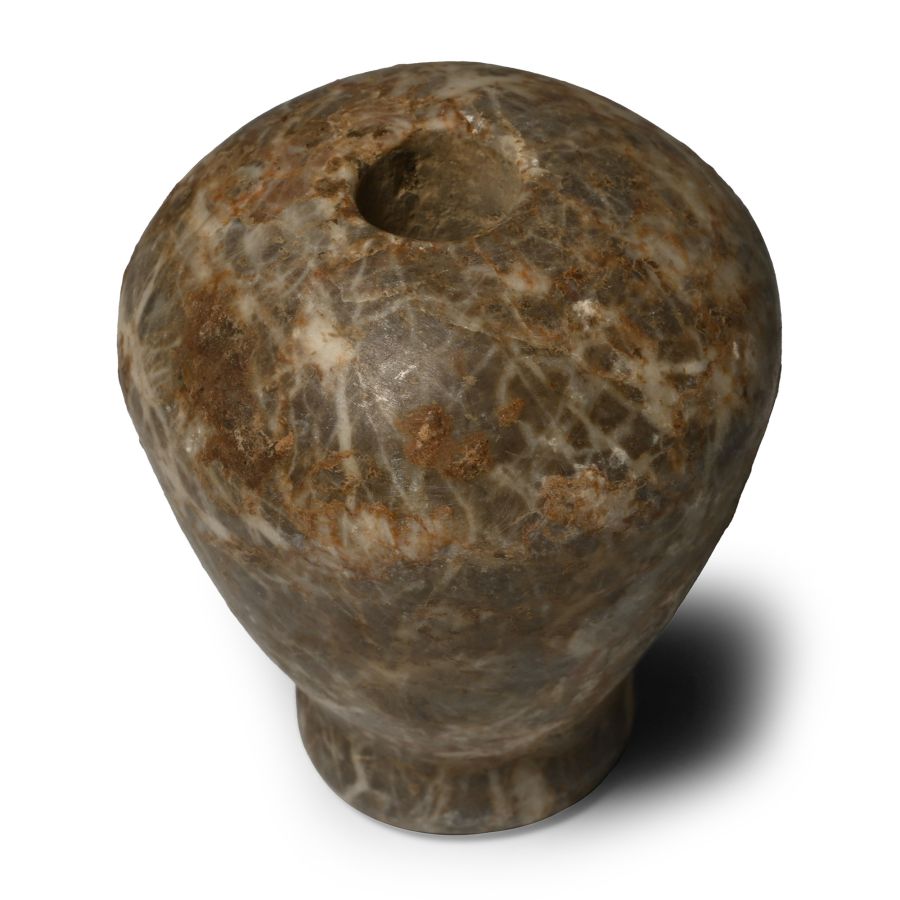
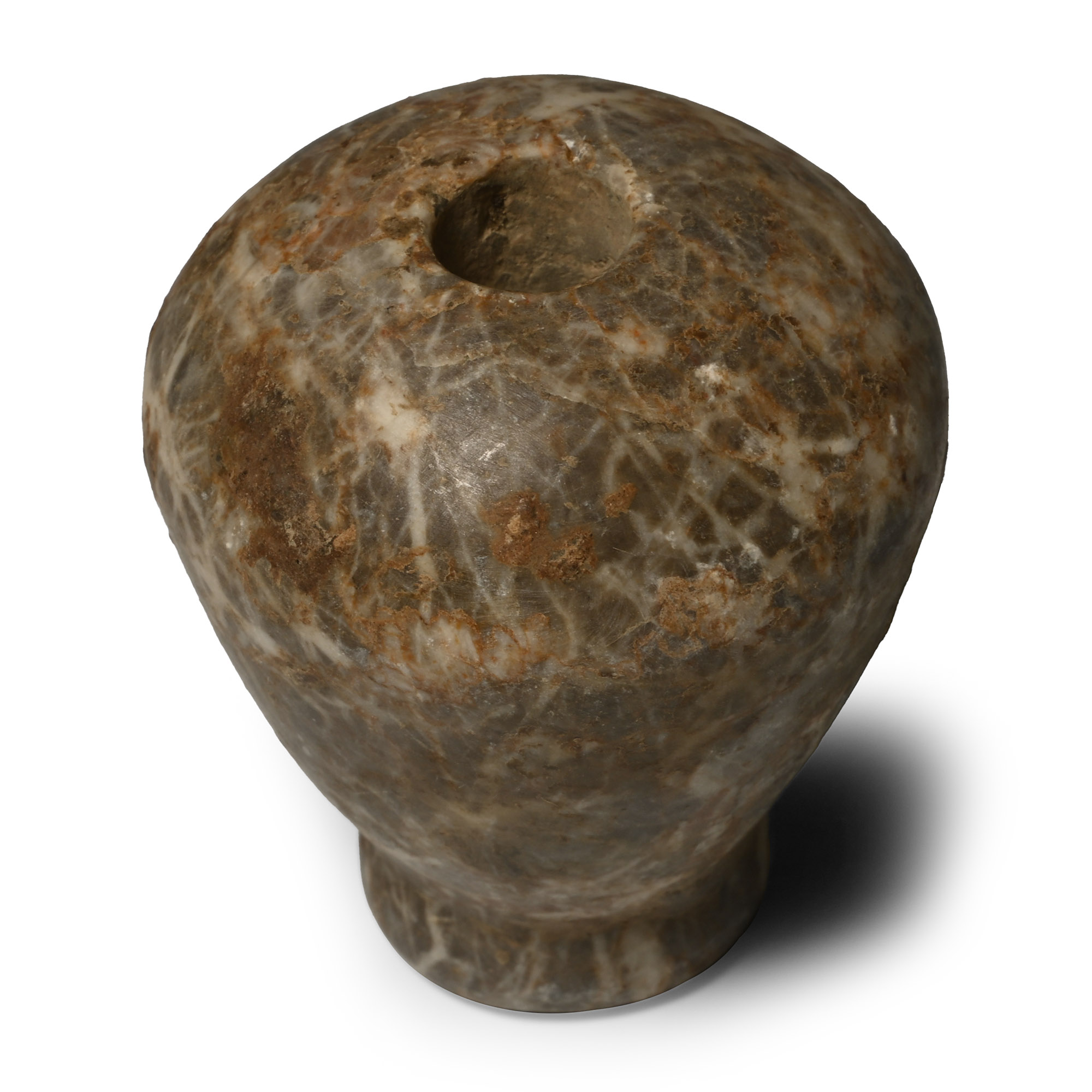
Western Asiatic Stone Macehead
3RD-2ND MILLENNIUM B.C.
3 in. (342 grams, 75 mm).
Tubular in form with tapering profile and balustered socket.
ProvenanceFrom the collection of a London, UK, gentleman, 1990s.
This lot is accompanied by an illustrated lot declaration signed by the Head of the Antiquities Department, Dr Raffaele D’Amato.
Cf. Gorelik, M., Weapons of Ancient East, IV millennium BC-IV century BC, Saint Petersburg, 2003, in Russian, see pl.XXXI, no.30, from Armenia, for similar.
CONDITIONTimeLine Auctions follows a vetting process to ensure the authenticity and legality of all items, reinforcing our commitment to integrity and responsible trading. Each antiquity, antique, and coin lot undergoes thorough examination by a vetting committee of at least ten external specialists, professional trade association members, scientists, and archaeologists: Our Vetting Process
AUCTIONS:
TimeLine is a leading auction house specialising in antiquities, ancient art, collectables, natural history, coins, medals, and books. Our auctions offer museums, collectors, historians, and enthusiasts the opportunity to acquire unique and historically significant pieces.
-
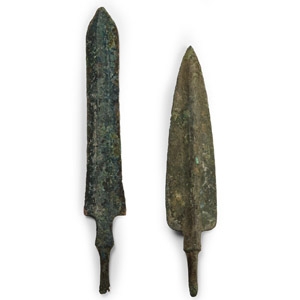
Large Luristan Bronze Arrowhead Group
13th-7th century B.C.Sold for (Inc. bp): £26
Comprising two arrowheads, each with a raised midrib and short tang. 48 grams total, 10.7-12.2 cm
Acquired on the UK art market before 2000. Property of an Essex, UK, gentleman. This lot is accompanied by an illustrated lot declaration signed by the Head of the Antiquities Department, Dr Raffaele D’Amato. -
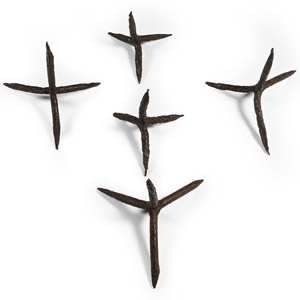
Medieval Iron Anti-Cavalry Caltrop Group
13th-14th century A.D.Sold for (Inc. bp): £91
Each hand-forged with square-section spikes, designed so that however the item falls, one spike is always vertical. 196 grams total, 7.0-10.2 cm
From the private collection of a London gentleman, from his grandfather's collection formed before the early 1970s. This lot is accompanied by an illustrated lot declaration signed by the Head of the Antiquities Department, Dr Raffaele D’Amato. -
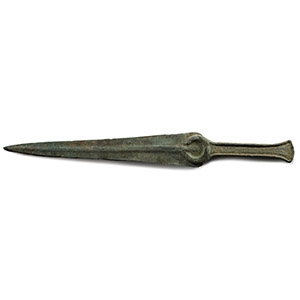
Luristan Bronze Dagger
14th-10th century B.C.Sold for (Inc. bp): £338
A short dagger with slender triangular blade, low round shallow midrib with flat upper face, annular guard and round shoulders, columnar grip with open sides to receive organic hilt, crescent pommel. 154 grams, 34 cm
Acquired 1980-2015. Ex Abelita family collection. This lot is accompanied by an illustrated lot declaration signed by the Head of the Antiquities Department, Dr Raffaele D’Amato.
Moorey, Gordon and Khorasani created a classification of bladed weapons, according to which daggers are edged weapons no greater than 36cm in length, dirks (short swords) are between 36cm and 50cm in length, and swords are edged weapons greater than 50cm in length.
