
Loading, please wait...


LOT 1449
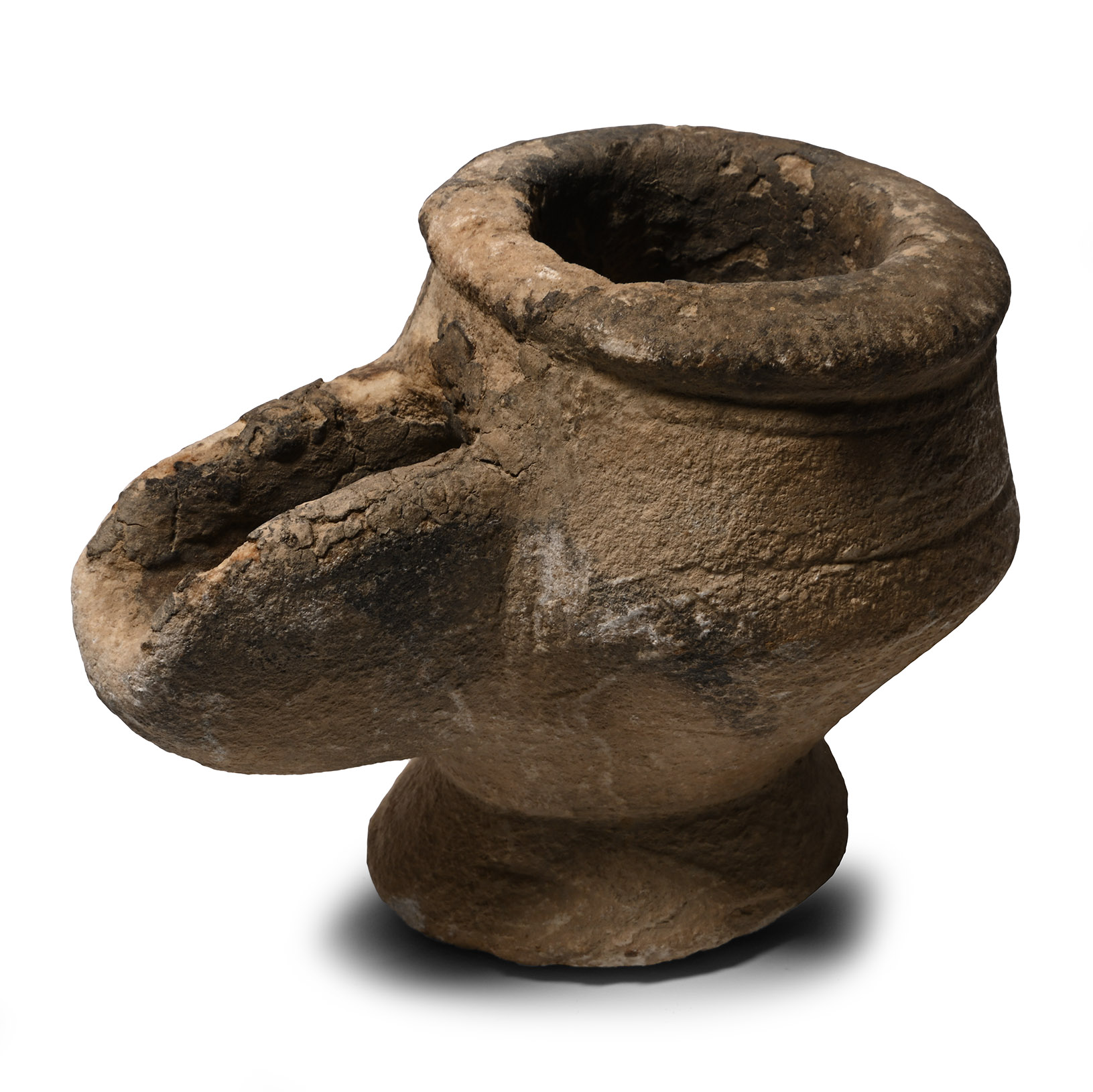
Western Asiatic Stone Libation Bowl
1ST MILLENNIUM B.C.
4 3/4 in. (667 grams total, 11.9 cm).
With a biconical body and flared foot set off-centre, large U-shaped spout and flat rim.
ProvenanceFrom a collection formed before 1988, London and Geneva.
This lot has been cleared against the Art Loss Register database, and is accompanied by an illustrated lot declaration signed by the Head of the Antiquities Department, Dr Raffaele D'Amato.
TimeLine Auctions follows a vetting process to ensure the authenticity and legality of all items, reinforcing our commitment to integrity and responsible trading. Each antiquity, antique, and coin lot undergoes thorough examination by a vetting committee of at least ten external specialists, professional trade association members, scientists, and archaeologists: Our Vetting Process
AUCTIONS:
TimeLine is a leading auction house specialising in antiquities, ancient art, collectables, natural history, coins, medals, and books. Our auctions offer museums, collectors, historians, and enthusiasts the opportunity to acquire unique and historically significant pieces.
LOT 1449
Western Asiatic Stone Libation Bowl
Estimate £150 - 200€170 - 230 (for guidance only)$200 - 270 (for guidance only)
-
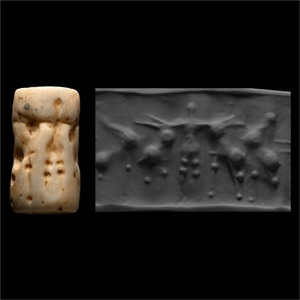
Early Akkadian Shell Cylinder Seal with Attacking Lions
2400-2200 B.C.Sold for (Inc. bp): £169
Cylinder with cord and bead handles; accompanied by a copy of an old scholarly note, typed and signed by W.G. Lambert, late Professor of Assyriology, University of Birmingham, 1970-1993, which states: 'Description of Cylinder Seal of Fossil Shell 30 x 16.5 mm. A god standing in the centre succours a domestic animal on either side which is being attack[ed] in turn by a lion. Terminal: two line[s] below vacant description panel. The seal is of late ED III or early Akkad date, c. 2400-2200 B.C. The cutting is marked by a strong use of the drill. The seal is worn, though the design clear. The meaning of the design is based on real life. Lions were a real threat to the herds and flocks of the community, and it was hoped that the depiction of a god coming to the rescue of the domestic creatures would mean that in real life their animals would be similarly saved by divine help.'; accompanied by a museum-quality impression. 16.1 grams total, 8.1-29.57 mm
UK private collection, acquired 1980-1983. Accompanied by a copy of a scholarly note, typed and signed by Professor Wilfrid George Lambert in August 1990. This lot has been cleared against the Art Loss Register database, and is accompanied by an illustrated lot declaration signed by the Head of the Antiquities Department, Dr Raffaele D'Amato. -
.jpg)
Achaemenid Multi-Formed Stone Seal
Circa 5th century B.C.Sold for (Inc. bp): £10,400
Discoid in plan with zoomorphic handle; underside with contest scene of two opposed gryphons with forelegs raised standing on the corpse of a boar; faravahar above. 13.3 grams, 29 mm
From the 'S' collection, acquired 1970-1990s. The collection was seen and studied by W.G.Lambert, late Professor of Assyriology at the University of Birmingham, 1970-1993. This lot has been checked against the Interpol Database of stolen works of art and is accompanied by a search certificate number no.12542-231458. This lot has been cleared against the Art Loss Register database, and is accompanied by an illustrated lot declaration signed by the Head of the Antiquities Department, Dr Raffaele D'Amato. -
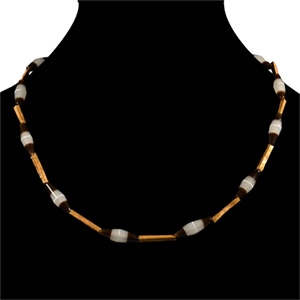
Western Asiatic Gold and Banded Glass Bead Necklace
2nd millennium B.C. or laterEstimate: £600 - 800 (+bp*)
Opening Bid: £300
Composed of gold rectangular tubes, interspersed with later brown and white biconical glass beads; modern clasp, restrung. 20 grams, 45.5 cm
Formerly in the collection of Mr S.M., London, formed 1948-2000. Ex property of a North London gentleman. Property of a Californian, USA, collector. This lot has been cleared against the Art Loss Register database, and is accompanied by an illustrated lot declaration signed by the Head of the Antiquities Department, Dr Raffaele D'Amato.
