
Loading, please wait...
LOT 0303
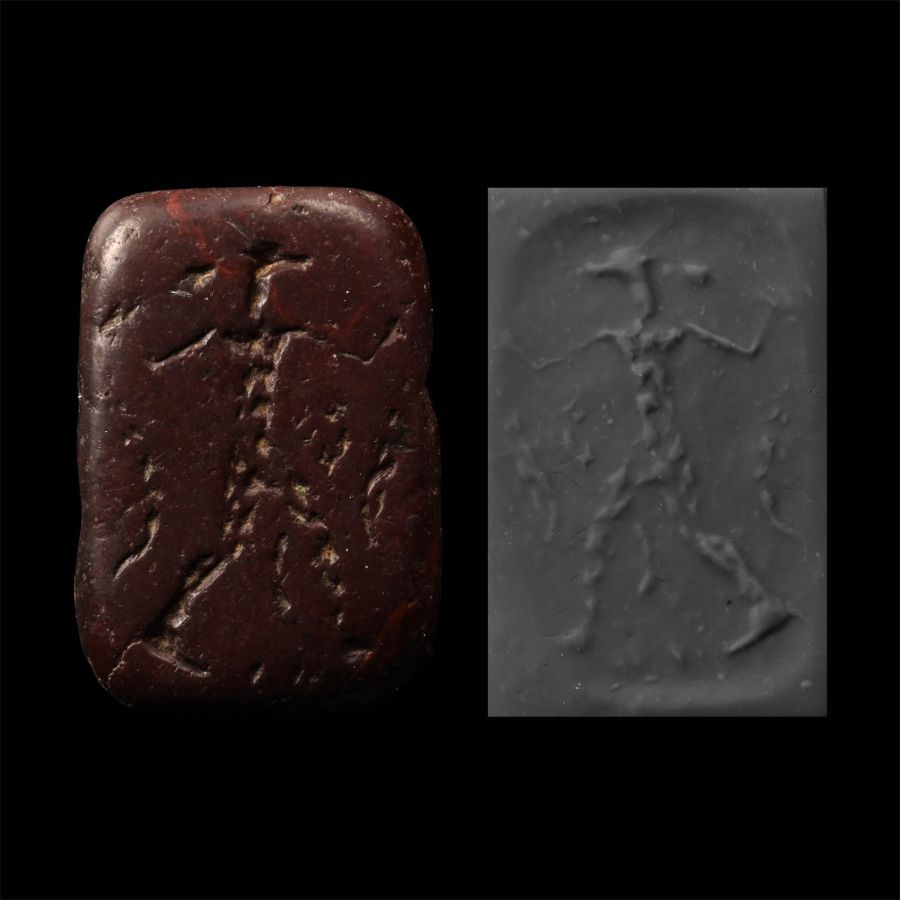
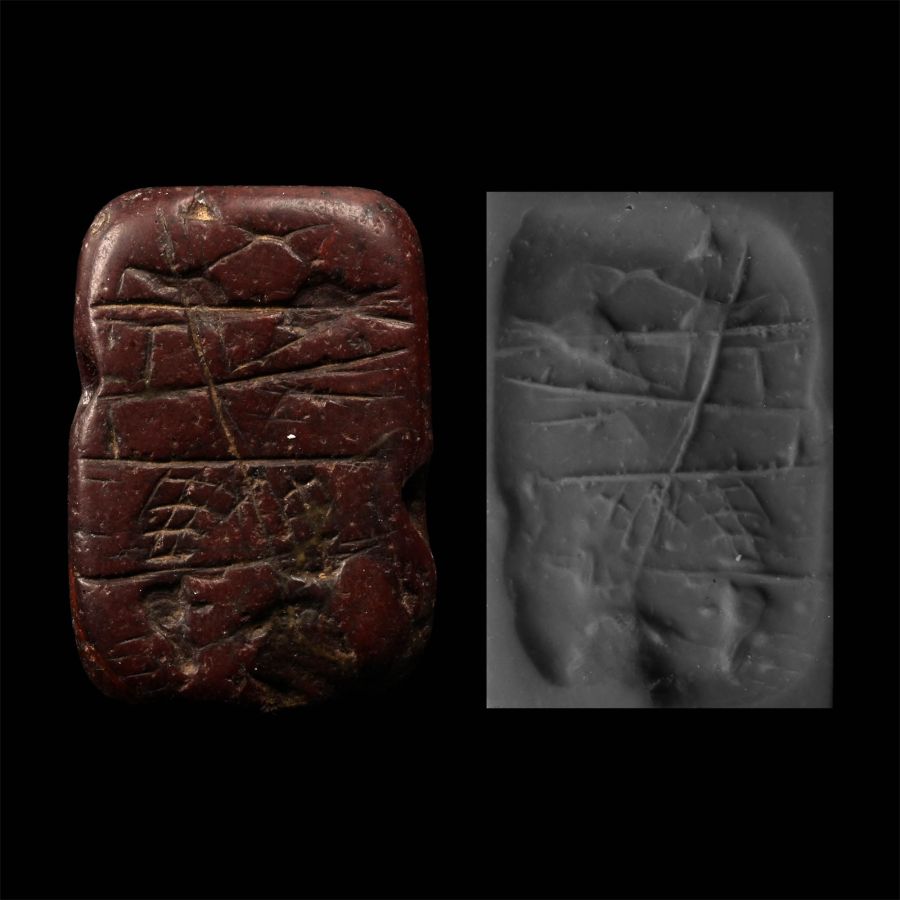
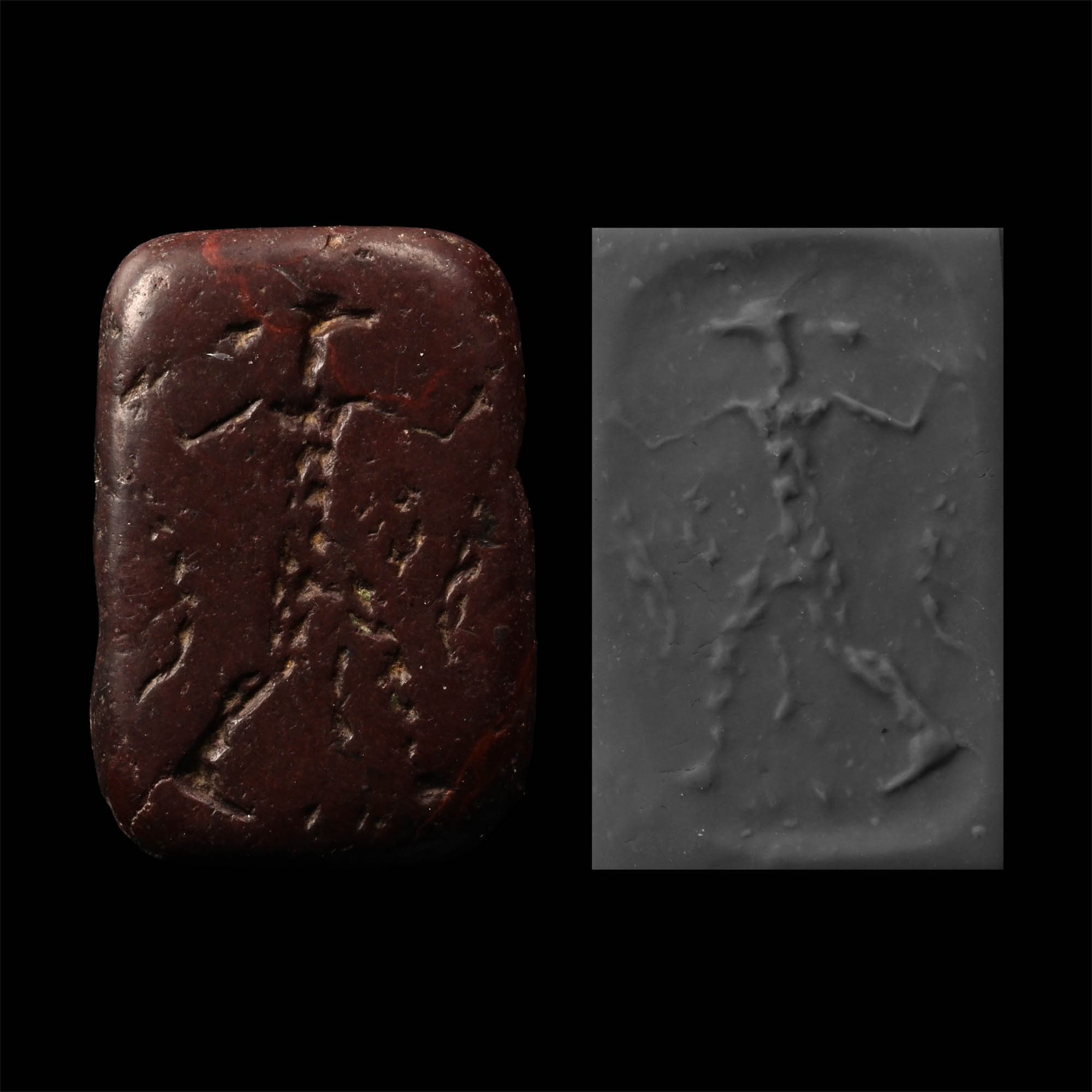
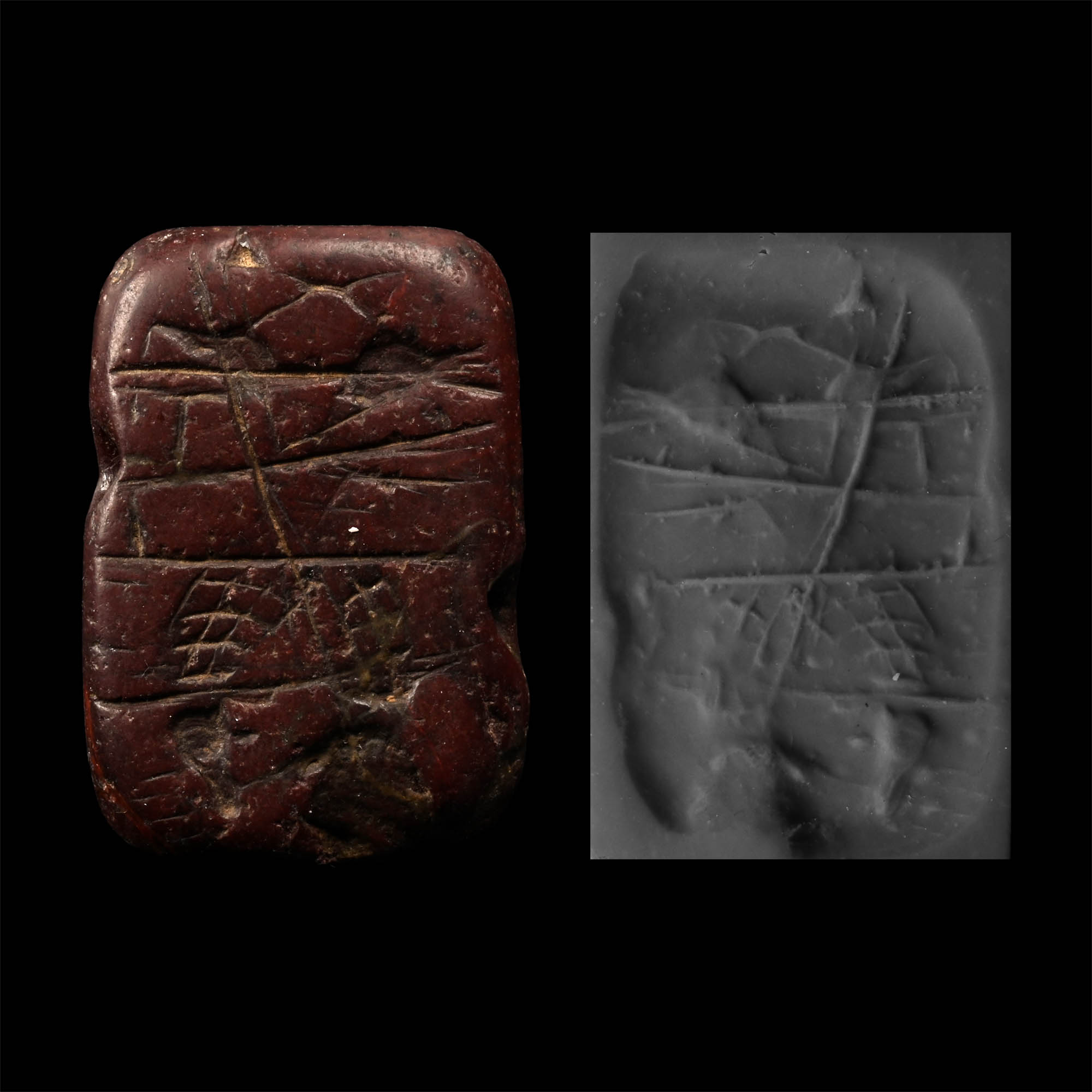
Western Asiatic Stone Lamashtu Seal
1ST MILLENNIUM B.C.
1 3/8 in. (19.41 grams, 36 mm).
Rectangular in plan with smoothed edges and angles, bifacial ornament: obverse with standing gazelle-headed figure advancing holding a serpent, pointillé detailing; reverse with transverse borders and hatched panels.
ProvenanceEx 'S' collection, London, UK.
Examined by Professor Wilfrid George Lambert FBA (1926-2011), historian, archaeologist, and specialist in Assyriology and Near Eastern archaeology, in the late 1980s and early 1990s.
Accompanied by a copy of a previous illustrated catalogue slip.
TimeLine Auctions follows a vetting process to ensure the authenticity and legality of all items, reinforcing our commitment to integrity and responsible trading. Each antiquity, antique, and coin lot undergoes thorough examination by a vetting committee of at least ten external specialists, professional trade association members, scientists, and archaeologists: Our Vetting Process
AUCTIONS:
TimeLine is a leading auction house specialising in antiquities, ancient art, collectables, natural history, coins, medals, and books. Our auctions offer museums, collectors, historians, and enthusiasts the opportunity to acquire unique and historically significant pieces.
-
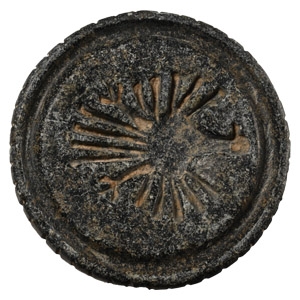
Anatolian Black Stone Stamp Seal
2nd-1st millennium B.C.Estimate: £150 - 200 (+bp*)
Opening Bid: £75
Discoid in plan with hatching to the rim and the pierce lug to the reverse; deep border and intaglio motif of a spread eagle with segmented wings and tail. 42 grams, 49 mm
From the collection of Mr S.M., London, UK, formed from 1979-1999. -
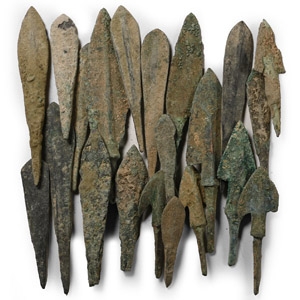
Luristan Bronze Arrowhead Group
13th-7th century B.C.Sold for (Inc. bp): £208
Comprising lanceolate, triangular, barbed-and-tanged and other types. 187 grams total, 42-87 mm
Ex London, UK, collection, 1990s. -
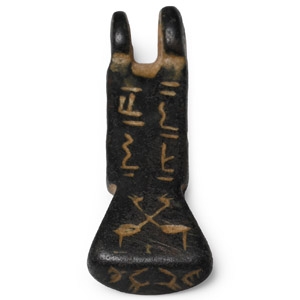
Western Asiatic Bronze Attachment with 'There is One God and God is Great' Inscription
9th-10th century A.D.Sold for (Inc. bp): £27
D-section pendant with flared end and twin suspension lugs; incised text to reverse 'There is One God and God is Great'. 10.9 grams, 34 mm
From the collection of a gentleman, acquired on the London art market in the 1990s.
