
Loading, please wait...

LOT 1253
Western Asiatic Stone Jeweller's Mould Group
1ST MILLENNIUM A.D.
1 1/8 - 1 3/4 in. (59 grams total, 29-44 mm).
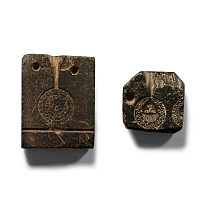
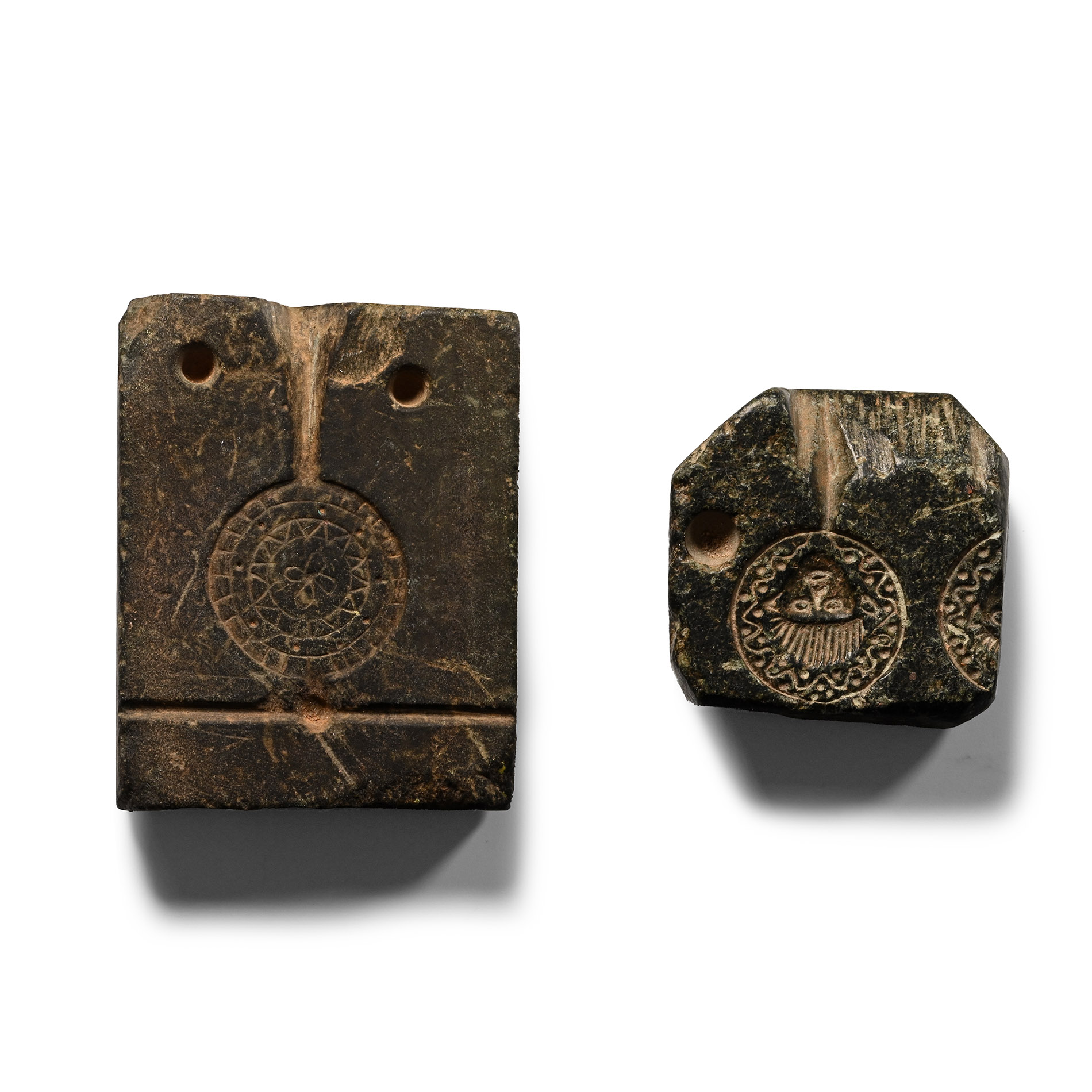
Comprising: bifacial soapstone block fragment with incised roundel of a nimbate head with pouring channel, vent and locating hole, reverse similar with roundel of two opposed figures with fronds between, both faces with portions of other designs; larger rectangular block with pouting channel vent and two locating holes, roundel with rosette design. [2]
ProvenanceFrom the collection of a gentleman, acquired on the London art market in the 1990s.
CONDITIONTimeLine Auctions follows a vetting process to ensure the authenticity and legality of all items, reinforcing our commitment to integrity and responsible trading. Each antiquity, antique, and coin lot undergoes thorough examination by a vetting committee of at least ten external specialists, professional trade association members, scientists, and archaeologists: Our Vetting Process
AUCTIONS:
TimeLine is a leading auction house specialising in antiquities, ancient art, collectables, natural history, coins, medals, and books. Our auctions offer museums, collectors, historians, and enthusiasts the opportunity to acquire unique and historically significant pieces.
LOT 1253
Western Asiatic Stone Jeweller's Mould Group
Estimate £250 - 350€290 - 410 (for guidance only)$340 - 470 (for guidance only)
-
Western Asiatic Carnelian, Agate and Silver Bead Necklace String
1st millennium B.C.Sold for (Inc. bp): £221
Composed of oval beads interspersed with shorter oval beads, two pairs of silver oval beads to the centre with a conical feature bead; restrung. 45 grams, 50 cm
From the collection of a gentleman, acquired on the London art market in the 1990s. -
Western Asiatic Terracotta Idol
2250-2000 B.C.Sold for (Inc. bp): £468
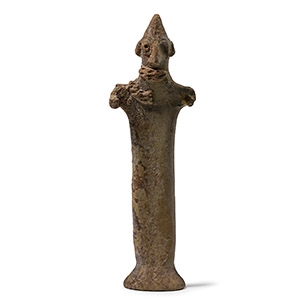
Modelled with a pinched, bird-like head and face with large circular eyes, two applied ornamental collars, stub arms and splayed foot. 41 grams, 13.5 cm
with Geneve Enchere, December 2017, no.790. Private collection, Europe. -
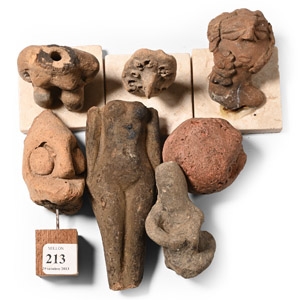
Western Asiatic and Other Terracotta Idol Fragment Group
2nd-1st millennium B.C.Sold for (Inc. bp): £286
Including anthropomorphic figures, heads and other items, some on display bases. 507 grams total, 45-98 mm
From a collection acquired on the UK art market from various auction houses and collections mostly before 2000. From an important Cambridgeshire estate; thence by descent.
