
Loading, please wait...
LOT 1358
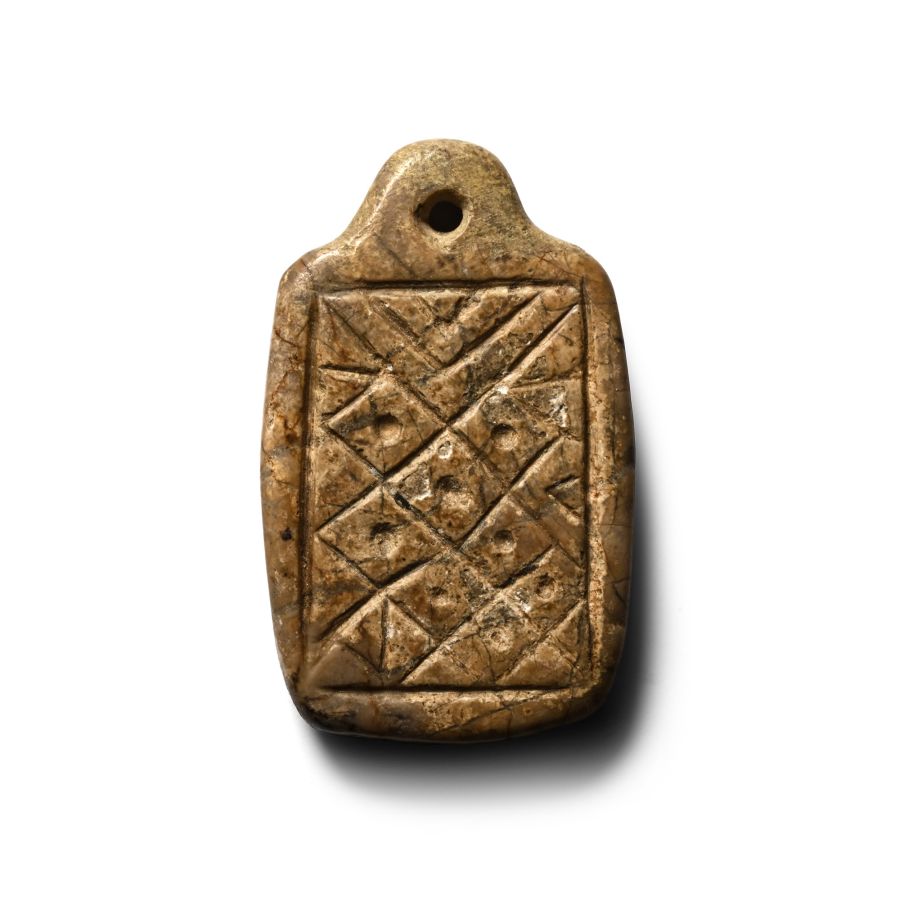
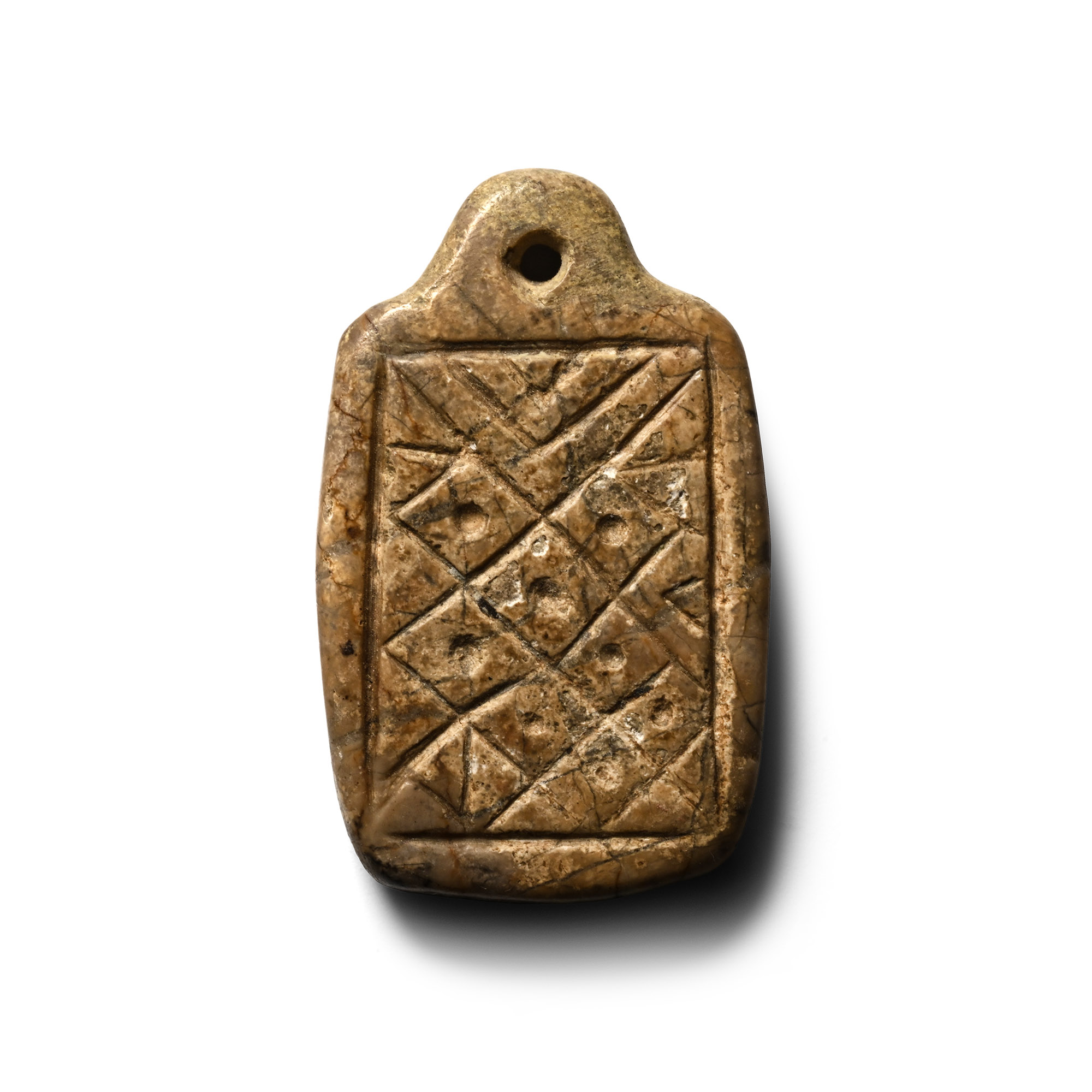
Western Asiatic Stone Geometric Pendant
CIRCA 14TH-16TH CENTURY A.D.
1 1/2 in. (7.61 grams, 37 mm).
Rectangular body with integral suspension loop and engraved grid of dot-in-lozenges on the obverse. [No Reserve]
ProvenanceFrom the private collection of a European gentleman (1942-2024), formed since the 1970s.
LiteratureCf. for similar patterns (Pythagorean tetractys) in Islamic art Critchlow, K., Islamic Patterns, an analytical and cosmological approach, London, 1976, fig. F, p.31.
CONDITIONTimeLine Auctions follows a vetting process to ensure the authenticity and legality of all items, reinforcing our commitment to integrity and responsible trading. Each antiquity, antique, and coin lot undergoes thorough examination by a vetting committee of at least ten external specialists, professional trade association members, scientists, and archaeologists: Our Vetting Process
AUCTIONS:
TimeLine is a leading auction house specialising in antiquities, ancient art, collectables, natural history, coins, medals, and books. Our auctions offer museums, collectors, historians, and enthusiasts the opportunity to acquire unique and historically significant pieces.
-
.jpg)
Persian Iron Dragon-Shaped Flint Striker
17th-18th century A.D.Sold for (Inc. bp): £520
With a thick looped body and striking face to the outer edge; handle formed in openwork with stylised serpent-head, open mouth with recurved teeth, trident tail with similar pellet clusters; engraved and drilled detailing. 297 grams, 11.5 cm
Acquired Christie's, The Longridge Collection, London, UK, 2010 (£1,276.00). Personal collection of a Suffolk lady, UK.
Among the objects reflecting the continuation of traditional figural compositions in Indo-Iranian art, there are zoomorphic flint strikers, decorated with serpents, ducks or geese and hawks attacking birds, indicating the persistence of imperial and solar symbols. -
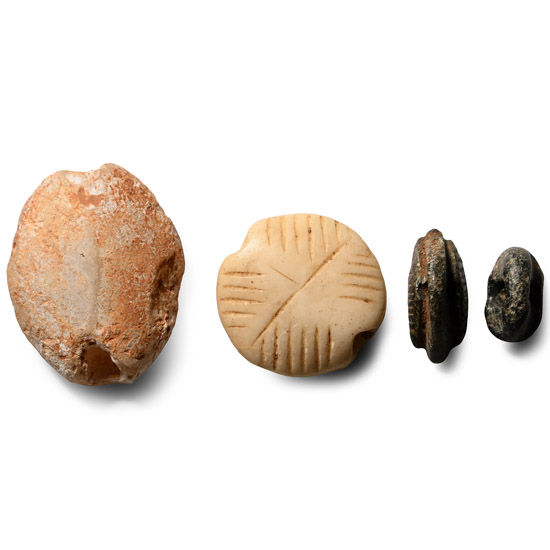
Western Asiatic Stone Scaraboid and Bird Seal Group
1st millennium B.C.-1st millennium A.D.Sold for (Inc. bp): £26
Comprising: a scaraboid in cream stone with hatching on the underside; a black stone seal formed as a stylised bird with its neck resting along the spine, hatched wings and underside; a small black seal pierced through the central ridge, linear motifs on the underside; a pale stone seal with slightly domed upper face, underside with stylised animal(?) motifs. 10.28 grams total, 11-26 mm
From the private collection of a European gentleman (1942-2024), formed since the 1970s. -
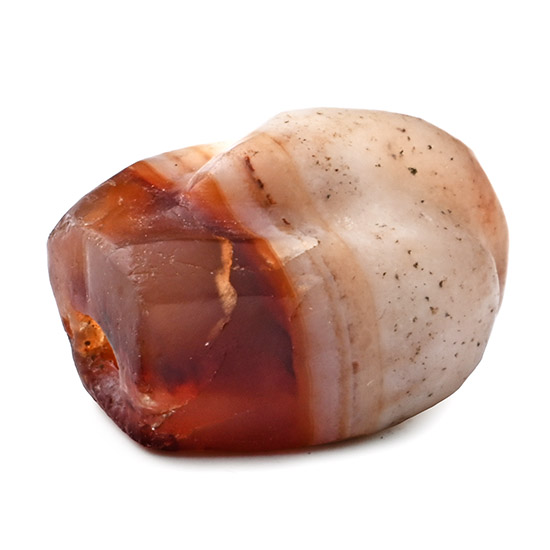
Neo-Babylonian Banded Agate Duck Weight
Circa 800-600 B.C.Estimate: £100 - 140 (+bp*)
Opening Bid: £50
Modelled in the round with its head and neck resting along the spine. 1.6 grams, 14 mm
Ex private collection of the late Mr S.M., London, UK, 1970s-2000s. Accompanied by a previously illustrated catalogue card with provenance.
