
Loading, please wait...
LOT 1131
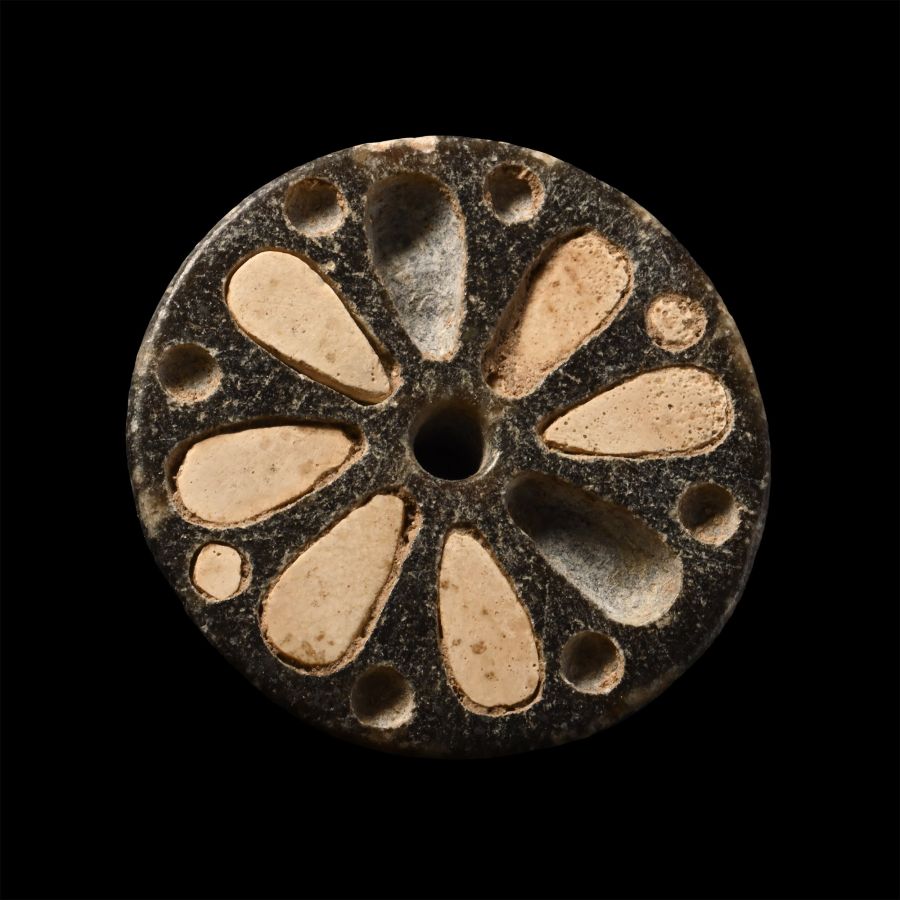
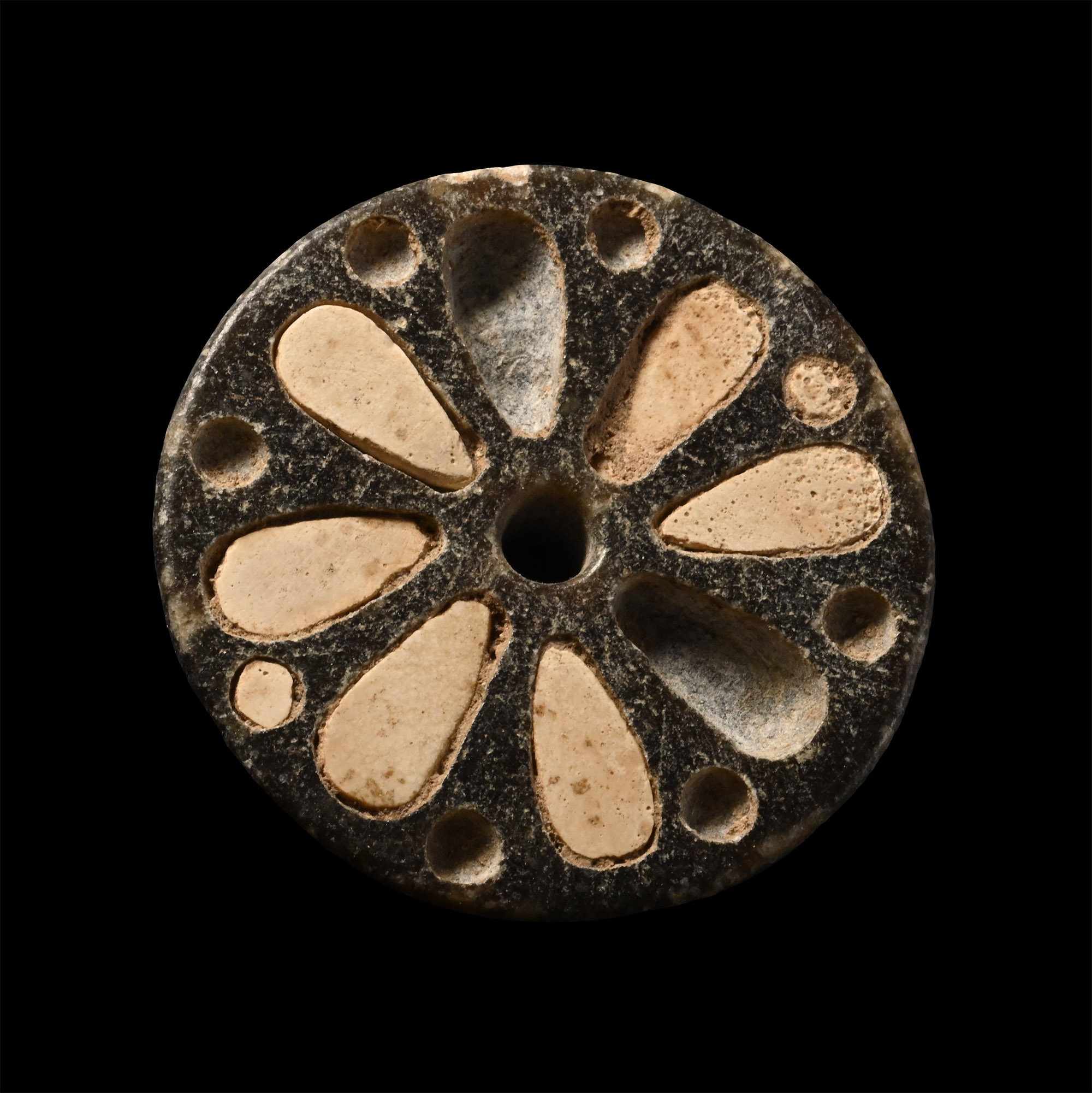
Western Asiatic Stone Flower Roundel with Inlays
1ST MILLENNIUM B.C.
1 1/2 in. (20.4 grams, 37 mm).
Plano-convex in section with radiating petal-shaped sockets to the underside each folled with a coloured inlay, discoid sockets between.
ProvenanceAcquired on the UK art market.
Private collection, England.
TimeLine Auctions follows a vetting process to ensure the authenticity and legality of all items, reinforcing our commitment to integrity and responsible trading. Each antiquity, antique, and coin lot undergoes thorough examination by a vetting committee of at least ten external specialists, professional trade association members, scientists, and archaeologists: Our Vetting Process
AUCTIONS:
TimeLine is a leading auction house specialising in antiquities, ancient art, collectables, natural history, coins, medals, and books. Our auctions offer museums, collectors, historians, and enthusiasts the opportunity to acquire unique and historically significant pieces.
LOT 1131
Western Asiatic Stone Flower Roundel with Inlays
Estimate £200 - 300€230 - 350 (for guidance only)$270 - 410 (for guidance only)
-
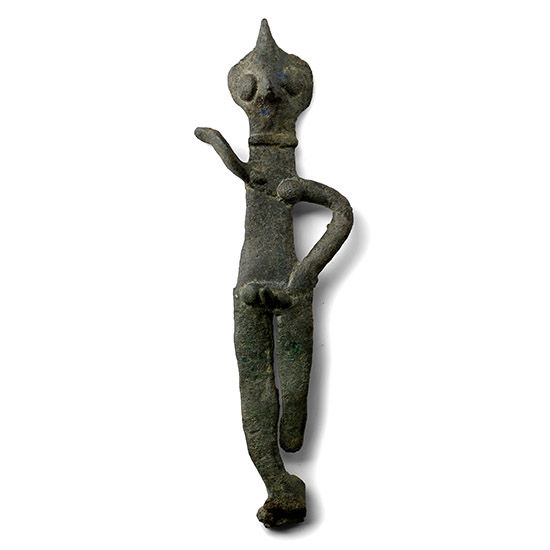
Syro-Hititte Bronze Male Idol
2nd millennium B.C.Sold for (Inc. bp): £117
Modelled in the round with onion-shaped head, raised collar and phallus, domed eyes. 38.3 grams, 11.1 cm
Previously the property of an Islington, London, UK, dealer. From a London, UK, private collector since circa 1990. -
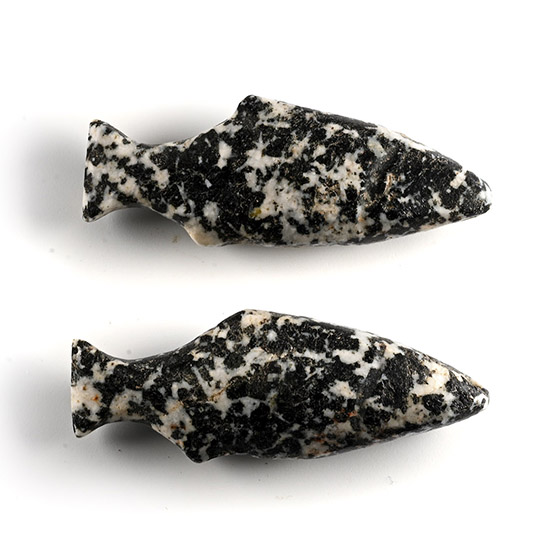
Proto-Sumerian Diorite Fish Pair
3rd millennium B.C.Sold for (Inc. bp): £286
Two carved fish amulets, each pierced at the mouth for suspension. 17.1 grams total, 41-42 mm
Swiss private collection, 1990s. Acquired in 2002. -
.jpg)
Syrian Haematite Cylinder Seal with Storm God
2nd-1st millenium B.C.Sold for (Inc. bp): £520
With three standing figures and animals; accompanied by a copy of an old scholarly note, typed and signed by W.G. Lambert, late Professor of Assyriology, University of Birmingham, 1970-1993, which states: 'Cylinder Seal of Hematite, 19.5 x 8 mm. The main scene consists of three figures: to the right the Storm God standing with one foot on each of two mountains. He wears an elaborate hat, and holds up a symbol. Facing him is a human figure with both hands raised, and wearing a robe to the knees. behind the worshipper stands a goddess holding up a curved object. There are two fillers: a scorpion, and a pillar--table with two objects resting on it. The minor scene consists of a walking quadruped with human head below, and a reared-up lion above a short guilloche. This is a Syrian seal, c. 1800-1600 B.C., perhaps from Palestine.'; accompanied by a museum quality impression and a pair of red stone beads. 3.38 grams, 20 mm
Anonymous French sale. Private collection, London, UK. Accompanied by a copy of an old scholarly note, typed and signed by W.G. Lambert, late Professor of Assyriology, University of Birmingham, 1970-1993.
