
Loading, please wait...
LOT 1438
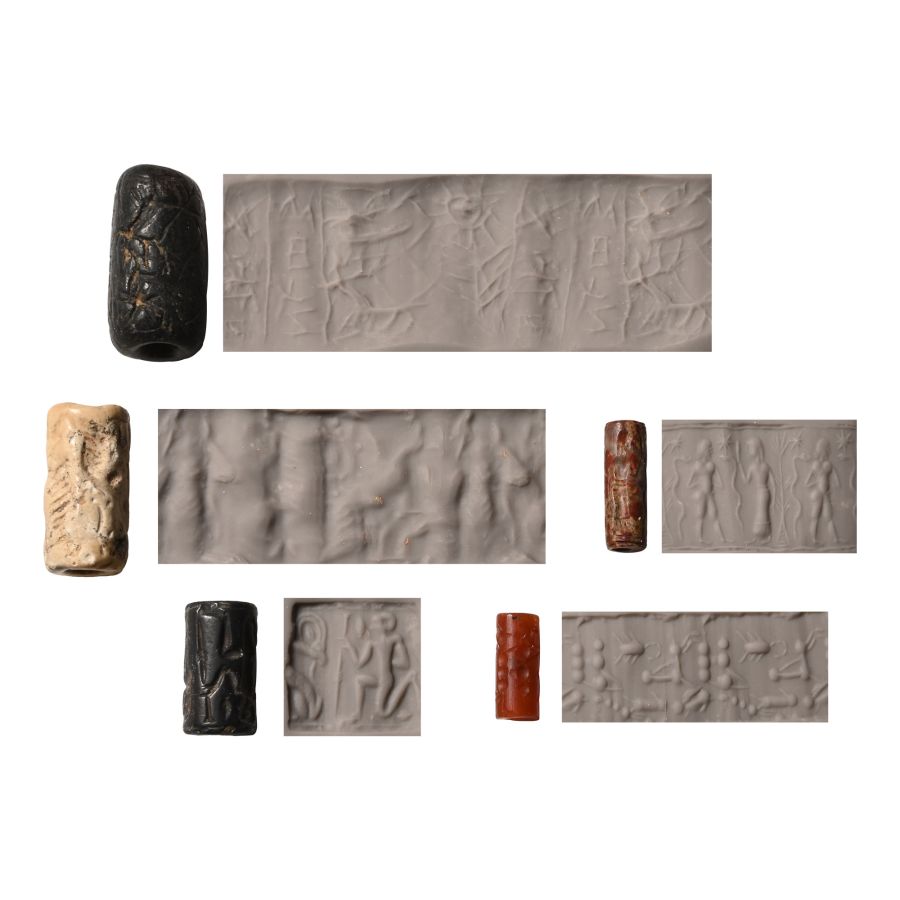
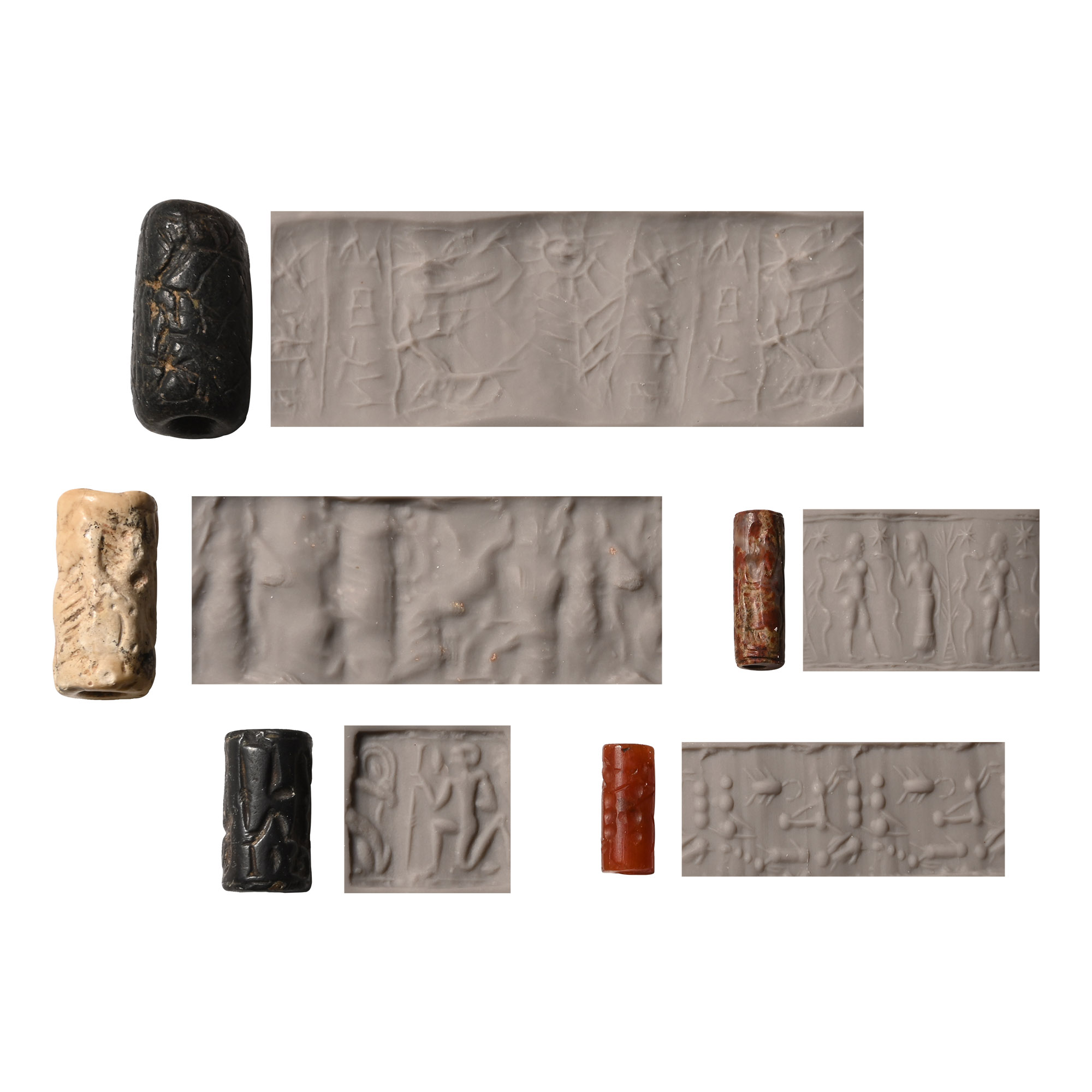
Western Asiatic Stone Cylinder Seal Group
2ND-1ST MILLENNIUM B.C.
3/8 - 3/4 in. (8.13 grams total, 11-20 mm).
Comprising: frieze with linear geometric figures, two columns of cuneiform text; drilled images of scorpions and other zoomorphs; leaping ibexes in profile and vertical fish; nude figure with arms behind his back standing between serpents, confronting a robed figure with knife beneath a star; fragment with kneeling figure in profile holding a spear; each supplied with a museum-quality impression. [5, No Reserve]
ProvenanceFrom the private collection of a European gentleman (1942-2024), formed since the 1970s.
LiteratureCf. a similar scene on a seal in Wilson, J.A., Allen, T.G. Ancient Oriental Cylinder and Other Seals, with a description of the collection of Mrs. William H.Moore, Chicago, 1940, fig.167.
CONDITIONTimeLine Auctions follows a vetting process to ensure the authenticity and legality of all items, reinforcing our commitment to integrity and responsible trading. Each antiquity, antique, and coin lot undergoes thorough examination by a vetting committee of at least ten external specialists, professional trade association members, scientists, and archaeologists: Our Vetting Process
AUCTIONS:
TimeLine is a leading auction house specialising in antiquities, ancient art, collectables, natural history, coins, medals, and books. Our auctions offer museums, collectors, historians, and enthusiasts the opportunity to acquire unique and historically significant pieces.
-
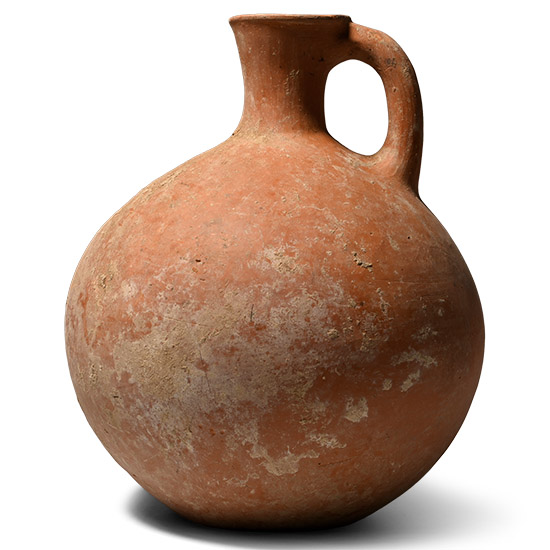
Western Asiatic Pottery Vessel with Handle
1st millennium B.C.Sold for (Inc. bp): £117
Bulbous body with a flat base and a narrow funicular neck, a round-section handle to the rear. 571 grams, 18.5 cm
From an important specialist collection, London, UK, 1990s. -
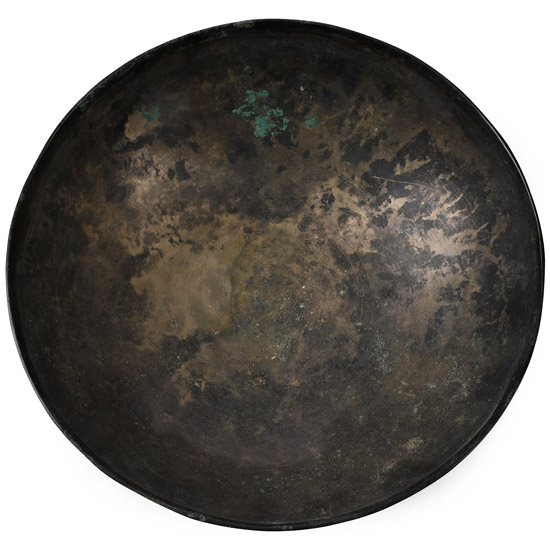
Sasanian Bronze Bowl
Circa 4th-6th century A.D.Sold for (Inc. bp): £72
Wide shallow bowl with rounded base and an inturned rim. 330 grams, 19 cm
From a London, UK, collection, 1990s-2010. -
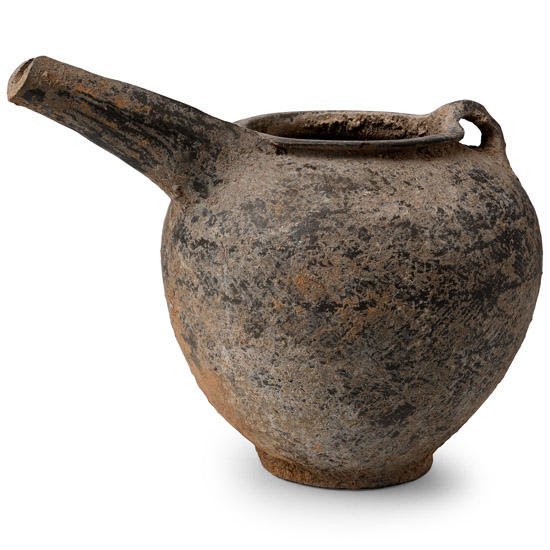
Amlash Zoomorphic Terracotta Pouring Vessel
1st millennium B.C.Estimate: £100 - 140 (+bp*)
Opening Bid: £50
Bulbous body with a narrow foot, an everted rim and a U-shaped spout, the body with bands of densely arranged herringbone decoration. 437 grams, 18 cm wide
Ex Abelita collection, 1990s.
