
Loading, please wait...
LOT 1454
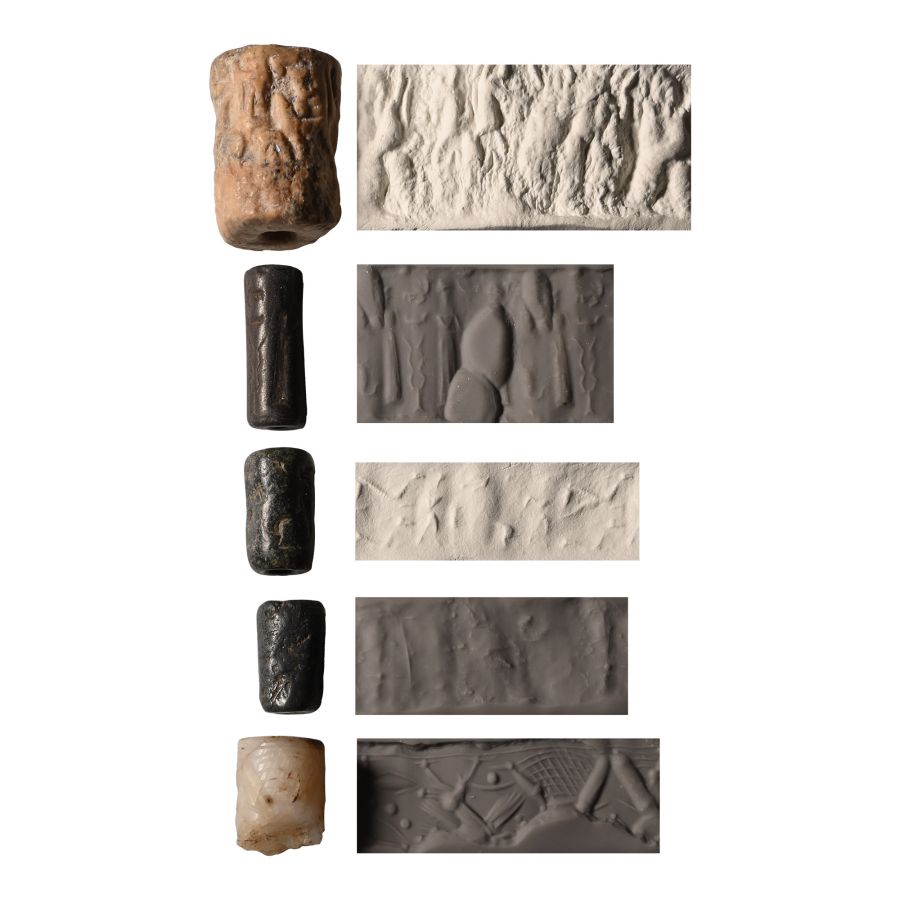
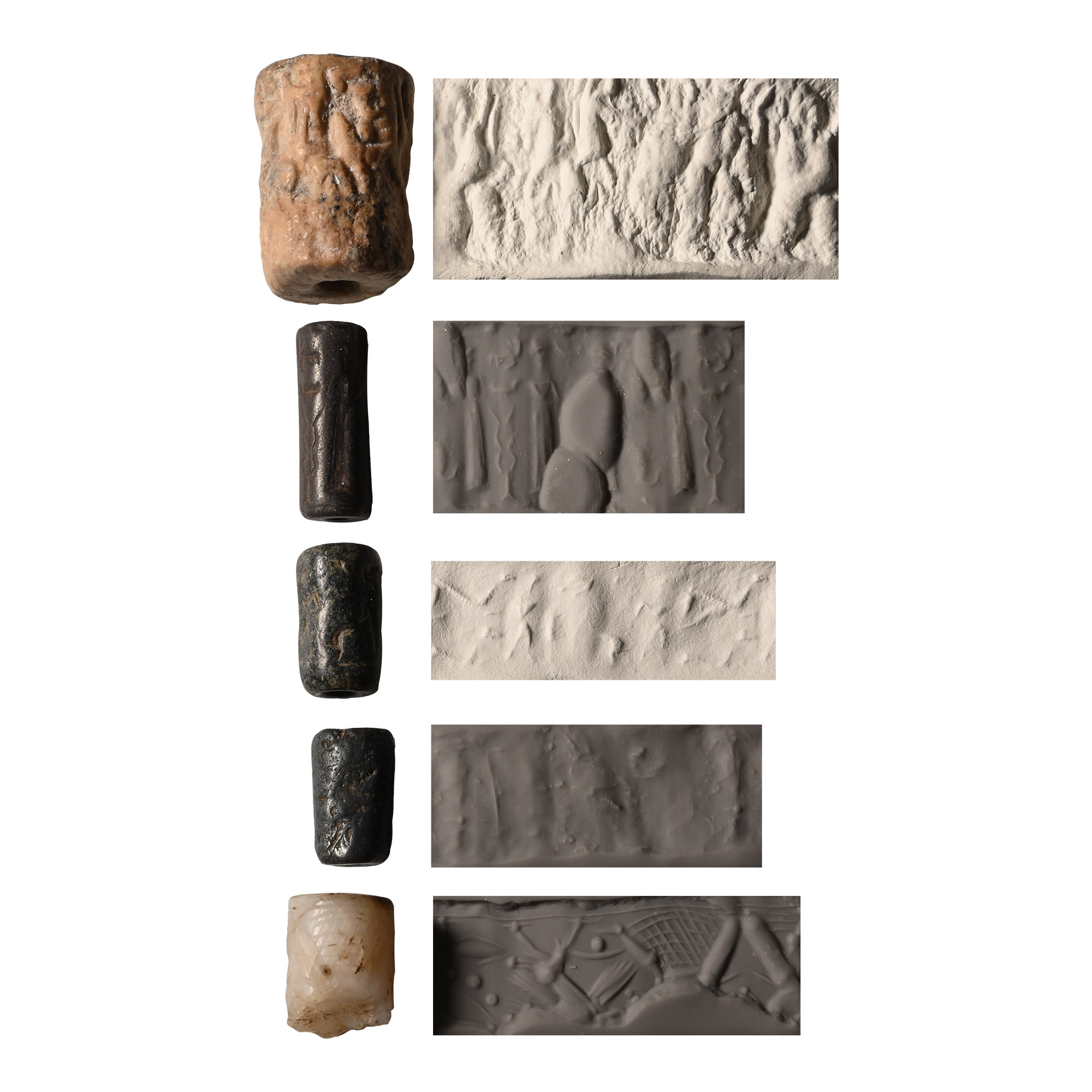
Western Asiatic Stone Cylinder Seal Group
3RD-1ST MILLENNIUM B.C.
3/4 - 1 1/8 in. (45.28 grams total, 18-29 mm).
Comprising: a limestone seal showing lions and bulls in combat; a hematite seal with a seated deity with an axe, and a standing adorant; a hematite seal with two adorants before a scorpion, another scorpion and another small animal, sun and moon crescent; a black steatite seal with two standing figures and a jumping beast; a chalcedony seal with a man to the right, evil eye, bird and a mountain or a skirt; supplied with museum-quality impressions. [5, No Reserve]
ProvenanceFrom the private collection of a European gentleman (1942-2024), formed since the 1970s.
Accompanied by previous typed catalogue slips with collection nos.27, 31, 34, 43, 79.
Cf. a cylinder in similar style in Niederreiter, Z., Catalogue of the cylinder seals in the Royal Museums of Art and History, I, Neo-Assyrian and Neo-Babylonian Periods (circa 1000-500 B.C.), Budapest, 2020, no.60 (offering scene).
CONDITIONTimeLine Auctions follows a vetting process to ensure the authenticity and legality of all items, reinforcing our commitment to integrity and responsible trading. Each antiquity, antique, and coin lot undergoes thorough examination by a vetting committee of at least ten external specialists, professional trade association members, scientists, and archaeologists: Our Vetting Process
AUCTIONS:
TimeLine is a leading auction house specialising in antiquities, ancient art, collectables, natural history, coins, medals, and books. Our auctions offer museums, collectors, historians, and enthusiasts the opportunity to acquire unique and historically significant pieces.
-
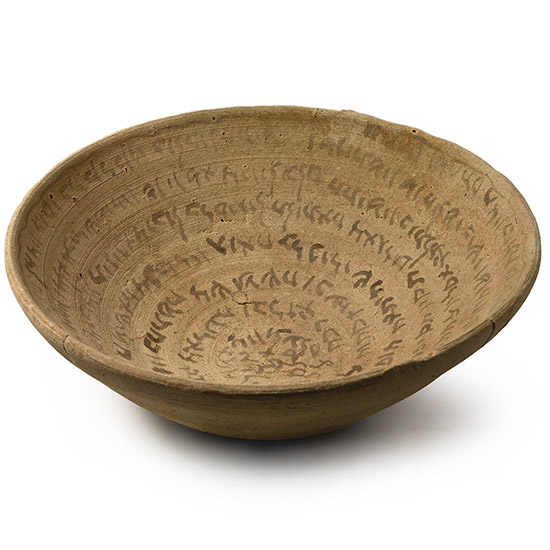
Aramaic Terracotta Magical Incantation Bowl
Circa 4th-8th century A.D.Sold for (Inc. bp): £975
Flat-based bowl, inscribed in spiral from the bottom inner wall to the rim with Aramaic text. 360 grams, 17.6 cm
Private collection, 1980s. UK private collection before 2000. Acquired on the UK art market. Private collection, London, UK
Aramaic incantation bowls are particular to the Sasanian period and have been found in the regions of modern Iraq. These simple ceramic bowls, also known as magic bowls, each contain an Aramaic inscription, written in ink, which spirals from the centre. The bowls seem to have played an important part in domestic life. For example, during excavation in Nippur in 1889, one or more incantation bowls were found in each house together with domestic artefacts, most often in doorways or under floorboards in the corner of rooms. The bowls are predominantly apotropaic, and the inscriptions tend to protect their owners from misfortunes such as childbirth, illness and evil spirits. -
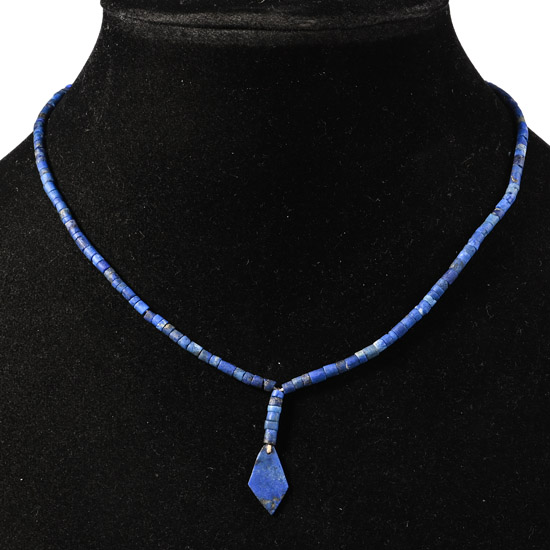
Bactrian Style Lapis Lazuli Bead Necklace String
20th century A.D.Sold for (Inc. bp): £46
Composed of tubular beads with a lozenge-shaped pendant, restrung. 5.44 grams, 31 cm
Acquired in the 1990s-early 2000s. Ex London, UK, collection. -
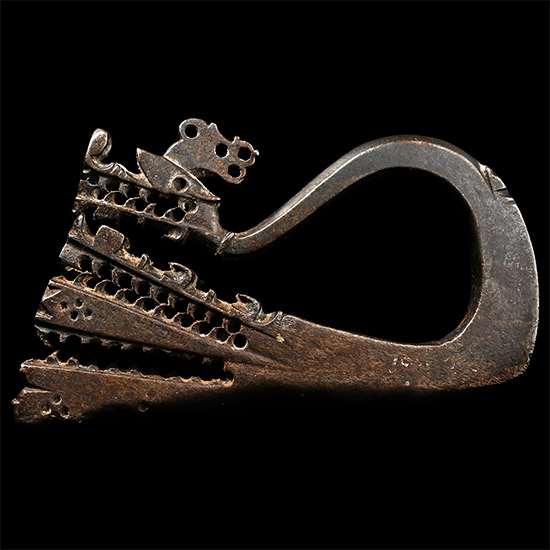
Persian Iron Dragon-Shaped Flint Striker
17th-18th century A.D.Sold for (Inc. bp): £520
With a thick looped body and striking face to the outer edge; handle formed in openwork with stylised serpent-head, open mouth with recurved teeth, trident tail with similar pellet clusters; engraved and drilled detailing. 297 grams, 11.5 cm
Acquired Christie's, The Longridge Collection, London, UK, 2010 (£1,276.00). Personal collection of a Suffolk lady, UK.
Among the objects reflecting the continuation of traditional figural compositions in Indo-Iranian art, there are zoomorphic flint strikers, decorated with serpents, ducks or geese and hawks attacking birds, indicating the persistence of imperial and solar symbols.
